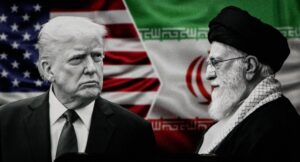
The war between the United States, Israel, and Iran is still unfolding, posing significant challenges for the region, including the countries of Lebanon, Iraq, Qatar, Saudi Arabia, Kuwait, the UAE and Bahrain. While Syria has avoided becoming militarily involved in the current escalation, risks of economic stagnation, renewed sectarian polarization, and potential entanglement in Lebanon loom large.
Economic spillover and Syria’s fragile recovery
Iran’s successful strategy in expanding the geographical area of the conflict – even on a global scale by means of disrupting energy flows through the Strait of Hormuz – catalysed one of the Gulf’s worst economic crises[i] in decades. This will directly affect Syria’s ruined economy too. Although Syria has no ships en-route to the strait, nor energy production sites to be targeted[ii], the economic damage dealt to the Gulf nations will directly affect its promised reconstruction programmes. The Syrian economy, devastated by 13 years of war, requires at least some $216 billion to be rebuilt, as estimated by the World Bank.[iii] Gulf countries, namely Qatar and Saudi Arabia, are key stakeholders in plans to revive the Syrian economy, but their focus will now be on rebuilding their own economies and infrastructure first.
Looking years ahead, Syria’s options for economic recovery are still limited if the world continues to be affected by an energy war, inflation and geopolitical uncertainty. Prolonged regional instability risks further delaying reconstruction. In light of an estimated 90% of Syrians living below the poverty line, entire neighbourhoods and towns reduced to rubble, and growing nation-wide economic hardship, Syrians have already taken to the streets.
Israel, Hezbollah and the risk of Syrian entanglement
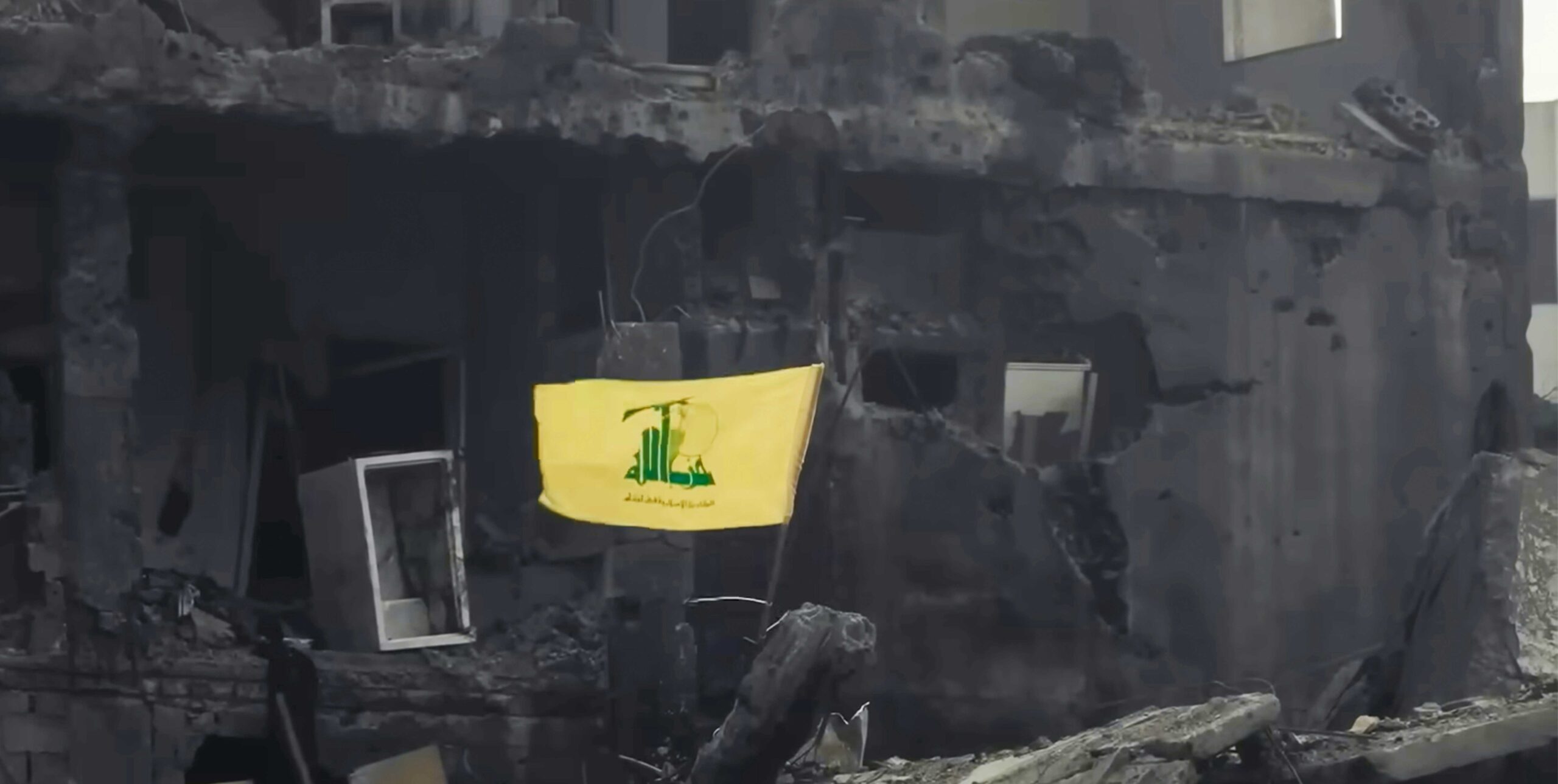
Syria’s neighbour, Lebanon, is experiencing the most violent ripple effects of the Iran war. Iran-backed Hezbollah militants involved Lebanon in the regional escalation by firing six rockets on Israel’s less than 48 hours after the war on Iran started. The Israeli response was rapid and escalatory, involving heavy bombardment throughout Lebanon, which killed over 1000[iv] and displaced nearly one million.[v] Israel said it was willing to pursue a similarly extensive operation as in the Gaza Strip[vi] if Hezbollah kept its arms. Meanwhile, the Lebanese state has been institutionally paralysed, and the national army remains vulnerable to internal divisions.
In this context, rumours that Syria would engage in the fight to disarm Hezbollah are circulating, particularly after Damascus gathered troops[vii] along Syria’s border with Lebanon. However, the Syrian government has emphasised that these are defensive security measures and denied any intention to join the fight between Israel and Hezbollah. By the same token, U.S. special envoy to Syria Tom Barrack reaffirmed[viii] that Washington did not ask Damascus to ‘take action’ in Lebanon. Despite such official assurances, the risk of inadvertent escalation or the indirect involvement of Syria in the Lebanese conflict cannot be dismissed.
The current government in Damascus has a long history of enmity with Hezbollah, not only stemming from an ideological dispute, but also due to the collective memory of violence most Syrians associate with Hezbollah fighters. Hezbollah played a vital role on the ground throughout Syria’s 13-year-long conflict and was responsible for massacres against Syrian rebels and civilians alike. Despite this, since assuming office last year, Syrian President Ahmed al-Sharaa has avoided any confrontation with Hezbollah. In August 2025 Al Sharaa told[ix] a group of Lebanese journalists that he had to ‘let go of the wounds we have because of Hezbollah’s aggression in Syria’. Al-Sharaa has been focusing his efforts on regime-building inside Syria and constructing a new foreign policy posture that would insulate the country from external conflicts. He seems to care less about foes outside Syria than challenges at home, while bearing in mind the fact that his troops neither have the capacity nor the experience to fight outside their native territories.
The U.S. might have a different view in this regard as Lebanon lacks the logistical and political capabilities to disarm Hezbollah on its own. This could prove disastrous for Syria and Lebanon alike.
Comparisons to Lebanon’s experiences in 1976 underscore how external approval of Syrian intervention in Lebanon once shaped regional dynamics. 50 years ago and following U.S. and Israeli permission, Hafiz Assad deployed Syrian troops to the country to help the Maronites in their fight against the Palestinian Liberation Organization (PLO).
Assad had played one party against the other to ensure that no one would gain enough power to challenge his own agenda. The operation came with long-term consequences for Lebanon’s sovereignty: Syrian troops stayed in the country for decades, controlling all aspects of political life. Hezbollah was further empowered while the Lebanese state was weakened.
While today’s geopolitical conditions are different, any Syrian intervention in Lebanon would have far more severe consequences. Unlike in 1976, Syria’s intervention would likely be framed in sectarian terms, and could exacerbate existing tensions, further destabilizing Lebanon’s already fragile political system and fragmenting the Lebanese army along sectarian lines.
Although the government in Damascus appears aware of these dangers, its ability to fully control events on the ground remains uncertain. The Syrian military includes factions with varying ideological orientations, and recent incidents have raised questions about centralized command. Clashes in coastal areas in March 2025 and in Suwayda in July illustrated the government’s difficulty in containing affiliated armed groups and preventing localized violence from escalating.
In Lebanon, where sectarian sensitivities are deeply entrenched and memories of Hezbollah’s role in Syria remain vivid, the risks would likely be even more acute.
What’s next for Hezbollah and the regional balance
There is uncertainty on how the current escalation on Iran will end. However, it is clear now that even if Trump found a ramp off to the war, Israel is determined to continue the military operation in Lebanon with a proclaimed aim of eliminating Hezbollah. Past Israeli military campaigns and special operations in Lebanon (in 1992, 1996, 2006, and in 2024) applied a policy of heavy retaliation and targeted assassinations, but these did not eliminate Hezbollah, suggesting that military force alone may not be sufficient. In fact, Israel’s 1982 invasion and subsequent occupation of southern Lebanon contributed to the conditions under which Hezbollah emerged.[x]
Today, any occupation and expansion of the so-called buffer zone would validate Hezbollah and empower its stance. On the other hand, the vulnerabilities of the Lebanese state would further rally the Shiite community around Hezbollah, and widen its support base rather than diminish it. Neglected by the state and opposed by other religious communities in Lebanon, supporters would continue to view Hezbollah as their protector.
For Syria, a strong Hezbollah means a strong Iranian presence at its borders, posing continued security threats. On the other hand, the chaotic collapse of Hezbollah would entail violent sectarianization and radicalization across borders as it would trigger Sunni-Shiite identity clashes. Salafist militias are operating inside Syria, and the government seems to have little control over them. Consequently, any confrontation with Hezbollah fighters would further fuel the polarized context in Syria and Lebanon, and could frame the conflict as an all-out war against the Shiites.
The best-case scenario – at least for Syria at the moment – might the containment of Hezbollah within a strong Lebanese state. To achieve this, efforts should be focused on empowering state institutions rather than individual leaders. Weakening Hezbollah cannot be viewed as a short-term aim, and it will never happen in the absence of a Lebanese state and the continued presence of Israeli troops in the country.
The approximately two-hour drive between Damascus and Beirut, which inspired a saying in Lebanon and Syria, reflects how intertwined the fate of these two countries is: when there are clouds in Damascus, umbrellas are opened in Beirut and vice versa. Although it is still unclear what the endgame for the U.S. and Israel vis-à-vis Iran and the regional balance in the Middle East is, Syrians and Lebanese are going to experience its ripple effects for decades to come.
[i] Solomon, E. (2026). “Arab World Faces ‘Profound’ Economic Crisis From Iran War, U.N. Agency Warns”, The New York Times, 31 March 2026, retrieved from: https://www.nytimes.com/2026/03/31/world/middleeast/arab-countries-war-economic-impact.html.
[ii] Jordan, D. (2026). “Iranian attacks across Gulf continue as major industrial sites hit”, BBC News, 29 March 2026, retrieved from: https://www.bbc.co.uk/news/articles/cp86yrq5jy7o.
[iii] World Bank Group (2025). “Syria’s Post-Conflict Reconstruction Costs Estimated at $216 billion”, 21 October 2025, retrieved from: https://www.worldbank.org/en/news/press-release/2025/10/21/syria-s-post-conflict-reconstruction-costs-estimated-at-216-billion.
[iv] United Nations (2026). “War in the Middle East: Iran nuclear facility hit as equivalent of ‘one classroom of children’ killed, wounded daily in Lebanon”, 21 March 2026, retrieved from: https://news.un.org/en/story/2026/03/1167175.
[v] Reliefweb (2026). “1M Displaced, 130K Cross Borders Amid Escalating Regional Conflict, New IOM Data”, 24 March 2026, retrieved from: https://reliefweb.int/report/lebanon/1m-displaced-130k-cross-borders-amid-escalating-regional-conflict-new-iom-data.
[vi] Fabian, E. (2026). “’Like Gaza’: Israel said planning ‘massive’ Lebanon ground invasion to uproot Hezbollah”, The Times of Israel, 14 March 2026, retrieved from: https://www.timesofisrael.com/israel-said-planning-massive-ground-invasion-of-southern-lebanon-to-uproot-hezbollah/.
[vii] Delatey, F. et al. (2026). “Syria sends thousands of troops to Lebanon border, sources say”, Reuters, 3 March 2026, retrieved from: https://www.reuters.com/business/aerospace-defense/syria-sends-thousands-troops-lebanon-border-sources-say-2026-03-03/.
[viii] The New Arab (2026). “US envoy Barrack denies report on requesting Syrian troops to ‘fight Hezbollah’ in Lebanon”, 18 March 2026, retrieved from: https://www.newarab.com/news/barrack-denies-report-requesting-syria-fight-hezbollah.
[ix] Al Arabiya Extra (2025). “Al-Sharaa: ‘I endured Hezbollah’s attacks’” [in Arabic], YouTube, 27 August 2025, retrieved from: https://www.youtube.com/shorts/3vmvvMkAr1s.
[x] BBC (2010). “Who are Hezbollah?”, 4 July 2010, retrieved from: http://news.bbc.co.uk/1/hi/world/middle_east/4314423.stm.