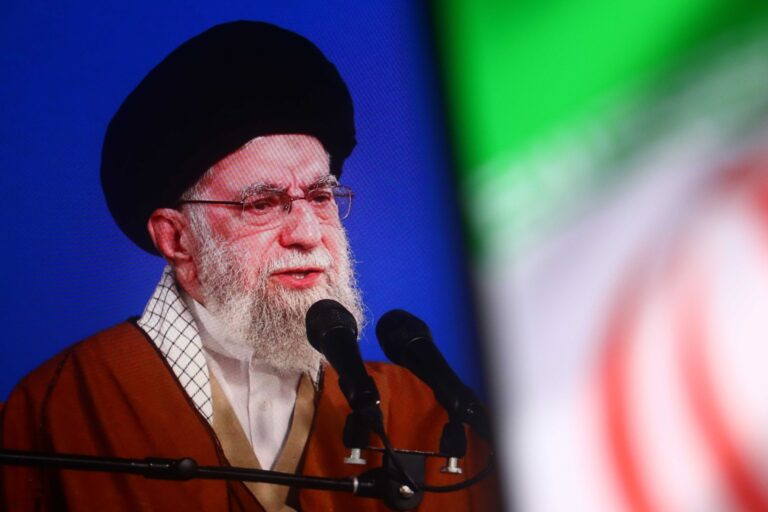

Since the joint attacks[i] on Iran, Tehran has been conducting[ii] multi-wave retaliatory strikes against Israel and U.S. military bases in the Middle East. These strikes are being countered[iii] by the defence systems, including Israel’s AI-integrated multi-tiered air defences. Israel’s Arrow 3[iv] and Arrow 2[v] air systems are under severe economic and operational pressure during the ongoing high-intensity crisis. While Israel claims a 92%[vi] interception rate against missiles and drones launched by Iran and Hezbollah, reports[vii] suggest that these systems are under strain. Iran is employing “saturation” tactics[viii] in an irregular pattern, launching hundreds of projectiles simultaneously to overwhelm[ix] Israeli radar capacity and deplete interceptor stockpiles.
Israel’s missile defense system and AI integration
Israel’s air defence network[x] includes the Iron Dome, David’s Sling, the Arrow systems, and the Terminal High-Altitude Area Defense (THAAD). The THAAD system – deployed by the U.S. – operates alongside Israeli defences. The Arrow systems stand out for their range of up to 2,400 km (1,500 miles) in intercepting short- to intermediate-range missiles. Arrow 3 is particularly effective at intercepting missiles carrying cluster munition warheads during the exo-atmospheric phase – before the re-entry and dispersal of submunitions.
While Israel has employed[xi] AI-enabled tools such as “The Alchemist” (for visual detection) and “The Gospel” (for target recommendation) in offensive operations, research suggests the integration of automated and semi-automated decision-support technologies with Arrow 2, Arrow 3, David’s Sling, and the Iron Dome. Arrow 2 and Arrow 3 use advanced algorithms[xii] integrated into radar systems, battle management centres, and launch control systems. AI integration across these multi-layered defences shortens[xiii] the time between target identification and interception. Arrow 3 uses[xiv] Elta’s Green Pine radar – a subsidiary of Israel Aerospace Industries (IAI)[xv] – which employs AI to track and distinguish between decoys and targets before initiating interception.
The Citron Tree battle management centre used[xvi] in the Arrow 3 supports both manual and fully automated modes, along with a man-machine interface for data processing, threat assessment, and mission control. Similarly, the Hazelnut Tree Launch Control Centre (LCC) in Arrow 3 features fully automated[xvii] battle management and full system redundancy for maximum availability. It also manages automated safety mechanisms to prevent accidental launches. Citron Tree downloads[xviii] radar and external data inputs and uses AI tools to manage threat interception automatically, including against multiple simultaneous threats
Iranian tactics and Israel’s operational challenges
Iran has conducted multi-wave attacks[xix] using low-cost drones and advanced missiles, including the Arash-2 and the Fattah-2 hypersonic missile. Israel’s heavy reliance on AI in military decision-making may create vulnerabilities, particularly against Iran’s strategy of combining high-volume, low-cost strikes with increasingly unpredictable patterns. While Iran’s behaviour appeared relatively predictable in the early phases of the conflict, it has since evolved toward more irregular and adaptive modes of engagement.
These tactics aim to confuse[xx] Israeli air defences and increase the success rate of strikes on critical infrastructure, including targets[xxi] such as the Haifa oil refineries and Beit Shemesh. Reports[xxii] indicate a significant shortage of Arrow interceptors, highlighting the need to expand production. Due to the cost–kill ratio imbalance, Israel’s finance and defence ministries are reportedly divided over allocating additional funding for a new interceptor production line.
Overall, Iran’s tactics have managed to strain and overwhelm Israel’s AI-integrated defence systems, contributing to financial and political pressures.
Israeli responses, and financial and systemic limitations
To reduce costs, Israel has begun incorporating the David’s Sling – originally not designed to counter Iranian ballistic missiles – to operate alongside Arrow 3 against medium-range threats. However, due to a lower success rates and technical limitations, David’s Sling has struggled to intercept certain threats, leading to successful Iranian strikes, including those on Haifa oil refineries, Tel Aviv, Dimona.[xxiii] Reports indicate that Arrow 2 and Arrow 3 interceptor stocks were depleted by over 81%[xxiv] early in the conflict. This raises critical questions about Israeli strategic planning particularly in forecasting the trajectory of the crisis and evaluating the costs and benefits within a potentially protracted conflict.
AI vs human intuition in military decision making
Sustaining resources, incorporating human judgment, and anticipating the trajectory of a conflict require more than predictive models; they demand human intuition to navigate ambiguity, uncertainty, and complex dynamics.
This shift presents a significant challenge for AI-enabled air defence systems, which are typically optimised to detect and respond to identifiable and recurring patterns. When confronted with non-linear, ambiguous, and dynamically changing attack profiles, the effectiveness of automated or semi-automated systems may decline. Consequently, Iran’s adoption of less predictable strategies has the potential to further strain and possibly overwhelm Israeli defence infrastructure. If such patterns persist or become more complex, they could exacerbate existing operational pressures and expose structural limitations within AI-reliant defense architectures.
Legal and ethical implications
International Humanitarian Law (IHL) prohibits[xxv] attacks on civilian infrastructure and requires distinction, proportionality, and precaution in the use of force. The increasing integration of AI into air offence and defence systems complicates the application of these principles, particularly where automated or semi-automated systems influence targeting or interception decisions. As AI-enabled systems process sensor data, identify threats, and recommend or execute engagements within compressed timeframes, accountability becomes increasingly diffuse.
In such contexts, a critical question arises: if an AI-assisted interception or strike results in unintended civilian harm, who is responsible? Accountability could be distributed across multiple actors, including system developers, military operators, commanders, and policymakers who authorise deployment. However, existing legal frameworks remain largely state- and human-centric, creating ambiguity when decisions are shaped by algorithmic processes. On 28 February, one such incident happened when a U.S. missile mistakenly struck[xxvi] a girls’ elementary school in Minab, Iran. The U.S. attributed it to outdated intelligence. Similarly, in air defence scenarios, an automated interceptor could malfunction or misclassify a target, leading to unintended civilian harm.
Another challenge is the absence of human judgment in AI-driven systems. While algorithms can be optimised for speed and efficiency, they lack the ability to exercise restraint or nuanced discrimination in complex environments where civilian and military objects are interwoven. Excessive reliance on AI risks undermining the principles of distinction and proportionality, raising profound legal and ethical concerns in modern warfare.
Conclusion
In essence, the strategic outcomes of the Israel-Iran conflict highlight a critical reality: human intelligence and judgment remain decisive. Military and air defence decision-making must therefore reinforce the role of human intuition to prevent AI-driven systems from becoming strategically overwhelmed. In an era of algorithmic warfare, the advantage will not lie in the most advanced systems alone, but with those who best integrate human judgment with technological capability.
[i] Loft, P. (2026). “US/Israel-Iran conflict 202^”, House of Commons Library, 31 March 2026, retrieved from: https://commonslibrary.parliament.uk/research-briefings/cbp-10521/.
[ii] Al Jazeera (2026). “Tehran pounded in week two of US-Israel war, Iran targets Israel”, 7 March 2026, retrieved from: https://www.aljazeera.com/news/2026/3/7/tehran-pounded-in-week-two-of-us-israel-war-iran-targets-israel.
[iii] Al Sharq Al Awsat (2026). “What Is Israel’s Multi-Layered Defense Against Iranian Missiles?”, 27 February 2026, retrieved from: https://english.aawsat.com/features/5245417-what-israel%E2%80%99s-multi-layered-defense-against-iranian-missiles%C2%A0.
[iv] Airforce Technology (2026). “Arrow 3 Air Defence Missile System, Israel”, 12 March 2026, retrieved from: https://www.airforce-technology.com/projects/arrow-3-air-defence-missile-system-israel/.
[v] Army Technology (2014). “Arrow 2 Theatre Ballistic Missile Defence System, Israel”, 10 February 2014, retrieved from: https://www.army-technology.com/projects/arrow2/.
[vi] The Times of Israel (2026). “US intelligence said to assess around half of Iran’s missile launchers still intact”, 3 April 2026, retrieved from: https://www.timesofisrael.com/us-intelligence-said-to-assess-around-half-of-irans-missile-launchers-still-intact/.
[vii] Khalil, Z. (2026). “Israel using air defense systems not designed to intercept some missiles: Report”, AA, 1 April 2026, retrieved from: https://www.aa.com.tr/en/middle-east/israel-using-air-defense-systems-not-designed-to-intercept-some-missiles-report/3887405.
[viii][viii] Drone Warfare (2026). “DWIM Weekly – Mar 2-8, 2026”, 9 March 2026, retrieved from: https://drone-warfare.com/2026/03/09/dwim-weekly-mar-2-8-2026/.
[ix] Amoah, M., Bazilian, M.D. and Matisek, J. (2026). “Over 11,000 munitions in 16 Days of the Iran War…”, RUSI, 24 March 2026, retrieved from: https://www.rusi.org/explore-our-research/publications/commentary/over-11000-munitions-16-days-iran-war-command-reload-governs-endurance.
[x] BBC News (2024). “What are Israel’s Iron Dome, David’s Sling, Arrow and Thaad missile defences?”, 16 October 2024, retrieved from: https://www.bbc.co.uk/news/world-middle-east-20385306.
[xi][xi] OpinioJuris (2024). “Artificial Intelligence in the Battlefield: A Perspective from Israel”, 20 April 2024, retrieved from: https://opiniojuris.org/2024/04/20/artificial-intelligence-in-the-battlefield-a-perspective-from-israel/.
[xii] Duz, S. and Kocakoglu, S. (2025). “Deadly Algorythms”, SETA, February 2025, retrieved from: https://media.setav.org/en/file/2025/02/deadly-algorithms-destructive-role-of-artificial-intelligence-in-gaza-war.pdf.
[xiii] Embassy of the Czech Republic in Singapore (2025). “Israeli forces display power of AI, but it’s a double-edge sword”, 11 April 2025, retrieved from: https://mzv.gov.cz/singapore/en/culture_and_education/archive/israeli_forces_display_power_of_ai_but.html.
[xiv] Airforce Technology (2026). “Arrow 3 Air Defence Missile System, Israel.”
[xv] IAI (N.D.) Retrieved from: https://www.iai.co.il/.
[xvi] Airforce Technology (2026). “Arrow 3 Air Defence Missile System, Israel.”
[xvii] Ibid.
[xviii][xviii] Army Technology (2014). “Arrow 2 Theatre Ballistic Missile Defence System, Israel.”
[xix] WION (2026). “Iran-Israel War: Iran’s Low-Cost ‘Arash-2’ Drone Evades Advanced Air Defence Systems”, 24 March 2026, retrieved from: https://www.wionews.com/videos/iran-israel-war-iran-s-low-cost-arash-2-drone-evades-advanced-air-defence-systems-1774339173544.
[xx] Sinha, S. (2025). “Iran claims ‘new method’ tricked Israel’s missile defenses into attacking each other”, Interesting Engineering, 16 June 2025, retrieved from: https://interestingengineering.com/military/iran-claims-new-method-tricked-israels-defenses.
[xxi] WANA Iran (2026). “Iran’s Attack List on U.S. & Israeli Targets”, 29 March 2026, retrieved from: https://wanaen.com/iran-launches-wide-ranging-operations-on-march-28-targeting-multiple-regional-sites/.
[xxii] Defence Security Asia (2026). “Interceptor Crisis: Israel Days From Running Out of Arrow-3 as US THAAD Stocks Drain in Iran War”, 26 March 2026, retrieved from: https://defencesecurityasia.com/en/israel-arrow3-thaad-shortage-iran-war-rusi-interceptor-crisis-2026/.
[xxiii] Fabian, E. (2026). “David’ Sling system failed to down Iranian ballistic missiles that struck southern towns”, The Times of Israel, 23 Mrch 2026, retrieved from: https://www.timesofisrael.com/liveblog_entry/davids-sling-system-failed-to-down-iranian-ballistic-missiles-that-struck-southern-towns-idf/.
[xxiv] Ali, R. (2026). “One month of war: Assessing military strength of US, Israel, Iran”, AA, 28 March 2026, retrieved from: https://www.aa.com.tr/en/middle-east/one-month-of-war-assessing-military-strength-of-us-israel-iran/3882816.
[xxv] Cyber Law (N.D.). “International humanitarian law”, retrieved from: https://cyberlaw.ccdcoe.org/wiki/International_humanitarian_law_(jus_in_bello).
[xxvi] Melimopoulos, E. (2026). “Who bombed the Iranian girls’ school, killing more than 170?” Al Jazeera, retrieved from: https://www.aljazeera.com/news/2026/3/12/who-bombed-the-iranian-girls-school-killing-more-than-170-what-we-know.