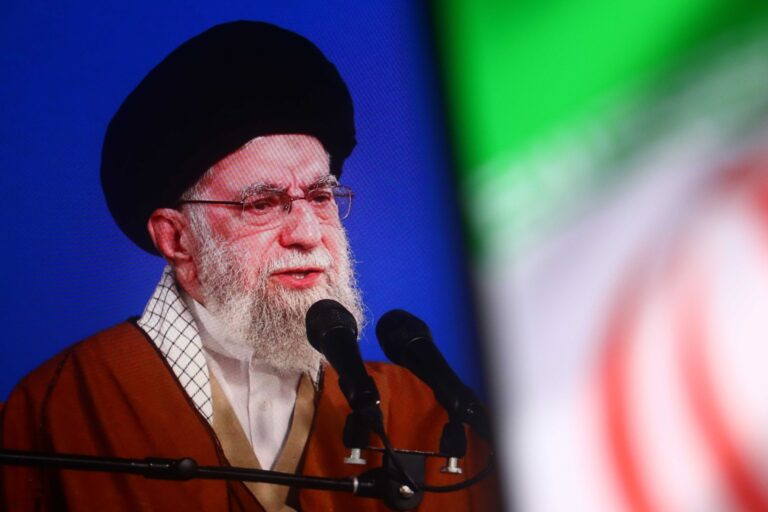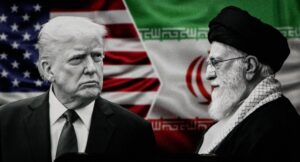
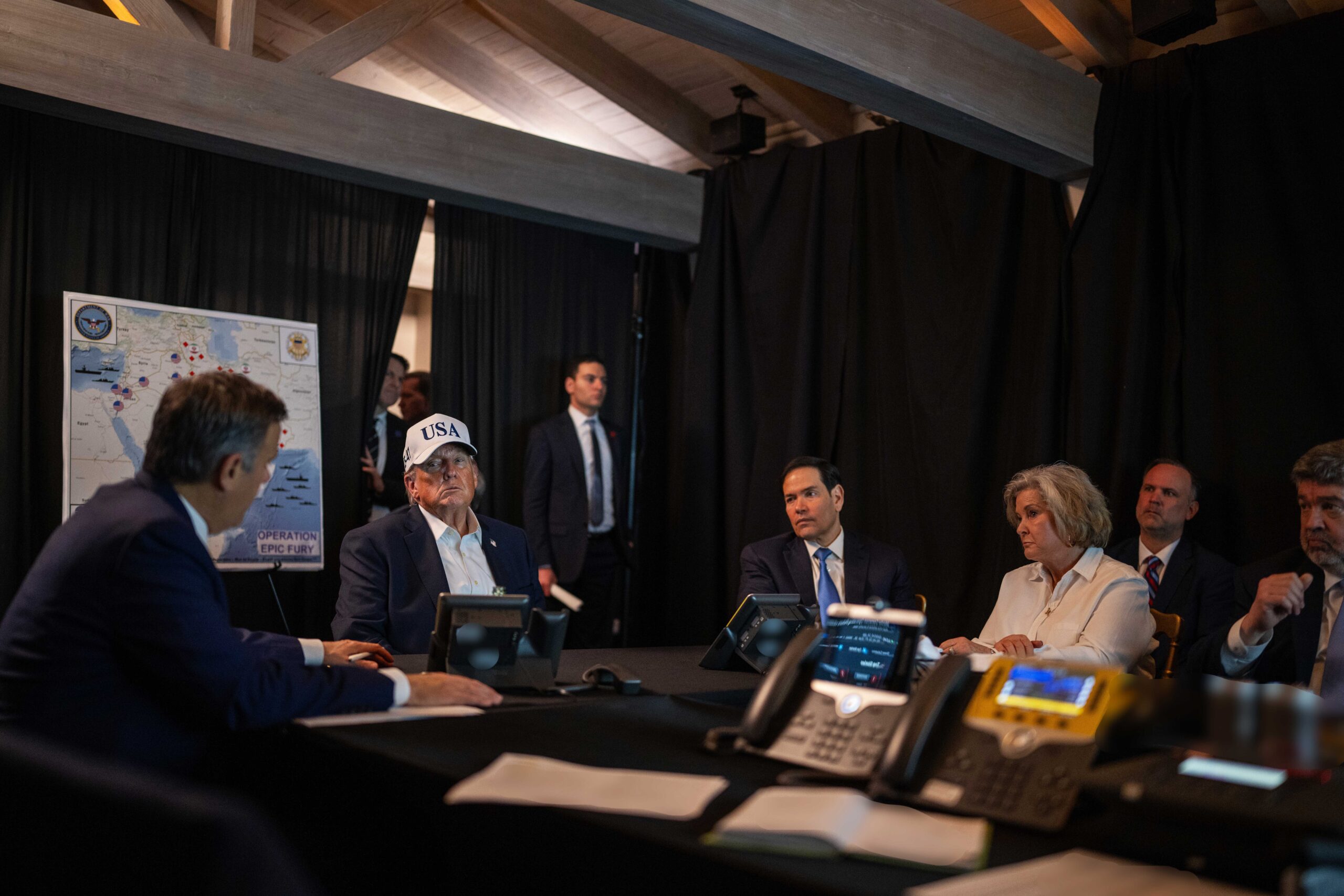
The central failure of Operation Epic Fury is strategic. Five weeks in, neither of its declared objectives – regime change as framed by U.S. President Donald Trump, nor the elimination of an existential threat as framed by Israeli Prime Minister Benjamin Netanyahu – is within reach. The Strait of Hormuz remains effectively closed.[i] Iran’s leadership has reconstituted under Mojtaba Khamenei.[ii] The diplomatic track that might have constrained escalation has been shattered.[iii]
What has emerged instead is not a transition from war to peace, but a system of managed instability in which disruption itself has become Iran’s most effective and durable form of power. The war has not resolved the Iran problem. It has fundamentally transformed it by converting a containable challenge into a more distributed, persistent, and system-level disorder.
Even if the fragile two-week ceasefire brokered by Pakistan[iv] holds, it will mark not an end, but the beginning of a prolonged adjustment process across five primary domains alongside second-order effects in legitimacy, regime evolution, and diplomatic structure: the strategic reordering of the Gulf, the repricing of global economic risk, the erosion of American alliance credibility, the transformation of the Strait of Hormuz from commons to controlled corridor, and a nuclear question now more difficult to resolve than at any prior moment.
The strategic reordering of the Gulf
The most immediate political consequence of Operation Epic Fury is psychological, but its implications are systemic. All six Gulf Cooperation Council (GCC) states have now been directly targeted by Iranian missile and drone strikes against both military and civilian infrastructure.[v] What Gulf policymakers had spent years attempting to avoid – the regionalisation of conflict – has occurred at scale.
Pre-war signalling by Saudi Arabia and the UAE, indicating their territory would not be used to launch attacks on Iran, was intended to preserve insulation.[vi] Instead, it exposed a critical miscalculation: restraint did not buy immunity. Iran’s response demonstrated that geographic proximity and structural alignment with U.S. security architecture were sufficient to draw the Gulf into the conflict.
The result is a multidirectional crisis of confidence that is not merely perceptual, but strategic. Gulf states are angered by Iranian strikes, frustrated by Washington’s unilateralism,[vii] and increasingly uneasy with the normalisation of Israeli military activity across the region.[viii] This convergence is already reshaping behaviour. It will likely accelerate hedging, weaken exclusive reliance on U.S. protection, and push Gulf capitals towards more diversified security and diplomatic partnerships.
This shift feeds directly into the evolving diplomatic landscape. A more autonomous Gulf likely will be less willing to align reflexively with U.S. strategic preferences and more inclined to pursue parallel channels of engagement with Tehran.
The repricing of Gulf economic risk
The Gulf’s economic transformation – its positioning as a stable hub for capital, logistics, and global talent – has been predicated on predictability. That assumption has been materially weakened.[ix]
Disruptions to energy infrastructure and export routes are not simply price shocks; they represent a repricing of geopolitical risk embedded in the Gulf’s economic model.
The immediate economic damage is significant, but the deeper issue is structural. Disruptions to energy infrastructure and export routes are not simply price shocks; they represent a repricing of geopolitical risk embedded in the Gulf’s economic model. For states heavily dependent on the Strait of Hormuz, the vulnerability is systemic. Goldman Sachs projected in mid-March that if the conflict continues through April, Saudi Arabia and the UAE could see their 2026 GDPs contract by three to five per cent; for Kuwait and Qatar, the estimated contraction reaches as high as fourteen per cent.[x]
The cost asymmetry exposed during the conflict underscores the challenge. Iran’s low-cost drone warfare has forced Gulf states to expend high-cost defensive interceptors at unsustainable ratios, rapidly depleting inventories.[xi] Replenishment will be expensive, contested, and slow, given global supply constraints.
Less visible, but equally consequential, is the labour dimension. Gulf economies depend on migrant workers who lack institutional protections. Large-scale disruption risks triggering outward labour flows that would simultaneously generate humanitarian pressure abroad and constrain domestic recovery capacity.[xii] The Gulf’s post-war adjustment will therefore hinge not only on capital reconstruction, but on labour stabilisation.
Taken together, these pressures constitute not discrete shocks but components of a broader strategic reordering of the Gulf system in which economic resilience, security autonomy, and geopolitical positioning are being recalibrated simultaneously.
The erosion of the U.S. security model
Operation Epic Fury has exposed a fundamental contradiction in the U.S. security role in the Gulf: it remains indispensable, but no longer reliably protective.
While U.S. forces have driven offensive operations, Gulf states have absorbed the majority of retaliatory strikes outside Israel. American bases have functioned less as shields than as magnets, drawing fire onto host countries.[xiii] At the same time, the defensive systems underpinning regional security have proven both scarce and prohibitively expensive to sustain under sustained attack.
The breakdown extends beyond the region. Efforts to mobilise allied naval participation in reopening maritime routes have largely failed.[xiv] European and Asian partners have shown limited willingness to engage in a conflict they neither shaped nor endorsed, which is a direct consequence of being excluded from pre-war deliberations.[xv]
The implications are foundational. The post-1945 model of alliance burden-sharing depends on consultation, reciprocity, and shared ownership of risk. Operation Epic Fury inverted that sequence, initiating conflict first and seeking coalition support afterward. The result is not simply friction, but a weakening of the alliance model itself.
The diminished credibility of U.S. commitments – both security guarantees and diplomatic assurances – complicates the ability to negotiate constraints on adversaries’ strategic programmes.
This erosion feeds directly into the nuclear domain. The diminished credibility of U.S. commitments – both security guarantees and diplomatic assurances – complicates the ability to negotiate constraints on adversaries’ strategic programmes.
The breakdown of credible assurance
If the erosion of the U.S. security model reflects declining protection, the breakdown of credible assurance reflects declining trust.
The most durable damage may lie in the realm of diplomacy. The decision to initiate military action while nuclear negotiations were ongoing has undermined the core logic of coercive diplomacy.[xvi] Indirect talks mediated by Oman’s foreign minister Badr al-Busaidi had produced what Iranian Foreign Minister Abbas Araghchi described as a “historic” agreement that was “within reach” as late as 25 February.[xvii] The war was launched three days later.
The sequence observed – active diplomacy followed by military escalation – has reinforced a contrary lesson, namely that restraint may increase vulnerability. For Iran, and for other states watching closely, the implication is clear. Agreements that reduce strategic leverage without guaranteeing security may not be sustainable.[xviii] This represents a breakdown in the credible assurance mechanism that underpins negotiated settlements, and it propagates outward, shaping expectations in other strategic contexts beyond the Iran file.
The “rockets-and-feathers” shock
The economic consequences of the war are best understood not as a temporary disruption, but as a system-wide repricing of risk across global supply chains. The “rockets and feathers” dynamic – rapid price increases followed by slow and uneven declines – is now operating at geopolitical scale.[xix]
Brent crude surpassed $100 per barrel on 8 March, climbing as high as $126 before stabilising at elevated levels.[xx] But oil and LNG are only part of the story. The Strait of Hormuz functions as a critical artery for a wide range of commodities. The IEA has characterised the resulting supply disruption as the largest in the history of the global oil market.[xxi]
The timing is critical, as the disruption coincides with spring planting season across the Northern Hemisphere, risking downstream crop yield reductions months from now.
Particularly consequential is fertilizer. The closure has suspended the movement of roughly 30 to 40 per cent of globally traded nitrogen fertiliser, with urea prices at the New Orleans import hub having surged by approximately 32 per cent in a single week.[xxii] The timing is critical, as the disruption coincides with spring planting season across the Northern Hemisphere, risking downstream crop yield reductions months from now.[xxiii]
Insurance markets amplify this effect. War-risk premiums have soared, and some underwriters have tightened terms or curtailed coverage,[xxiv] enforcing a market-mediated blockade that halts flows without the need for sustained physical interdiction. Major carriers including Maersk, CMA CGM, and Hapag-Lloyd suspended transits, with vessels rerouting around the Cape of Good Hope and adding ten to fourteen days to journey times.[xxv] These premiums are unlikely to normalise quickly. The Houthi attacks on Red Sea shipping, which began in late 2023, offer a sobering precedent – transit through that waterway remains approximately 60 per cent below pre-2023 levels despite a ceasefire.[xxvi]
The distributional effects are stark. Advanced economies will absorb higher costs; more vulnerable states, particularly in Sub-Saharan Africa and South Asia, face the prospect of systemic disruption to food systems and fiscal stability.[xxvii] Harvard Kennedy School economist Carmen Reinhart has warned of stagflation risk: higher inflation combined with dampened growth, echoing the dynamics of the 1970s oil shocks.[xxviii] The long tail of the economic shock is not simply prolonged; it is regressive.
The Strait of Hormuz as a controlled corridor
Perhaps the most consequential structural shift produced by the war is the transformation of the Strait of Hormuz from a global commons into a contested and increasingly regulated corridor.
Iran has demonstrated a form of market-mediated coercion: within hours of the 28 February strikes, it broadcast warnings prohibiting all navigation. The insurance market did the rest, halting the flow of approximately 20 million barrels per day without requiring sustained physical interdiction.[xxix]
Tehran is now moving to institutionalise this leverage. Iran and Oman are actively drafting a protocol to “monitor transit” through the strait, with Iranian officials framing the arrangement not as a safety measure but explicitly as a sovereignty claim.[xxx] Iran’s parliament is simultaneously drafting legislation to codify toll collection on passing vessels permanently.[xxxi]
The selective access Iran has offered – permitting ships owned by China, Russia, India, Iraq, and Pakistan to transit while turning others away[xxxii] – demonstrates that the strait is being converted from a commons into a managed corridor conditioned on political alignment. Iran has also demanded formal international recognition of its authority over the strait as a condition for ending the war.[xxxiii]
Any post-war framework that allows Iran to influence transit conditions introduces a persistent and embedded vulnerability…
For Gulf states, and especially Saudi Arabia – which has seen its oil exports fall by approximately 50 per cent since the blockade began, with its only alternative route, the East-West Pipeline, already running at maximum capacity of 7 million barrels per day[xxxiv] – any post-war framework that allows Iran to influence transit conditions introduces a persistent and embedded vulnerability into the economic model of a state whose entire transformation programme depends on unimpeded export revenue.
The nuclear incentive problem
The war has not reduced the strategic rationale for nuclear deterrence in Iran. It has strengthened it.
The sequence of events – diplomatic engagement followed by military escalation – has reinforced the long-standing lesson derived from the fates of Iraq and Libya that states which surrender strategic leverage without obtaining durable security guarantees are more, not less, vulnerable to external intervention.[xxxv]
Iran’s new Supreme Leader, Mojtaba Khamenei, is widely assessed as more open to nuclear weapons development than his father, who had issued a fatwa against them.[xxxvi] As Trita Parsi of the Quincy Institute has stated: “The nuclear fatwa is dead. Elite opinion as well as public opinion has shifted dramatically on this, which shouldn’t be surprising since Iran has been bombed twice in the midst of negotiations by two nuclear-equipped states.”[xxxvii]
Iran’s residual fissile material stock, which is estimated at over 400 kilograms of uranium enriched to 60 per cent as of June 2025, remains a serious concern.[xxxviii] A fragmented or destabilised Iran with contested control over this material could represent a proliferation risk more dangerous than the one this war was launched to prevent.
The implications extend regionally. Saudi Arabian Crown Prince Mohammed bin Salman stated in 2018 that “without a doubt, if Iran developed a nuclear bomb, we would follow suit as soon as possible” – a commitment that has not changed.[xxxix] The Trump administration’s concurrent pursuit of a civilian nuclear agreement with Saudi Arabia that reportedly does not impose the “gold standard” restriction on uranium enrichment compounds these concerns.[xl] The risk is not a single proliferation event but a cascade across a region already destabilised by the war’s other consequences.
Norms, legitimacy, and strategic cost
Beyond these primary domains, second-order effects in legitimacy are already compounding the strategic landscape.
The conduct of the war has introduced additional long-term costs in the domain of legitimacy. The strike on the Shajareh Tayyebeh Primary School in Minab, Hormozgan province on 28 February 2026 – killing between 175 and 180 people, the majority of them schoolchildren – has been the subject of investigations by the New York Times, BBC Verify, Reuters, NPR, and CBC, which concluded the United States was likely responsible.[xli] Preliminary U.S. military findings suggest the strike used outdated 2016 target coordinates that clearly showed the school had been walled off from the adjacent IRGC compound a decade before the strike.[xlii]
The context is inescapable: Secretary of Defense Pete Hegseth had vowed the war would be prosecuted with “no stupid rules of engagement,” after dismantling civilian harm mitigation programmes at the Pentagon.[xliii] This posture has been reinforced by repeated public threats by President Trump to target critical civilian infrastructure – including electricity grids and desalination facilities – expanding the perceived scope of permissible targets beyond traditional military objectives. The UN’s Independent International Fact-Finding Mission on Iran cited the Minab strike and expressed alarm at “public statements from U.S. officials suggesting that long-established rules of engagement do not apply in this conflict.”[xliv]
The conduct of Operation Epic Fury will serve as a reference point – informing elite discourse and constraining future engagement…
Reputational effects accumulate over time. In the Islamic world, in the Global South, in allied capitals, and eventually in American public opinion, the conduct of Operation Epic Fury will serve as a reference point – informing elite discourse and constraining future engagement in ways that compound the other structural costs documented here.
Iran’s post-war strategic posture
The conflict has not produced a weakened or compliant Iran. It has reinforced resilience. Institutional structures designed for continuity under pressure – the IRGC’s decentralised “mosaic defence” model, officially outlined in 2005 and restructured into 31 provincial commands in 2008 – have functioned as designed, preventing the rapid institutional collapse that the war’s architects may have anticipated.[xlv] Leadership reconstitution has occurred without systemic collapse, producing a political configuration more aligned with hardline elements.[xlvi]
The result is an Iran that is more militarised, more risk-acceptant, and more willing to leverage disruption as a sustained strategy. Managing this Iran will be at least as complex as confronting it militarily. A strategy focused on short-term military outcomes risks neglecting the longer-term requirements of containment, deterrence, and engagement in a more hostile environment.
A more fragmented diplomatic order
The diplomatic landscape emerging from the conflict is more fragmented and less centred on U.S. leadership. Gulf states are already moving towards greater strategic autonomy, pursuing diversified partnerships and parallel diplomatic channels. Pakistan has emerged as an important intermediary, facilitating indirect communications between Washington and Tehran and securing limited transit arrangements for Pakistani-flagged vessels.[xlvii] China, which receives between 45 and 50 per cent of its crude oil imports through the strait, has both the economic incentive and the diplomatic relationship with Tehran to play a larger stabilising role.[xlviii]
This reflects a broader structural shift. The regional order is evolving from a hierarchical system anchored by a single external power towards a more distributed configuration with multiple centres of influence – one in which the mechanisms of crisis management operate increasingly outside traditional U.S.-led frameworks.
Conclusion: From containment to systemic disorder
Operation Epic Fury did not resolve the Iran problem. It transformed it.
A conflict intended to degrade threat has instead reconfigured it – embedding risk across multiple domains and making it more difficult to deter, negotiate with, and contain. Iran has emerged more adaptive. The Strait of Hormuz has become a lever of sustained influence. Global markets are repricing geopolitical risk. Alliance structures have been strained. The nuclear question has grown more acute.
These are not temporary disruptions. They are enduring shifts.
The guns will eventually fall silent. What they leave behind is a strategic environment in which the pathways to stability are narrower, the costs of miscalculation are higher, and the mechanisms for managing conflict are weaker.
The long tail of Operation Epic Fury will not be measured in the duration of the war, but in the persistence of the disorder it has set in motion.
[i] Stars and Stripes (2026). ‘Hegseth says Trump will make deal on Iran or US will increase fighting intensity,’ Stars and Stripes, 31 March 2026, retrieved from: https://www.stripes.com/theaters/middle_east/2026-03-31/hegseth-caine-briefing-iran-march-31-21236249.html.
[ii] Wikipedia (2026). ‘2026 Iranian Supreme Leader Election,’ Wikipedia, updated April 2026, retrieved from: https://en.wikipedia.org/wiki/2026_Iranian_Supreme_Leader_election.
[iii] Wikipedia (2026). ‘2025–2026 Iran–United States Negotiations,’ Wikipedia, updated April 2026, retrieved from: https://en.wikipedia.org/wiki/2025%E2%80%932026_Iran%E2%80%93United_States_negotiations.
[iv] Davies, C. (2026). “How Pakistan helped secure a fragile ceasefire between the US and Iran”, BBC News, 8 April 2026, retrieved from: https://www.bbc.co.uk/news/articles/cj401qvgg19o.
[v] Britannica (2026). ‘2026 Iran War,’ Encyclopaedia Britannica, updated 2 April 2026, retrieved from: https://www.britannica.com/event/2026-Iran-war.
[vi] PBS NewsHour (2026). ‘Gulf Allies Disappointed U.S. Didn’t Notify About Iran Attacks and Ignored Their Warnings, Sources Say,’ PBS NewsHour, March 2026, retrieved from: https://www.pbs.org/newshour/world/gulf-allies-disappointed-u-s-didnt-notify-about-iran-attacks-and-ignored-their-warnings-sources-say.
[vii] PBS NewsHour (2026). Ibid.
[viii] Middle East Eye (2026). ‘Why Gulf States Fear Israel’s Day After Iran,’ Middle East Eye, March 2026, retrieved from: https://www.middleeasteye.net/opinion/why-gulf-fears-israels-day-after-iran.
[ix] Wikipedia (2026). ‘Economic Impact of the 2026 Iran War,’ Wikipedia, updated April 2026, retrieved from: https://en.wikipedia.org/wiki/Economic_impact_of_the_2026_Iran_war.
[x] Young, K.E. (2026). ‘A Post-American Persian Gulf?’ Foreign Affairs, 1 April 2026, retrieved from: https://www.foreignaffairs.com/iran/post-american-persian-gulf.
[xi] Time (2026). ‘How the War on Iran Threatens the Global Economy,’ Time, 11 March 2026, retrieved from: https://time.com/article/2026/03/11/war-trump-iran-gulf-oil-gas-economy/.
[xii] Tooze, A. (2026). ‘U.S.–Iran War: The Economic Winners and Losers,’ Foreign Policy, 27 March 2026, retrieved from: https://foreignpolicy.com/2026/03/27/iran-war-economic-effects-gulf-oil-gas/.
[xiii] Time (2026). ‘How the War on Iran Threatens the Global Economy,’ op. cit..
[xiv] Al Jazeera (2026). ‘European Leaders Reject Military Involvement in Strait of Hormuz,’ Al Jazeera, 16 March 2026, retrieved from: https://www.aljazeera.com/news/2026/3/16/european-leaders-reject-military-involvement-in-strait-of-hormuz.
[xv] Arms Control Association (2026). ‘Analysis: U.S. Negotiators Were Ill-Prepared for Serious Nuclear Talks With Iran,’ Arms Control Association, April 2026, retrieved from: https://www.armscontrol.org/act/2026-04/features/analysis-us-negotiators-were-ill-prepared-serious-nuclear-talks-iran.
[xvi] Wikipedia (2026). ‘2025–2026 Iran–United States Negotiations,’ op. cit..
[xvii] Al Jazeera (2026). ‘Pakistan Maintains ‘Delicate Balancing Act’ as It Hosts Iran Talks,’ Al Jazeera, 29 March 2026, retrieved from: https://www.aljazeera.com/news/2026/3/29/pakistan-maintains-delicate-balancing-act-as-it-hosts-iran-talks.
[xviii] INSS (2026). ‘Principles for an Israeli Strategy to Address the Iranian Nuclear Threat at the End of the War,’ Institute for National Security Studies, April 2026, retrieved from: https://www.inss.org.il/publication/nuclear-iran-2026/.
[xix] Bacon, R. (1991). ‘Rockets and Feathers: The Asymmetric Speed of Adjustment of UK Retail Gasoline Prices to Cost Changes,’ Energy Economics, 13(3), retrieved from: https://www.sciencedirect.com/science/article/abs/pii/014098839190022R.
[xx] Wikipedia (2026). ‘2026 Strait of Hormuz Crisis,’ Wikipedia, updated April 2026, retrieved from: https://en.wikipedia.org/wiki/2026_Strait_of_Hormuz_crisis.
[xxi] Fortune (2026). ‘Global Economy Takes Gut Punch from War in Iran, With Nobody Untouched the Longer It Goes On,’ Fortune, 29 March 2026, retrieved from: https://fortune.com/2026/03/29/global-economy-impact-iran-war-gas-price/.
[xxii] CNBC (2026). ‘Fertilizer Price Surge: Iran War Threatens Food Security,’ CNBC, 25 March 2026, retrieved from: https://www.cnbc.com/2026/03/25/fertilizer-price-iran-war-food-security-inflation-urea-potash-nitrogen-farmers.html.
[xxiii] UN News (2026). ‘UN Warns of Fertilizer Supply Crisis During Spring Planting Season,’ UN News, March 2026, retrieved from: https://news.un.org/en/story/2026/03/1167182.
[xxiv] Euronews (2026). ‘Ships Seek Iran’s Clearance to Cross Hormuz as Risks Rise and Insurance Costs Surge,’ Euronews, 26 March 2026, retrieved from: https://www.euronews.com/business/2026/03/26/ships-seek-irans-clearance-to-cross-hormuz-as-risks-rise-and-insurance-costs-surge.
[xxv] Castore Vali (2026). ‘Iran Crisis 2026: Strait of Hormuz Closure and Commercial Shipping Risk,’ Castore Vali, March 2026, retrieved from: https://www.castorvali.com/news/iran-strait-of-hormuz-shipping-crisis-2026/.
[xxvi] Young, K.E. (2026). ‘A Post-American Persian Gulf?’ op. cit..
[xxvii] CNBC (2026). ‘Fertilizer Price Surge,’ op. cit..
[xxviii] Fortune (2026). op. cit..
[xxix] Ghosh, B. (2026). ‘Controlling the Strait of Hormuz is Iran’s Real Nuclear Option,’ Time, 25 March 2026, retrieved from: https://time.com/article/2026/03/25/strait-of-hormuz-iran-war-weapon-option/.
[xxx] CNBC (2026). ‘Iran and Oman Drafting Protocol to ‘Monitor’ Hormuz Strait Traffic: IRNA,’ CNBC, 2 April 2026, retrieved from: https://www.cnbc.com/2026/04/02/iran-war-oman-hormuz-strait.html.
[xxxi] Al Jazeera (2026). ‘Pakistan Secures Iran Deal to Send 20 Ships Through Strait of Hormuz,’ Al Jazeera, 28 March 2026, retrieved from: https://www.aljazeera.com/news/2026/3/28/pakistan-secures-iran-deal-to-send-20-ships-through-strait-of-hormuz.
[xxxii] Wikipedia (2026). ‘2026 Strait of Hormuz Crisis,’ op. cit..
[xxxiii] Al Jazeera (2026). ‘Pakistan Secures Iran Deal,’ op. cit..
[xxxiv] House of Saud (2026). ‘Iran-Oman Hormuz Protocol: From Blockade to Governance,’ House of Saud, 3 April 2026, retrieved from: https://houseofsaud.com/iran-oman-hormuz-protocol/.
[xxxv] IntelliNews (2026). ‘Iran Activates Its Decentralised Mosaic Defence Doctrine,’ bne IntelliNews, 3 March 2026, retrieved from: https://www.intellinews.com/iran-activates-its-decentralised-mosaic-defence-doctrine-that-could-proves-to-be-a-major-headache-for-the-us-429245/.
[xxxvi] Wikipedia (2026). ‘Mojtaba Khamenei,’ Wikipedia, updated April 2026, retrieved from: https://en.wikipedia.org/wiki/Mojtaba_Khamenei.
[xxxvii] CNN (2026). ‘Iran’s Nuclear Programme: Cornered and Wounded, Will Tehran Now Race for a Bomb?’ CNN, 29 March 2026, retrieved from: https://www.cnn.com/2026/03/29/middleeast/iran-nuclear-bomb-analysis-intl.
[xxxviii] UK Parliament (2026). ‘US/Israel–Iran Conflict 2026,’ House of Commons Library Research Briefing, CBP-10521, April 2026, retrieved from: https://researchbriefings.files.parliament.uk/documents/CBP-10521/CBP-10521.pdf.
[xxxix] CNN (2026). op. cit..
[xl] Noon Post (2026). ‘The Iran War Rekindles Nuclear Ambitions: Which Countries Are Rethinking Their Calculations?’ Noon Post (English), April 2026, retrieved from: https://english.noonpost.com/p/the-iran-war-rekindles-nuclear-ambitions.
[xli] NPR (2026). ‘Iran School Airstrike,’ NPR, 8 March 2026, retrieved from: https://www.npr.org/2026/03/08/nx-s1-5739395/iran-school-airstrike-tomahawk-missile-trump.
[xlii] CNN (2026). ‘US Iran School Strike Civilians,’ CNN, 11 March 2026, retrieved from: https://www.cnn.com/2026/03/11/politics/us-iran-school-strike-civilians.
[xliii] Human Rights Watch (2026). ‘US/Israel: Investigate Iran School Attack as a War Crime,’ Human Rights Watch, 7 March 2026, retrieved from: https://www.hrw.org/news/2026/03/07/us/israel-investigate-iran-school-attack-as-a-war-crime.
[xliv] UN News (2026). ‘UN Fact-Finding Mission Expresses Alarm at US Conduct,’ UN News, March 2026, retrieved from: https://news.un.org/en/story/2026/03/1167138.
[xlv] JISS (2026). ‘Iran’s Mosaic Defence Faces Its Real Test,’ Jerusalem Institute for Strategy and Security, April 2026, retrieved from: https://jiss.org.il/en/grinberg-irans-mosaic-defense-faces-its-real-test/.
[xlvi] Foreign Affairs (2026). ‘The New Khamenei,’ Foreign Affairs, March 2026, retrieved from: https://www.foreignaffairs.com/iran/new-khamenei.
[xlvii] Al Jazeera (2026). ‘Pakistan to Continue with Iran–US Mediation Despite ‘Obstacles’,’ Al Jazeera, 2 April 2026, retrieved from: https://www.aljazeera.com/news/2026/4/2/pakistan-to-continue-with-iran-us-mediation-despite-obstacles.
[xlviii] Al Jazeera (2026). ‘Will China Join Pakistan-Led Efforts to Mediate US–Iran Peace?’ Al Jazeera, 31 March 2026, retrieved from: https://www.aljazeera.com/news/2026/3/31/will-china-join-pakistan-led-efforts-to-mediate-us-iran-peace.