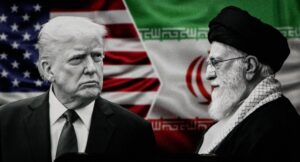
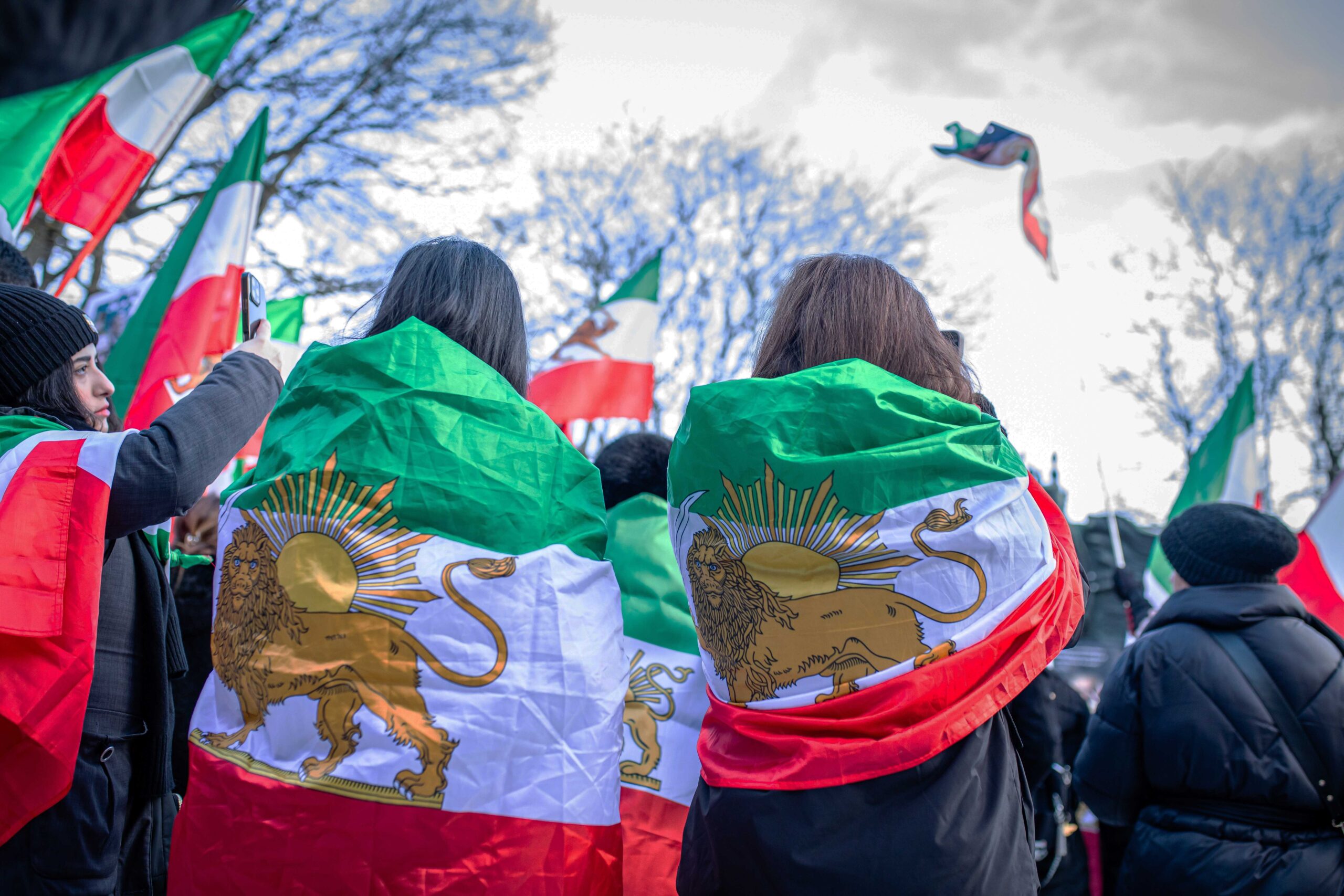
Iranian-American author and political activist Masih Alinejad, one of the most prominent figures of Iranian anti-regime resistance in recent decades, has spent years mobilizing women, exposing state violence; however, when the immediate future of Iran is imagined, it is not Alinejad who is widely envisioned as a potential bearer of authority, but a male figure whose legitimacy is derived from inheritance rather than struggle.
He was born a prince. She was born ordinary, but the world witnessed her powerful rise as the foremost voice of the Iranian opposition globally. The contrast reveals how deeply political authority remains tied to masculine lineage rather than revolutionary labour, a dynamic visible not only in the Middle East but also echoing in struggles for women’s political recognition worldwide. In other words, women fuel, men rule. For true transformation, this imbalance must be rectified.
Over recent decades, revolutions across the Middle East have consistently relied on women’s courage, labour, and visibility; yet, despite their indispensable roles in organizing protests, sustaining movements, documenting violence, and enduring brutal repression, women remain rarely recognized as rightful heirs to political power. This persistent exclusion reveals a deeper crisis in political imagination: power continues to be symbolically coded as masculine, preserving men’s exclusive claim to political futurity while foreclosing women’s rightful succession.
Sally: Political participation and the domestic order
Sally – an Egyptian woman and friend of this author, whose name was changed for this article – became active in politics through the 2011 uprising. Her story offers an intimate view of how revolutionary rupture reorganizes authority inside the home. Sally’s marriage was strained by her growing activism because her husband could not understand her political engagement as civic participation but as defiance of the gendered order that governed her role as wife and mother.
A lawyer by profession, Sally did not interpret this reaction as personal hostility but as structural. Authority, in her account, was assumed to be masculine by default, while women were expected to align themselves behind men rather than act as autonomous political subjects. By asserting an independent political voice, she disrupted not only public norms but domestic hierarchies as well. As her political carrier began, her marriage ended. Her experience reveals how political participation for women is inseparable from private risk. The family operates as a microcosm of political authority, disciplining women’s mobility and voice even as revolutions seem to open public spaces. The domestic foreclosure of women’s authority in much of the Middle East mirrors their later exclusion from formal political power, revealing a continuum rather than a contradiction between private discipline and public erasure; women may enter the streets, but the terms of authority remain unchanged.
Maryam Firouz: Revolutionary labour without succession
Prominent Iranian leftist politician Maryam Firouz, known as the Red Princess of Iran[i], came from an aristocratic Qajar family, but deliberately rejected her privilege by joining her country’s communist Tudeh Party primarily during the 1940s and early 1950s. Her political life unfolded across multiple regimes, each of which relied on revolutionary mobilization, yet ultimately consolidated power in male hands. After every political transition, from the 1953 coup to the post-1979 Islamic Republic, her revolutionary credentials failed to secure political authority; each time power was consolidated and mobilized, she faced punishment. Firouz endured arrest, exile, surveillance, and political marginalization until her death in 2008. Her trajectory demonstrates how revolutionary movements absorb women’s labour while excluding them from political succession.
Participation is welcomed during moments of rupture, but authority is redistributed along familiar gendered lines. The symbolic foundations of sovereignty remain intact, rendering women’s leadership provisional and expendable.
Malalai Joya: Recognition without power
Malalai Joya, an Afghan politician and activist, embodies a contemporary manifestation of a persistent dynamic. She became an overnight household name after fearlessly denouncing warlords and alleged war criminals, figures empowered as Afghanistan’s new rulers in the wake of the NATO- and US-led war on terror. Her bold intervention during a 2003 session of the constitutional assembly that was widely broadcast directly confronted entrenched power structures and resonated deeply with those demanding accountability and justice.
Joya’s voice was nothing less than revolutionary in Kabul, a war-torn capital emerging from years of brutal of civil war and the Taliban’s ruthless suppression of women’s public presence. As a Kabul based reporter at the time, this author witnessed first-hand Joya’s undeniable presence and unmatched bravery. Yet, courage alone proved insufficient to secure lasting political authority; her influence was steadily marginalized within formal institutions. In 2007, she was expelled from the National Assembly and soon after disappeared from public life, having maintained a low profile since.
Joya’s story[ii] exposes a recurring paradox: women who confront power openly and defiantly are often celebrated as symbols but systematically barred from institutional authority. Visibility becomes a substitute for genuine influence; recognition, a hollow stand-in for succession. Once the moment of upheaval fades, political legitimacy is reclaimed through familiar, exclusionary patterns.
Political imagination and structural constraint
The selection of these women is deliberate, as they represent ordinary individuals from the Middle East, everyday actors without prominent political lineage or affiliations that might otherwise overshadow their agency in political struggles. Their exceptionalism is forged through their activism, directly challenging prevailing narratives of political power in the region. Their stories collectively illuminate how ordinary women, devoid of inherited privilege have played pivotal roles in revolutionary movements, asserting agency in contexts that systematically marginalize them and reveal the structural mechanisms by which different systems and ideologies exclude women from formal authority.
Sally, an Egyptian woman largely devoid of political patronage or formal affiliations, was propelled by a profound political consciousness and an unwavering commitment to altering her country’s trajectory. For her, public protest was not merely a choice but a necessity. Her participation in the 2011 uprising at Tahrir Square embodied a deliberate rupture with gendered constraints on women’s political participation, foregrounding the essential role women played in precipitating the resignation of Hosni Mubarak. Although situated within a broader collective movement, Sally’s individual agency exemplifies how grassroots mobilization by ordinary women can disrupt entrenched patriarchal political orders and engender substantive social transformation.
Malalai Joya’s trajectory similarly exemplifies courageous resistance amid compounded marginalization. She grew up as a refugee displaced by the Soviet invasion of Afghanistan in the 1980s, followed by decades of war, and ascended to political prominence despite profound systemic barriers. While not entirely isolated, her vocal opposition during the male-dominated constitutional assembly, where she vociferously denounced warlords and patriarchal authority, was notably bold, culminating in her expulsion and marginalization. Yet, this act of defiance crystallizes the profound challenges women activists confront in contesting institutionalized gendered violence and authoritarian power structures.
While Maryam Firouz came from an aristocratic background[iii] and was noted for her exceptional beauty, she rejected her inherited privilege and consciously embraced ordinariness as a form of political praxis, becoming a symbol of inspiration for women who have traditionally perceived politics and activism as the exclusive province of elite actors. Her experience elucidates the intersection of gender and class hierarchies within political exclusion. Her influence extended beyond Iran’s borders, inspiring transregional solidarity among revolutionary women across the region. Her public visibility through widely circulated magazine images and newspaper publications challenged prevailing norms delimiting female political leadership, highlighting the historical persistence of women’s exclusion from formal political authority predating the Islamic Republic.
Seen in this light, the trajectories of public figures such as Maryam Firouz and Malalai Joya are not anomalies but extensions of the same logic Sally described. Taken together, these cases reveal a structural feature of revolutionary politics rather than a series of isolated exclusions. Political authority is not a neutral institution but a symbolic order shaped by enduring norms of legitimacy. Expanding participation does not, by itself, transform sovereignty. Inclusion can occur without any meaningful redistribution of power.
As Judith Butler has argued, norms of gendered authority shape the very imagination of political legitimacy, determining who is seen as a rightful bearer of power. These cases illustrate her point vividly: women may act, resist, and sustain movements, yet authority continues to be imagined as masculine, inherited, and protective rather than collective and transformative.
While these examples emerge from the Middle East, they reflect a broader pattern: women’s labour often fuels political movements without securing recognition as legitimate authorities. The tension between revolutionary participation and exclusion from political futurity illuminates a global challenge, showing how gendered hierarchies continue to shape authority in diverse contexts.
In sum, the persistent side-lining of women from formal political leadership, even as they bear the brunt of revolutionary labour, raises urgent questions about the future of governance and democracy in the Middle East. Without confronting and transforming the deeply gendered imagination of sovereignty itself, moments of upheaval risk reproducing the very hierarchies they seek to dismantle.
For revolutions to fulfil their promise of true transformation, women must be imagined not only as agents of resistance but as legitimate holders of power. This demands a fundamental rethinking of leadership, succession, and authority beyond patriarchal codes. Until such a shift occurs, political change will continue to rely on women’s courage while denying them the future they help create.
[i] BBC Persian (2008). “Death of Maryam Firouz” [in Farsi], 13 March 2008, retrieved from: https://www.bbc.com/persian/iran/story/2008/03/printable/080313_mf_firouz_obituary.
[ii] JWA (2015). “Lessons from Malalai Joya, Afghanistan’s Feminist Voice”, 12 March 2015, retrieved from: https://jwa.org/blog/risingvoices/lessons-from-malalai-joya-afghanistans-feminist-voice.
[iii] Omrani, S. (2023). “Iranian Influential Women: Maryiam Firouz (1913-2008)”, Iran Wire, 5 July 2023, retrieved from: https://iranwire.com/en/influential-women/118210-iranian-influential-women-maryam-firouz-1913-2008/.