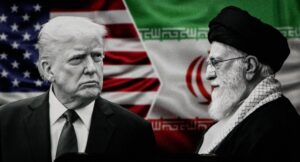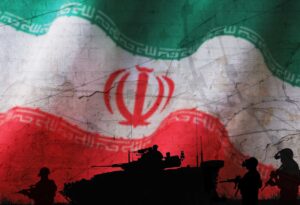
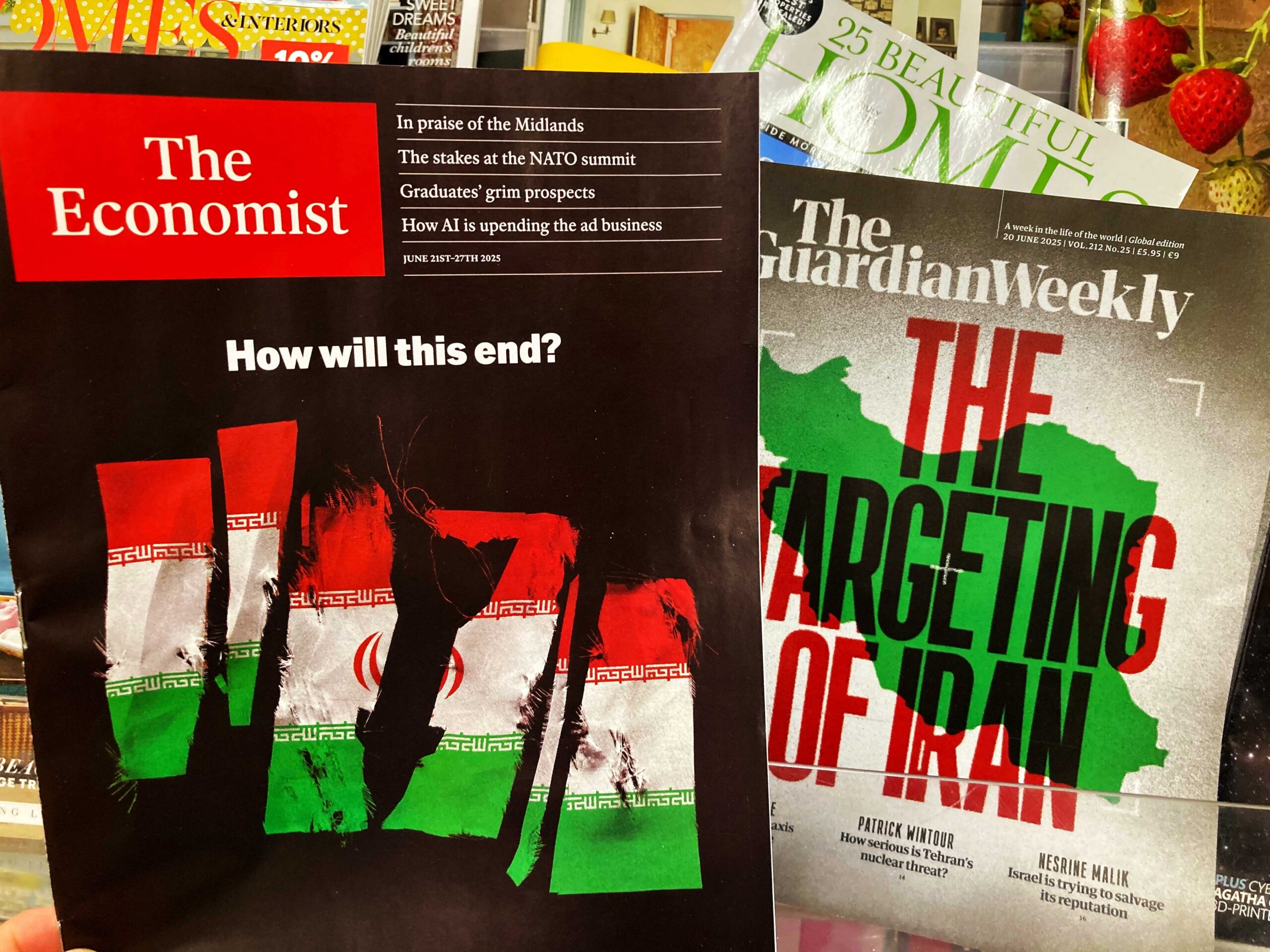
The joint U.S.-Israeli military campaign[i] launched on 28th February against Iran has so far resulted in the decapitation of a significant amount of Iran’s senior political and military leadership, including its supreme leader, Ayatollah Ali Khamenei. On 1st March, the streets of Tehran and other major Iranian cities saw crowds[ii] of people celebrating, setting off fireworks, and cheering for the death of their supreme leader. Hours later, those same streets were filled with mourners, clad in black, waving the regime’s flag, and holding portraits of the deceased Ayatollah. The mix of emotions across the Islamic Republic underscores a significant detail regarding regime change: regardless of what happens to the supreme leader, the regime itself remains intact.
This raises an important question: to what extent has the Iranian regime been weakened, and how likely is it to survive?
The regime’s unpopularity was evident in the past year, even before the brutal crackdown on protesters in January. Polls from June 2024 revealed[iii] that roughly 70 percent of Iranians – approximately 63 million people – oppose the continuation of the Islamic Republic. Still, there are reasons to believe that the Iranian regime could be left standing even after the military operations have ceased. Unlike previous cases in Libya, Iraq, and Syria, Iran will not succumb to regime change so easily since the political and social essence of the regime does not revolve around the cult of an autocratic leader, like Muammar Gaddafi, Saddam Hussein, or Bashar al-Assad, but on a religious political ideology. While the Islamic Republic has been ruled by a supreme leader, or Ayatollah, since the 1979 revolution, the soul of the regime is not based on the word of the Shiite clerics in Tehran, but on the Shiite ideals of the revolution itself. The Islamic Republic does not view the 1979 revolution as a finished event, but an eternal struggle against tyrannical enemies, foreign and domestic, who seek to destroy Iran’s Shiite identity and way of life. Resistance is not an option; it is the revolution’s identity and eschatological destiny.
The meaning of resistance
The motivations for the Islamic Republic’s commitment to resistance can be understood by examining the underlying symbolism and theological references of the current conflict. To Iranians, the only just and moral way to prosecute a war is to do so through martyrdom. Before his death, Ayatollah Khamenei assessed[iv] that a conflict with the U.S. and Israel should be conducted as “confrontation through the lens of Karbala.” This alludes to the Shiite story of Imam Hussein, who chose death over submission to an unjust ruler and became a martyr. The threat of war is not a means of diplomatic pressure, but a challenge for ideological survival. This is directly tied to the concept of Karbala, which, for Shiites, is not mere symbolism but a legitimate moral code to prevent the corruption of Islam by tyrannical rulers by any means necessary. It is the glorification of death-defying resistance over compromise in the face of existential threat.
The regime illustrates the persistent danger posed by its modern enemies through historical analogies. Ayatollah Khamenei’s comparison of Trump and Netanyahu to historical tyrants like Yazid, Nimrod, and the Egyptian pharaohs suggests that in a battle for survival, the Islamic Republic will die standing, as opposed to living on its knees. Serious military action against Iran could result in a nationalistic response that would galvanize its ninety million citizens, even those opposed to the regime, to take a stand against Washington. The more that Iranians feel as victims of U.S. aggression, the more that the Ayatollah’s death and the military’s struggle will be viewed as a symbol of resistance, and the easier it will be for the regime to remain in power. For the Shiite theocrats in Tehran, death does not signify defeat, but martyrdom.
The theme of resistance has an eschatological undertone from the Iranian perspective that cannot be underscored enough. For Iran, this is not merely a battle for the regime’s survival against the U.S. and Israel. As Ayatollah Khomenei once called it[v], it is a struggle against the “big satan” and the “little satan.” Although the founder of the Islamic Republic has been dead for 36 years, his Shiite Islamist political doctrine[vi] has continued to serve as the basis for Iran’s constitution.
The guardian jurist is the single most important political position in the Islamic Republic, as his authority derives from God. Understanding this political-theological theory is imperative to fathom why Iranians will adamantly resist a more qualitative and numerically superior military rival.
Guardianship of the Jurist
When Ayatollah Khomeini established the Islamic Republic after the 1979 revolution, he based its governance on the belief that a just government is possible if it is ruled by religious scholars who lead in accordance with Islamic law, otherwise known as the guardianship of the jurist. For this reason, the Ayatollah’s authority was never absolute, but checked by a multi-faceted political system[vii] with significant safeguards. The Assembly of Experts, Guardian Council, Expediency Council, and Supreme National Security Council all work in tandem to ensure the regime operates politically according to Khomenei’s doctrine. Meanwhile, physical security is led by the Islamic Revolutionary Guard Corps (IRGC). The constitution of the Islamic Republic has additional safeguards for the regime’s integrity in case of the Ayatollah’s demise, which are currently being enacted.
Iran’s supreme leader is elected by the Assembly of Experts, a body of 88 directly elected jurists who are constitutionally mandated with selecting and supervising the Ayatollah, even carrying out oversight in a private committee. The Guardian Council, which consists of six clerics and six jurists, makes sure the regime governs in accordance with Islamic law. In the event of disagreements between parliament and the Guardian Council, the Expediency Council, appointed by the Ayatollah, is tasked with mediating to ensure the system can continue to function in case of an institutional deadlock. In charge of policies concerning security and defense is the Supreme National Security Council, consisting of representatives from the Ayatollah, the various branches of the government, the military, and Iran’s intelligence apparatus. The internal and external physical security of the regime is sustained by the authority of the IRGC and its Basij militia, in addition to the intelligence agencies tracking foreign and domestic threats. This complex system of institutions was not meant to beef up the security of the regime, but rather, to ensure the regime’s survival if one element of the system had failed, or if the supreme leader was killed.
If it is the case of the latter, Article 111 of the Islamic Republic’s constitution stipulates what the regime must do if it is without a supreme leader. The article states that if the Ayatollah dies or becomes incapacitated, authority immediately transfers to an interim council[viii] composed of the president, the head of the judiciary, and a senior cleric selected through the Expediency Council. The goal of this interim council, especially during wartime, is not to expedite the delegation of authority or change the political system, but to be a process of clear negotiation that will lead to stability. Requiring decisions on a strict timeline would guarantee that succession does not transfer smoothly. This three-man provisional council[ix] assumes all leadership duties until the Assembly of Experts can finally choose a new supreme leader. In light of the death of Ayatollah Khamenei, the Islamic Republic is currently being led by President Masoud Pezeshkian, the chief justice of the Supreme Court; Gholam-Hossein Mohseni-Ejei; and a member of the Guardian Council, Ayatollah Alireza Arafi. Succession is an integral part of the Islamic Republic’s governance and authority, but it is not the deciding factor of its integrity.
Envisioning regime change
While both American and Israeli officials have called on the Iranian people to enact regime change, there are reasons to believe that the Islamic Republic will not be overthrown in the near future. In a wartime environment, especially one as securitized as Iran, people tend to be unorganized and too concerned for their own safety to be able to mobilize and conduct a popular uprising. The more chaotic and internally destabilized Iran becomes, the more there will be a need for order, which only the regime will be able to enforce. For this reason, any significant opposition movement or attempt at regime change would only arise once the fighting has ceased. This reality is one that President Trump himself alluded to while announcing[x] Operation Epic Fury in the early hours of 28th February: “To the great, proud people of Iran, I say to you tonight that the hour of your freedom is at hand. … When we are finished, take over your government. It will be yours to take.” President Trump’s decree is complicated by the fact that, despite intense American[xi] and Israeli[xii] support for regime change, no formal plan or internal movement in Iran has arisen to lead the people against the regime.
Among the options to lead an Iran free of theocratic rule, the most notable in Western media, but rather unpopular[xiii], as even President Trump himself now admits[xiv], is the son of the late Shah (monarch), the Crown Prince Reza Pahlavi. During the Twelve-Day War, the Crown Prince emerged as the most prominent Iranian opposition figure due to his public efforts[xv] to spur regime change in Iran. Immediately following the inception of the new conflict[xvi] between the United States, Israel, and Iran, the Crown Prince threw his hat into the ring[xvii] once more as a transitional leader.[xviii] Under his leadership, Iran’s foreign policy would undoubtedly undergo a complete reversal. The Crown Prince’s open support[xix] for Israel is no secret.[xx] He has even gone as far as to say that under his rule, Iran would enter into the Abraham Accords, the treaty alliance normalizing diplomatic relations between Israel and Muslim states. While pro-monarchists in the West believe the Crown Prince’s desire to lead is selflessly motivated[xxi] to save his country from a protracted war and economic backsliding, the Israeli funding[xxii] of Persian online campaigns promoting his leadership suggests that he is also Netanyahu’s favoured candidate.
A different and more destabilizing way to create regime change would be for the U.S. and Israel to exploit tensions between Iran’s ethnic minorities.[xxiii] This would not only destabilize Iran but also cause border conflicts with all of its neighbors: Turkey, Iraq, Azerbaijan, Turkmenistan, Afghanistan, and Pakistan. Persians account for only about 60 percent of Iran’s population. The other 40 percent mainly consists of Azeris, Kurds, Pashtuns, Arabs, Turkmen, and Baloch. Each minority group is connected with lands outside of Iran, such as the Azeris with Azerbaijan, Kurds with Kurdistan, Pashtuns with Afghanistan, Arabs with Iraq or the Gulf States, Turkmen with Turkmenistan, and the Baloch with Baluchistan.
Prolonged chaos could foment a rise in sectarian tensions in Iran and lead any of these groups to split off. U.S. officials have even said that President Trump expressed willingness to support groups[xxiv] within Iran willing to take up arms to overthrow the regime. This is evidenced by Trump’s recent phone call with Kurdish leaders in Iraq[xxv], who have thousands of militants near the Iraq-Iran border, and could join forces with the recently established Coalition of Political Forces of Iranian Kurdistan to fight Iran.[xxvi] While the U.S. has offered support, the violent boots-on-the-ground struggle required to overthrow the Islamic Republic will have to come at the expense of Iranian blood being spilled on Iranian streets.
The likelihood of regime change
On the opening day of the war, a missile strike[xxvii] likely targeting an IRGC barracks struck a nearby girls’ elementary school in the southern town of Minab, resulting in 175 deaths, almost all of whom were schoolgirls. On 3rd March, thousands of mourners filled the streets of Minab for the victims’ funeral. This tragic incident underscores the real threat that the United States and Israel could face, galvanizing the Iranian people to support the regime against them. If more strikes continue to miss their targets and kill civilians instead, the Iranian people will likely begin to see the U.S. and Israel as the eschatological threats the Ayatollah had made them out to be. These attacks could discourage Iranians from participating in the recent CIA and Mossad campaigns[xxviii] attempting to support dissidents[xxix] and extract information from Iranian citizens, which has worked in the past.[xxx] Still, the persuasion of the Iranian people by foreign intelligence or the inspiration to resist perceived U.S. and Israeli operations does not detract from the fact that for regime change to be successful, the required component is currently absent: a ground force willing to take the fight to the regime in the streets of Iranian cities.
Current U.S. military assets in the region are primarily naval and air-based, with a noticeable lack of a prominent infantry component. Historically, regime change could not be achieved through air and naval assets alone, as Libya, Iraq, and Syria suggest. While American warplanes, ships, and drones can easily target Iranian nuclear and missile facilities, military bases, ports, airfields, and anti-aircraft batteries, the soldiers in the Iranian army, IRGC, Basij, police, and other internal security services will remain active. In other words, once the U.S.-Israeli bombing campaign has concluded, the only security system controlling the country and its 90 million citizens at gunpoint will still be the regime itself.[xxxi] The security services loyal to the regime will still be numerous, armed, organized, and most importantly, ideologically motivated to carry out the 1979 revolution. As protests in the past two months have shown, the regime’s security apparatus will not hesitate to ensure the Islamic Republic’s integrity by silencing dissent using lethal force.[xxxii]
While U.S.-Israeli military action could destroy Iran’s offensive weapons capabilities, such as its nuclear program, missile facilities, aircraft, and navy, the small arms will remain in the hands of the regime’s troops. Regime change in Iran cannot be conducted without a ground assault, whether it is from a foreign military or any type of sectarian, separatist, anti-government, or insurgent group within Iran. For this alternative force to succeed, it must be numerous, armed, organized, and ideologically motivated to challenge the regime’s legitimacy. Currently, there is no significant opposition figure, like Ahmed al-Sharaa, or political collaborator, such as Delcy Rodriguez, who has emerged to lead the Iranian people. The assassination of Iran’s key political and military leaders will only ensure that the regime survives, just with different leadership, exactly as Ayatollah Khomenei had planned for in 1979. The death of Ayatollah Khamenei will not be the end of the regime, but rather, a test for it to survive and prove its legitimacy.
How will the war continue?
Senior Iranian officials have publicly stated[xxxiii] they will not negotiate with the United States, while President Trump, in an interview[xxxiv], said otherwise: “They want to talk, and I have agreed to talk, so I will be talking to them.” But what would Iran gain by negotiating with the United States once more? While President Trump could claim victory based on the Ayatollah’s death and the destruction of Iran’s nuclear and ballistic missile facilities, the Iranians may not want to end hostilities so easily. As previous experiences in the spring of 2025 and the past few weeks have revealed, military campaigns by the U.S. and Israel were started in the middle of diplomatic talks. This gives Tehran credible reasons to believe that negotiations with Washington are meaningless and only serve to catch the regime off guard before a major military operation. A longer, bloodier, and more costly war could better ensure the regime’s survival. Iran’s impending $589 million arms deal with Russia[xxxv], to acquire thousands of advanced shoulder-fired missiles over three years, and its agreement with China to purchase[xxxvi] anti-ship cruise missiles, suggest that Tehran has prepared for a drawn-out war[xxxvii] against Israel and the U.S. for its survival.
Iran’s continuation of military strikes against Israel and U.S. bases in the region could drain American[xxxviii] and Israeli defensive missile systems[xxxix], as was seen[xl] towards the end of the Twelve-Day War. Damaging oil and gas infrastructure in the Persian Gulf hurts the economies of the Gulf Cooperation Council and will inevitably increase regional instability.[xli] Continued attempts at blocking the Strait of Hormuz will raise energy prices and put international pressure on the U.S. and Israel to cease hostilities. The potential involvement of European countries would only serve to hurt the U.S.’s global image as the world’s most dominant military power. This could then embolden other actors, such as Russia or China, to move on their geopolitical ambitions, especially if the American stockpile of defensive missile systems, reserved for potential conflicts against Russia in Europe and China in East Asia[xlii], begins to run low.[xliii] This brings us to the logical truth: if Iran can continue to prosecute this war, why would it cease now?
A major difference in this conflict so far has been the severity of the American and Israeli approach to the war versus Iran’s. The killing of the supreme leader on the opening day of the war was meant to deliver a devastating blow to Iranian morale. Yet, Iran remained in the fight, carefully striking at Israel and U.S. bases across the region. The reason for this is simple: for every $35,000 Shahed drone launched[xliv] towards Israel or U.S. bases, a $12.7 million THAAD (Terminal High Altitude Air Defense) interceptor or $4 million Patriot interceptor will be used[xlv] to stop it. Just twelve days of strikes in June forced the U.S. to use 25 percent of its total supply of THAAD interceptors[xlvi], while Iran is believed to have used 35-55 percent of its medium-range ballistic missile arsenal.[xlvii] Before Operation Epic Fury began, General Caine, the chairman of the Joint Chiefs of Staff, warned[xlviii] that the U.S. did not have sufficient air and missile defence munitions and systems for a protracted conflict, and that the inability of regional allies to pull their weight would hinder operations. Recently, U.S. officials hinted that the war could expand inland[xlix] and last until September.[l] Iran’s response has forced the U.S. and Israel to adapt to what is shaping up to be a protracted war. The current conflict has become a test of stamina, and Iran is eager to compete. All that remains now is to see which side will bleed the other first. As long as the Iranian regime is unchallenged by a sizeable opposing ground force, it will likely remain in power. In the words[li] of former Israeli Defence Minister Yoav Gallant, “The coming weeks will shape the coming decades in the Middle East.”
[i] Williams, J., Uyengar, R. and Haltiwanger, J. (2026). “U.S., Israel Begin ‘Major Combat Operations’ in Iran”, Foreign Policy, 28 Ferbaury 2026, retrieved from: https://foreignpolicy.com/2026/02/28/us-israel-strike-iran-trump-nuclear-program-missiles/?tpcc=email_alerts&utm_source=Sailthru&utm_medium=email&utm_campaign=Email%20Alerts%3A%206%20Questions%20About%20Operation%20Epic%20Fury&utm_term=email_alerts.
[ii] Golbaum, C. and Hayeri, K. (2026). “’Iy’s Surreal’: Iranians in Disbelief After Supreme Leader Is Killed”, The New York Times, 1 March 2026, retrieved from: https://www.nytimes.com/2026/03/01/world/middleeast/iran-disbelief-khamenei-assassination.html.
[iii] Maleki, A. (2025). “Iranians’ Political Preferences in 2024”, The Group for Analyzing and Measuring Attitudes in Iran (GAMAAN), retrieved from: https://gamaan.org/wp-content/uploads/2026/02/Iranians-Political-Preferences-in-2024-GAMAAN-Report-English.pdf.
[iv] Hashem, A. (2026). “The United States Is Misreading Iran”, Foreign Policy, 23 February 2026, retrieved from: https://foreignpolicy.com/2026/02/23/trump-iran-war-misreading-khamenei-strategy-nuclear/.
[v] The Iran Primer (2023). “Iran: U.S. and Israeli Threats & Options”, 26 February 2023, retrieved from: https://iranprimer.usip.org/blog/2023/jan/26/iran-us-and-israeli-threats-options.
[vi] Safshekan, R. (N.D.). “The Source of Legitimacy in the Guardianship of the Jurist…”, Middle East Political Science, retrieved from: https://pomeps.org/the-source-of-legitimacy-in-the-guardianship-of-the-jurist-historical-genealogy-political-implications.
[vii] Council on Foreign Relations (2026). “The Islamic Republic of Iran’s Power Centers”, 2 March 2026, retrieved from: https://www.cfr.org/articles/islamic-republics-power-centers.
[viii] Ayoub, A. (2026). “The Article 111 Deadlock: Why the Islamic Republic Has No Legal Successor”, The Times of Israel, 1 March 2026, retrieved from: https://blogs.timesofisrael.com/the-article-111-deadlock-why-the-islamic-republic-has-no-legal-successor/#%3A~%3Atext%3DUnder%20Article%20111%2Cchoose%20a%20replacement.
[ix] Sharma, Y. (2026). “Who are the council members temporarily in charge of Iran?”, 1 March 2026, retrieved from: https://www.aljazeera.com/news/2026/3/1/who-are-the-council-members-temporarily-in-charge-of-iran.
[x] PBS News (2026). “Read Trump’s full statement on Iran attacks”, 28 February 2026, retrieved from: https://www.pbs.org/newshour/world/read-trumps-full-statement-on-iran-attack.
[xi] Kanno-Youngs, Z., Sanger, D.E. and Pager, T. (2026). “Trump Says War Could Last Weeks and Offers Contradictory Visions of New Regime”, 1 March 2026, retrieved from: https://www.nytimes.com/2026/03/01/us/politics/trump-iran-war-interview.html.
[xii] Yair Lapid (2026). “A message to the people of Iran”, X/Twitter, 28 February 2026, retrieved from: https://x.com/yairlapid/status/2027645683948200092?s=48&t=N1WKo30dosTBSUETvWnnrA.
[xiii] Maleki (2025). “Iranians’ Political Preferences in 2024”.
[xiv] Al Jazeeera (2026). “Worst-case scenario: Trump weighs replacing Khamenei as leader of Iran”, 3 March 2026, retrieved from: https://www.aljazeera.com/news/2026/3/3/worst-case-scenario-trump-weighs-replacing-khamenei-as-leader-of-iran#flips-#%3A~%3Atext%3DStill%2C%20Trump%20has%2Csaid%20of%20Pahlavi:0.
[xv] Times News (2025). “Iran’s Crown Prince Calls for Uprising Against Ayatollah”, YouTube, retrieved from: https://www.youtube.com/watch?v=OWKrBo_iQJ8.
[xvi] Pahlavi, R. (2026). “My dear compatriots…”, X/Twitter, 28 February 2026, retrieved from: https://x.com/pahlavireza/status/2027648281577132145?s=48&t=N1WKo30dosTBSUETvWnnrA.
[xvii] Pahlavi, R. (2026). “Thanks to President Trump, the hour of Iran’s freedom is at hand”, The Washington Post, 28 February 2026, retrieved from: https://www.washingtonpost.com/opinions/2026/02/28/reza-pahlavi-iran-freedom-trump/.
[xviii] Pahlavi (2026). “My dear compatriots…”.
[xix] Al Jazeera (2026). “Reza Pahlavi vows to recognize Israel, end nuclear programme if he led Iran”, 15 January 2026, retrieved from: https://www.aljazeera.com/video/newsfeed/2026/1/15/reza-pahlavi-vows-to-recognise-israel-end-nuclear-programme-if-he-led-iran.
[xx] CBN News (2024). “Pahlavi Visit to Israel Stirs Hope for New Era in Iran”, YouTube, retrieved from: https://www.youtube.com/watch?v=3HELJ_MxYJQ.
[xxi] National Conservatism (2024). “A Conference in Washington, DC – Crown Prince Reza Pahlavi”, retrieved from: https://nationalconservatism.org/natcon-4-2024/presenters/crown-prince-reza-pahlavi/.
[xxii] Megiddo, G. and Benjakob, O. (2025). “The Israeli Influence Operation Aiming to Install Reza Pahlavi as Shah of Iran”, Haaretz, 3 October 2025, retrieved from: https://www.haaretz.com/israel-news/security-aviation/2025-10-03/ty-article-magazine/.premium/the-israeli-influence-operation-in-iran-pushing-to-reinstate-the-shah-monarchy/00000199-9f12-df33-a5dd-9f770d7a0000.
[xxiii] Friedman, T.L. (2026). “How to Think About Trump’s War With Iran”, The New York Times, 2 March 2026, retrieved from: https://www.nytimes.com/2026/03/02/opinion/trump-iran-war-future.html?searchResultPosition=1.
[xxiv] The Wall Street Journal (2026). “Iran Conflict, March 3, 2026…”, 3 March 2026, retrieved from: https://www.wsj.com/livecoverage/iran-israel-us-strikes-2026?mod=Searchresults&pos=1&page=1&%3A~%3Atext=Trump%20is%20open%20to%20supporting%20groups%20in%20Iran%20willing%20to%20take%20up%20arms%20to%20dislodge%20the%20regime%2C%20U.S.%20officials%20said.
[xxv] Ravid, B. and Caputo, M. (2026). “Scoop: Trump calls Kurdish leaders in Iran war effort”, Axios, 3 March 2026, retrieved from: https://www.axios.com/2026/03/02/trump-iran-war-kurds-iraq.
[xxvi] Frantzman, S. (2026). “Iranian Kurdish groups unite against Tehran regime…”, FDD’s Long War Journal, 27 February 2026, retrieved from: https://www.longwarjournal.org/archives/2026/02/iranian-kurdish-groups-unite-against-tehran-regime-as-iraqi-militias-threaten-kurdistan-region.php.
[xxvii] The New York Times (2026). “Israel Begins ‘Broad Wave of Strikes’ on Iran’s Infrastructure”, 3 March 2026, retrieved from: https://www.nytimes.com/live/2026/03/03/world/iran-war-israel-lebanon-trump#iran-school-bombing-children.
[xxviii] Ynet (2026). “CIA follows Mossad with appeal to Iranians in Persian”, 24 February 2026, retrieved from: https://www.ynetnews.com/article/bjbhcdiowe.
[xxix] Alarabiya English (2025). “Israel’s Mossad tells Iranian protesters ‘We are with you’”, 31 December 2025, retrieved from: https://english.alarabiya.net/News/middle-east/2025/12/31/israel-s-mossad-tells-iranian-protesters-we-are-with-you-.
[xxx] The Jerusalem Post (2025). “’Mossad X account says hundreds of IRGC members fed up with regime have reached out for help”, 3 July 2025, retrieved from: https://www.jpost.com/israel-news/article-859948.
[xxxi] Gambrell, J. (2026). “More than 7,000 dead in Iran’s crackdown on protests, activists say”, PBS News, 12 February 2026, retrieved from: https://www.pbs.org/newshour/world/more-than-7000-dead-in-irans-crackdown-on-protests-activists-say.
[xxxii] HRA Iran (2026). “A 50 Day Record of Iran’s 2025-2026 Nationwide Protests”, 23 February 2026, retrieved from: https://www.hra-iran.org/the-crimson-winter-a-50-day-record-of-irans-2025-2026-nationwide-protests/#%3A~%3Atext%3DAcross%20the%20first%2CTotal%20fatalities%3A%207%2C007.
[xxxiii] Ali Larijani (2026). “There will be no negotiations with US…”, X/Twitter, 2 March 2026, retrieved from: https://x.com/alilarijani_ir/status/2028323835938832483?s=48&t=N1WKo30dosTBSUETvWnnrA.
[xxxiv] Scherer, M. (2026). “I have Agreed to Talk”, The Atlantic, 1 March 2026, retrieved from: https://www.theatlantic.com/national-security/2026/03/trump-iran-attack-negotiations/686201/.
[xxxv] Reuters (2026). “Iran agreed secret shoulder-fired missile deal with Russia, FT reports”, 22 February 2026, retrieved from: https://www.reuters.com/world/middle-east/iran-agreed-secret-shoulder-fired-missile-deal-with-russia-ft-reports-2026-02-22/.
[xxxvi] Irish, J., HAfezi, P. and Finch, G. (2026). “Iran nears deal to buy supersonic anti-ship missiles from China”, Reuters, 24 February 2026, retrieved from: https://www.reuters.com/world/china/iran-nears-deal-buy-supersonic-anti-ship-missiles-china-2026-02-24/.
[xxxvii] NBC News (2026). “’We are waiting for them’: Iran’s foreign minister on a possible U.S. ground invasion”, 5 March 2026, retrieved from: https://www.nbcnews.com/video/iranian-foreign-minister-says-iran-is-ready-for-a-possible-u-s-ground-invasion-258765893849.
[xxxviii] Halfbinger, D.M. (2026). “Israel Facing Prospect of War With a Depleted Missile Defense”, The New York Times, 27 February 2026, retrieved from: https://www.nytimes.com/2026/02/27/world/middleeast/israel-stockpile-missile-interceptors.html.
[xxxix] Holliday, S. (2025). “U.S. Races to Defend Israel as It Burns Through Missile Interceptors”, The Wall Street Journal, 20 June 2025, retrieved from: https://www.wsj.com/world/middle-east/u-s-races-to-defend-israel-as-it-burns-through-missile-interceptors-2909e49d.
[xl] Holliday, S. (2025). “Israel Is Running Low on Defensive Interceptors, Official Says”, The Wall Street Journal, 18 June 2025, retrieved from: https://www.wsj.com/world/middle-east/israel-is-running-low-on-defensive-interceptors-official-says-fd64163d.
[xli] Syrian Arab News Agency (2026). “GCC Chief: Continued Iranian attacks reflect efforts to destabilize region”, 3 March 2026, retrieved from: https://sana.sy/en/international/2300223/.
[xlii] Fox, A.C. (2026). “Iran, Israel, and the U.S. Are Racing the Clock”, Foreign Policy, 2 March 2026, retrieved from: https://foreignpolicy.com/2026/03/02/iran-israel-us-trump-war-air-defense-missiles-drones/?tpcc=fp_live.
[xliii] Bennett, B. and Popli, N. (2026). “Trump’s Iran War Is Burning Through US Weapons Stockpiles, Raising Concerns From Ukraine to Taiwan”, Time, 4 March 2026, retrieved from: https://time.com/7382582/trump-iran-war-weapons-stockpiles/.
[xliv] Varghese S. et al. (2026). “Iran Fires Cheap Drones Into Arab Countries”, The New York Times, 1 March 2026, retrieved from: https://www.nytimes.com/2026/03/01/world/middleeast/iran-fires-drones.html.
[xlv] JINS (2025). “Missile and Interceptor Cost Estimates During the U.S.-Israel-Iran War”, 21 July 2025, retrieved from: https://jinsa.org/wp-content/uploads/2025/07/Cost-Estimates-During-the-U.S.-Israel-Iran-War-07-21-25.pdf.
[xlvi] Mezzofiore, G., Qlblawl, T. and Araujo, M. (2025). “US used about a quarter of its high-end missile interceptors in Israel-Iran war, exposing supply gap”, CNN World, 31 July 2025, retrieved from: https://edition.cnn.com/2025/07/28/middleeast/us-thaad-missile-interceptor-shortage-intl-invs.
[xlvii] Cicurel, A. (2025). “Iranian Ballistic Missile Estimates”, JINSA, 26 June 2026, retrieved from: https://jinsa.org/jinsa_report/iranian-ballistic-missile-estimates-6-26-update/.
[xlviii] The Washington Post (2026). “Trump’s top general foresees acute risks in an attack on Iran”, 23 February 2026, retrieved from: https://www.washingtonpost.com/national-security/2026/02/23/dan-caine-iran-risk-trump/.
[xlix] McLeary, P. (2026). “War with Iran has ‘only just begun’, Hegseth says”, Politico, 4 March 2026, retrieved from: https://www.politico.com/news/2026/03/04/hegset-iran-war-just-begun-00811889.
[l] Toosi, N., Detsch, J. and McLeary, P. (2026). “Inside the Trump administration’s scramble to support its own war”, Politico, 4 March 2026, retrieved from: https://www.politico.com/news/2026/03/04/evacuation-middle-east-iran-war-00812898.
[li] Yoav Gallant (2026). “The coming weeks will share…”, X/Twitter, 27 February 2026, retrieved from: https://x.com/yoavgallant/status/2027398661185896919?s=48&t=N1WKo30dosTBSUETvWnnrA.