
The Gulf Cooperation Council (GCC) states increasingly occupy a central position in global geopolitics. Their role as energy producers, logistics hubs, and emerging centres of finance and technology has drawn growing international attention. At the same time, the region is frequently discussed in Western media through the lens of geopolitical rivalry, regional instability, and concerns about political governance.
While Western coverage often emphasizes conflict dynamics, governance debates, and structural vulnerabilities, policymakers and observers within the GCC frequently frame security and political legitimacy through the lenses of stability, economic transformation, and institutional capacity.
Understanding this divergence does not require dismissing legitimate criticism or political concerns. Rather, it requires recognizing that different analytical frameworks shape how developments in the Gulf are interpreted and communicated. In the context of heightened tensions with Iran and recurring regional flare-ups, these competing frames become particularly visible, as the Gulf is alternately portrayed as a fragile security perimeter and as a relatively stable core in a turbulent neighbourhood.
Western media narratives about the Gulf
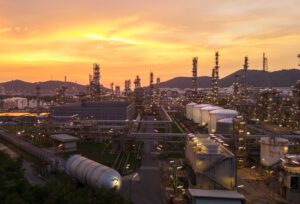
Western coverage frequently portrays the Gulf primarily through the lens of instability and geopolitical tension. Reporting often highlights themes such as Iran as a persistent regional threat, proxy conflicts and military escalation and the vulnerability of critical infrastructure, particularly energy facilities. Within this framework, the region is often depicted as structurally exposed to crisis dynamics, where stability depends heavily on external security guarantees or strong internal control mechanisms. Some commentaries also describe Gulf stability as a “managed illusion”[i], suggesting that public order and economic growth are sustained primarily through surveillance, repression, or geopolitical protection rather than resilient institutional development.
In such accounts, GCC states are often portrayed less as autonomous regional actors and more as dependents on security guarantees whose fate is closely tied to the trajectory of the Iran conflict and great-power deterrence.
Another recurring narrative concerns Gulf diplomacy. When GCC states maintain diplomatic and economic relations with multiple global actors, including the United States, China, and regional rivals, Western commentary sometimes interprets these policies as evidence of opportunistic balancing[ii], hedging without clear alignment, or reluctance to confront regional threats.
Within this framing, Gulf diplomacy may appear inconsistent or strategically ambiguous. This perception has been reinforced during recent episodes of tension with Iran, when calls in Western debates for clearer alignment are contrasted with GCC efforts to preserve de-escalatory channels and diversified partnerships.
Large-scale economic transformation initiatives across the GCC, ranging from technological investments and the expansion of tourism to urban mega-projects, have also attracted significant attention. Western reporting often focuses on questions regarding financial sustainability, environmental implications, political legitimacy, and reliance on migrant labour.[iii]
While these concerns are important elements of public debate, the broader transformational ambitions of Gulf economic strategies sometimes receive comparatively less analytical attention.
GCC Perspectives
For many Gulf states, security is increasingly defined in economic and societal terms, not only
military ones.[iv] Economic diversification programs, international investment strategies, and large infrastructure projects depend heavily on regional stability, predictable geopolitical relations, and long-term investor confidence.
Escalation with Iran or other regional actors therefore carries high economic costs. In regional policy discourse, this creates strong incentives for de-escalation, risk management, and the maintenance of functional normality even during periods of heightened tension.
Rather than signalling indecision, the Gulf’s multi-directional diplomacy is often understood locally as strategic risk diversification.[v] Maintaining working relationships with several global powers allows Gulf states to reduce dependence on a single security guarantor and maintain flexibility in a rapidly changing international system.
From a regional perspective, diversification of alliances and economic ties forms part of a broader strategy of resilience rather than a posture of strategic ambiguity.
Public expectations in many GCC societies are closely linked to economic opportunity, infrastructure development, and social stability. International surveys frequently highlight the importance of safety and political stability[vi] in shaping positive perceptions of Gulf cities among residents and expatriates.
Policies that maintain domestic calm and economic growth therefore reinforce state legitimacy and strengthen the social contract between governments and societies.
Case study: The Gulf and diverging narratives
Recent Western coverage has occasionally portrayed Dubai as a luxury hub suddenly exposed to geopolitical instability[vii] during periods of regional tension. Reports often emphasize missile threats, concerns among expatriates, and the vulnerability of Gulf economic hubs located near conflict zones.
Within this framing, Dubai’s reputation as a global safe haven for investors and international residents appears potentially fragile.
Within the region, however, the same developments are frequently interpreted differently. Local narratives tend to emphasize institutional resilience[viii], effective crisis management, and the continuity of economic and social life.
Economic data further complicates simplified narratives of fragility. Dubai welcomed nearly 20 million international visitors in 2025[ix], marking a new tourism record, while hotel occupancy rates remained among the highest globally.
From a regional perspective, these indicators reinforce the argument that economic momentum has remained resilient despite geopolitical tensions.
Large international events hosted in the Gulf are frequently interpreted in Western media as attempts at “sports-washing”[x] or reputation management. Criticism accompanied events such as Expo 2020 in Dubai, the FIFA World Cup in Qatar, and COP28.
Within GCC policy discourse, however, such events are often framed as part of broader soft power strategies aimed at diversifying national economies, attracting international investment, and positioning Gulf cities as global meeting points.
Western narratives about GCC governance[xi] frequently highlight restrictions on political expression, the absence of electoral democracy, and concerns regarding migrant labour conditions. Human rights organizations and investigative journalism play an important role in documenting these issues.
Within GCC societies, however, governance is often evaluated through somewhat different criteria, emphasizing economic development, administrative capacity, infrastructure provision, and political stability.
The divergence between Western and Gulf narratives therefore often reflects different evaluative frameworks rather than fundamentally different realities.
Conclusion
Understanding this divergence is essential for interpreting both media narratives and the policy strategies emerging from the Gulf region today. In the context of ongoing regional tensions, Western and GCC narratives do not merely describe events; they also shape the range of policy responses considered legitimate or feasible.
For effective transregional dialogue, policy analysis in Europe and North America may need to engage more systematically with regional perspectives and data, moving beyond one-dimensional portrayals of the Gulf as either a fragile frontline or an unproblematic success story.
[i] Esfandiary, D. (2025). “How a Single Strike Rattled the Gulf’s Illusion of Stability”, Time, 1 July 2025, retrieved from: https://time.com/7299042/strike-rattled-gulfs-illusion-stability/.
[ii] Saade, C. (2025). “Hedging at the Crossroads: Saudi Arabia’s Strategic dilemma Between U.S. Security Ties and Chinese Economic Engagement”, NAPF, 28 July 2025, retrieved from: https://www.napforum.org/policy-briefs/hedging-at-the-crossroads-saudi-arabia-s-strategic-dilemma-between-u-s-security-ties-and-chinese-economic-engagement.
[iii] Human Rights Watch (2024). “Saudi Arabia’s ‘Giga-Projects’ Built on Widespread Labor Abuses”, 4 December 2024, retrieved from: https://www.hrw.org/report/2024/12/04/die-first-and-ill-pay-you-later/saudi-arabias-giga-projects-built-widespread.
[iv] Ali, L. (2025). “Middle Powers in a Multipolar World: The Evolving Role of Gulf States in Global and Regional Order”, Gulf Research Center“, 15 October 2025, retrieved from: https://www.grc.net/single-commentary/317.
[v] Dr Sherwood, L. „Risk Diversification and UAE Foreign Policy“, retrieved from: https://www.academia.edu/18483969/Risk_Diversification_and_UAE_Foreign_Policy.
[vi] John, I. (2021). “UAE: 95% of expats feel safe, says new study”, Khaleej Times, 18 May 2021, retrieved from: https://www.khaleejtimes.com/business/uae-95-of-expats-feel-safe-says-new-study.
[vii] Davies, A. and Pomeroy, G. (2026). “Influencers tell of shock as Iran hits Dubai’s luxury landmarks”, BBC News, 2 March 2026, retrieved from: https://www.bbc.co.uk/news/articles/c875rjd990go.
[viii] Abu Dhabi Media Office (2026). “Abu Dhabi’s Emergencies, Crises and Disasters Management system…”, 9 March 2026, retrieved from: https://www.mediaoffice.abudhabi/en/security/abu-dhabis-emergencies-crises-and-disasters-management-system-maintains-ongoing-assessment-of-regional-developments-and-affirms-stability-across-the-emirate/.
[ix] Government of Dubai (2026). “Dubai welcomes 19.59 million visitors in third record year”, 9 February 2026, retrieved from: https://www.dubaidet.gov.ae/en/newsroom/press-releases/dubais-tourism-industry-achieves-third-successive-record-breaking-year.
[x] ECDHR. “How is the UAE using Dubai Expo to whitewash human rights violations”, retrieved from: https://www.ecdhr.org/how-is-the-uae-using-dubai-expo-to-whitewash-human-rights-violations/.
[xi] Walker, S. (2023). “Human Rights in the Gulf Cooperation Council (GCC) States: Prospects for Positive Change”, Contemporary Review of the Middle East, 10(2).