The second round of U.S.–Israeli attacks on Iran have undone decades of Gulf statecraft built around stability, external security guarantees, and regional hedging.
Already being dubbed “Gulf War III,”[i] the ongoing joint US-Israeli strikes on Iran and the retaliatory strikes across the Gulf mark a level of regional conflict unlike anything some of these states have experienced in their short histories. Living in a persistently volatile neighbourhood has meant that a central component of their state-building project has been to insure themselves against the ambitions of more powerful and often expansionist neighbours.
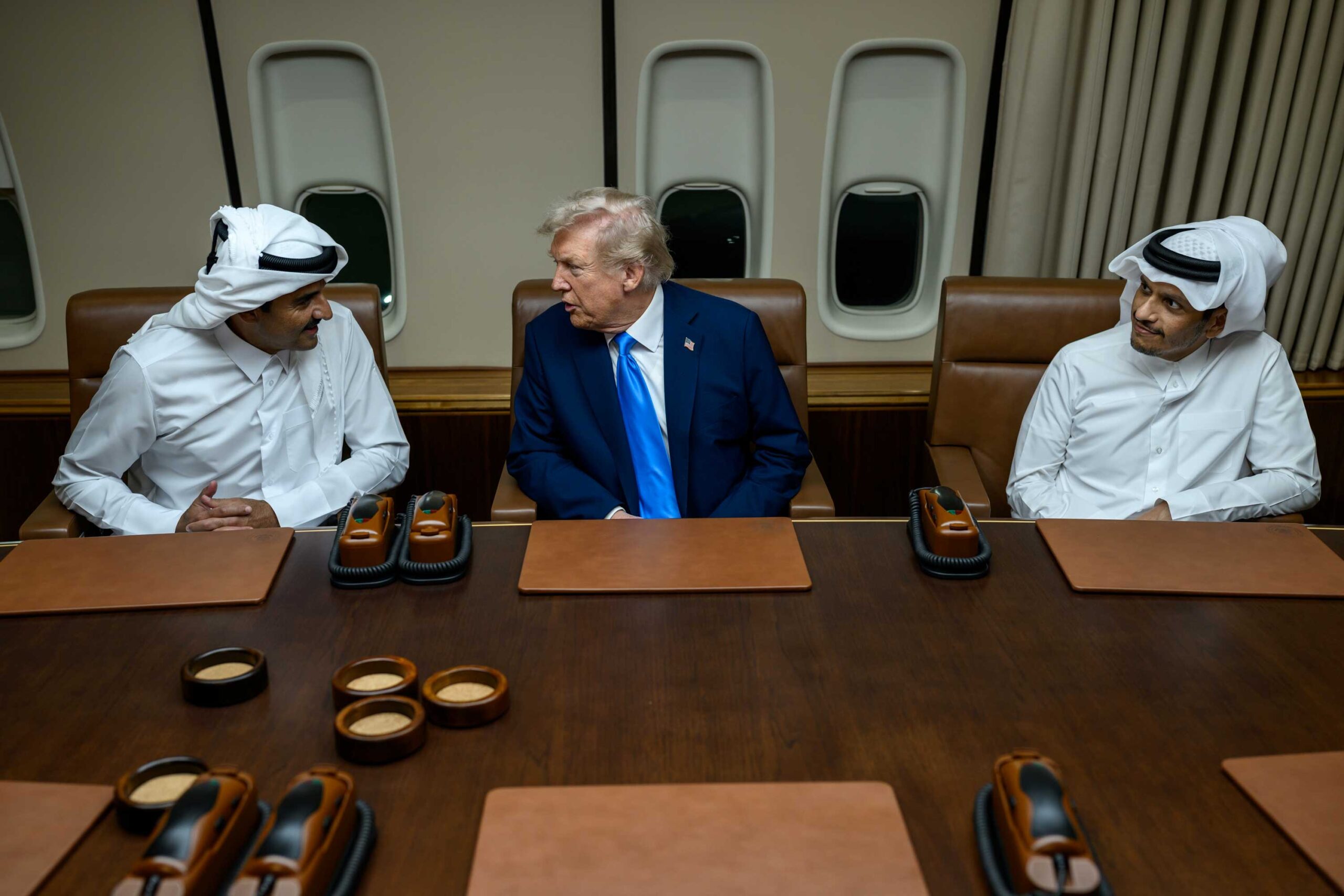
Despite confronting the Iranian threat for decades, Gulf states were largely united in cautioning the United States, their close ally and security partner, against pursuing an all-out war aimed at regime change in Iran. Several even went so far as to deny the permission to use their territory or airspace for strikes. Yet, with the exception of Oman and to some extent Saudi Arabia, most now find themselves in the bull’s eye of Iran’s fury.
While the war has clearly exposed the limits of the United States as the Gulf’s security guarantor, it has also undermined the credibility[ii] of the Gulf states’ professed neutrality in the U.S.–Israeli war against Iran. More troubling still, even as they confront the onslaught of Iran’s attacks together, GCC states are likely to draw divergent lessons from the crisis.
Exhausting all options for a viable security partnership
In International Relations theory and specifically pursued by small states, “hedging” predominantly refers to insurance-seeking behaviour under situations of high uncertainty and high stakes, where a rational state avoids taking sides and pursues opposite measures vis-à-vis competing powers to have a fallback position. It was in the aftermath of the first Gulf War, specifically Operation Desert Storm, that Gulf states tethered[iii] themselves more tightly to the American security umbrella. The post-war agreements led to a “mushrooming” of U.S. bases in the region, including the stationing of the Fifth Fleet in Bahrain and Al Udeid Air Base in Qatar. The U.S. also became the primary supplier of advanced weaponry, with over $198 billion in arms sales to the GCC between 2009 and 2016, and over $130 billion[iv] more between 2015-2023.
However, in the past decade, Gulf states – particularly the UAE and Saudi Arabia – have been expanding their security framework to include defence cooperation with China[v] and even Israel.[vi] More recently, the Strategic Mutual Defence Agreement (SMDA) was signed in Riyadh between Saudi Arabia and Pakistan. As the war enters its third week, the Abraham Accords signatories, the UAE and Bahrain, continue to face the brunt of Iranian attacks with no visible[vii] support from Israel, while Saudi Arabia is still mulling over to activate its SMDA with Pakistan
Learning all the wrong lessons
Three weeks in, the Gulf states continue to find themselves in an uncharted territory, with no good options except to work collectively towards de-escalating tensions with Iran. Yet the official statements coming out of most Gulf states, barring Oman, reflect a deliberate myopic understanding of the conflict engulfing the region that has the potential of reshaping the Middle East for generations to come.
For the UAE and Bahrain, it is perhaps understandable that they would exercise caution in directly blaming either the United States or Israel for starting the war, let alone condemn the decision to launch an attack on Iran while negotiations over its nuclear program were still underway. In this vein, the draft resolution tabled by Bahrain at the United Nations Security Council on behalf of the Gulf Cooperation Council, which was eventually adopted with 13 votes in favour, condemned only Iran for the “egregious attacks” on the Gulf states and Jordan, while making no reference to the United States or Israel.
Qatar, whose sovereignty has been breached for the third time in less than a year, has condemned Iran’s retaliatory strikes on its territory while responding more cautiously to repeated challenges to its mediator role by the United States and Israel. Two weeks into the war, when a CBS News host asked[viii] Majid Al Ansari, advisor to the Qatari prime minister, whether Qatar considered it a mistake for President Trump and Israel to start the war, he responded categorically: “It is not prudent for me to assess or classify this war in any way.”
The moment of truth
As discussed, there is little doubt that the Gulf states, particularly the smaller countries of the UAE, Qatar, Bahrain, and Kuwait, have long feared the arrival of this moment and had invested heavily in recalibrating their security playbook. Yet the escalation on 28 February 2026 revealed an uncomfortable truth. The very status quo that sustained the Gulf’s stability also produced the fragility now confronting it.
Now is the time to recalibrate again and devise a security strategy that reflects the interests of the broader Middle East region and not just the GCC. The war may prompt Gulf states to reassess their security relationships more fundamentally. In doing so, they will need to weigh the implications of Israel’s growing regional assertiveness and episodes of unilateral escalation alongside the enduring challenges posed by Iran, a neighbouring regional power with which they share deep historical ties but also significant strategic tensions.
[i] Cochrane, J.H. et al. (2026). “Gulf War III Or Cold War II: Iran Truth And Consequences”, Hoover Institution, 6 March 2026, retrieved from: https://www.hoover.org/research/gulf-war-iii-or-cold-war-ii-iran-truth-and-consequences.
[ii] Nereim, V. et al. (2026). “U.S.-Made Launcher Fired Missiles From Bahrain Toward Iran, Video Shows”, The New York Times, 13 March 2026, retrieved from: https://www.nytimes.com/2026/03/13/world/middleeast/bahrain-us-missile-strike-iran.html.
[iii] Ford, R. (2023). “US security policy in the Gulf: Changes and constants” Al Majalla, 15 August 2023, retrieved from: https://en.majalla.com/node/297511/politics/us-security-policy-gulf-changes-and-constants.
[iv] Al-Mohanadi, R. (2025). “As Europe Adjusts to Life Witout U.S. Security Umbrella, Lessons for GCC Abound”, Middle East Council on Global Affairs, 3 April 2025, retrieved from: https://mecouncil.org/blog_posts/as-europe-adjusts-to-life-without-u-s-security-umbrella-lessons-for-gcc-abound/.
[v] Bakir, A. and Al-Shamari, N. (2024). “The art of hedging…”, Third World Quarterly, 46(7), retrieved from: https://www.tandfonline.com/doi/full/10.1080/01436597.2025.2509574#d1e174.
[vi] Hoffman, J. (2022). “The Abraham Accords and the Imposed Middle East Order”, The National Interest, 3 October 2022, retrieved from: https://nationalinterest.org/blog/middle-east-watch/abraham-accords-and-imposed-middle-east-order-205136.
[vii] Hale, E. (2026). “Australia to send missiles to UAE, surveillance plane to help Gulf defence”, Al Jazeera, 10 March 2026, retrieved from: https://www.aljazeera.com/news/2026/3/10/australia-to-send-missiles-to-uae-surveillance-plane-to-help-gulf-defence.
[viii] CBS News (2026). “Dr. Majed Al-Ansari, Qatar’s advisor to the prime minister…”, Instagram, 12 March 2026, retrieved from: https://www.instagram.com/reel/DVwMTJCkQ0N/?igsh=NDZybnJocmZoMGs5.