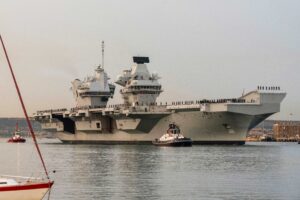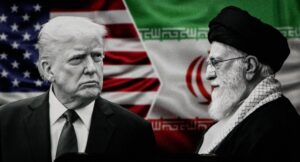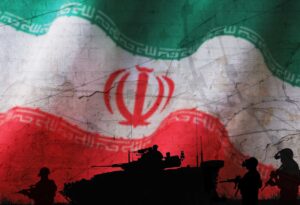
Widespread Iranian protests that began in December 2025[i] served as another catalyst for the US to enhance its military presence in the region and, at the same time, kick off a new series of nuclear talks with Iran. The brutal crackdown on protesters prompted U.S. President Donald Trump to threaten military intervention[ii], only to back down two days later.[iii] The mixed messages were followed by military build-up in the region.[iv] Furthermore, the U.S. aircraft carrier Abraham Lincoln entered the region[v], conveying clearly that if Iran’s theocratic regime does not cave in to U.S. demands, airstrikes would follow.
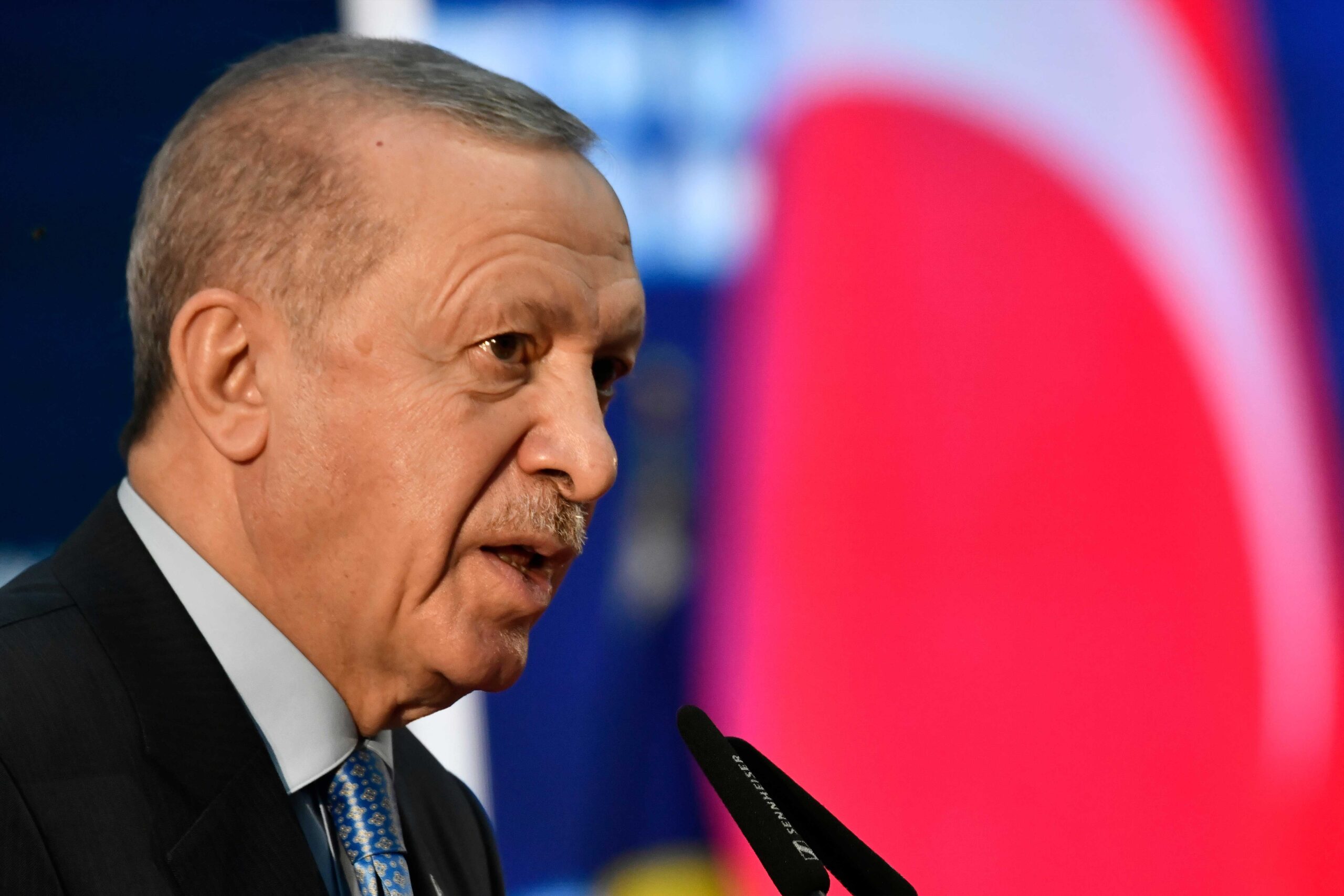
The massive blow that Iran endured from Israel’s Operation Rising Lion in June 2025, coupled with the U.S. bombardment of the country’s nuclear installations left Tehran ailing and revealed an intimidated regime on the brink of being overthrown. Besides doubts about the effectiveness of a limited air campaign carried out by the US and its allies in overthrowing the regime, the important question is whether such an outcome would favour the overall stability of the Middle East. Israel is also facing a major security dilemma, having to choose between a weakened Iran and a geopolitically more ambitious Turkey in the region, which may choose to bankroll a Sunni wave of adversaries, thus initiating a new security-related vicious circle. Erdoğan already proclaims himself as the “vanguard of the oppressed pious Sunni Muslim nation and the central pillar of the Ummah”[vi] (religious community), and Iran’s weakening would undoubtedly lead to further opportunities for him to realize his ambitions.
Erdoğan’s pivot to the Middle East
The Turkish President, Recep Tayyip Erdoğan, has proven himself a master political tactician in reorienting Turkey’s approach to the Middle East. He initially used soft power diplomacy to approach Middle Eastern leaders. During the Arab Spring he switched his stance towards Assad, actively lobbying in favour of a Libya-style U.S. intervention, which would topple the former Syrian president’s regime. In parallel with this, Erdoğan started staging meetings in Istanbul, hosting Syrian opposition fighters, including Jihadists. This move has split the U.S. intelligence community in two.[vii]
Erdoğan’s active engagement in the Middle East led to an alliance with Russia – turning his back to the West to an extent – but he is far from being branded as one leaning towards Russia. After tensions with Russia following the downing of a Turkish RF-4 Phantom jet – allegedly by the Syrian army[viii] [ix] – and Western partners’ reluctance to escalate in Syria, Ankara recalibrated and pursued a pragmatic rapprochement with Moscow, demonstrating Erdoğan’s flexible balancing strategy.
Turkey’s pivot to the Middle East coincided with the second phase in Erdoğan’s career in consolidating his power domestically. Pursuing the country’s presidency, he turned towards the Kurds. When they denied him assistance, he struck an alliance with Devlet Bahçeli’s MHP. Ultimately, it was him who granted Erdoğan the country’s presidency and the means to transform its political and governance frameworks. Furthermore, Erdoğan’s efforts to achieve rapprochement with Putin also paid off. This rapprochement led to further estrangement with the West and culminated in Turkey’s removal from the F-35 program, after Erdoğan purchased the S-400 defence system from Russia.[x]
Partly hawkish, partly pro-Russian, partly pro-Western, and more and more prominently anti-Israel, Erdoğan projected military might and revisionism. In Libya, he saved the Government of National Accord by stopping Khalifa Haftar’s advance towards Tripoli. In the Eastern Mediterranean, he actively disputed Greece and Cyprus’s Exclusive Economic Zones. In the context of the Nagorno-Karabakh conflict, he helped cement Azerbaijan’s prevalence against Armenia and curtailed Russia’s influence in the South Caucasus. In Iraq, he countered the PKK. Eventually, he turned to Syria. Following a series of military operations (Euphrates Shield, Olive Branch and Peace Spring) both against ISIS and the PKK’s offshoot, the YPG, Turkey finally put a lid on its “Syrian issue” after the rise of Ahmed al-Sharaa, a former Al-Qaeda leader, head of the fundamentalist organization Hay’at Tahrir al-Sham (HTS), and currently the interim president of Syria.[xi]
Israel and Turkey in the region against the backdrop of fading Iranian influence
Turkey’s anti-Israel rhetoric has been a recurrent theme since the late 2000s. Relations deteriorated sharply after 2009 and worsened following the 2010 Gaza flotilla incident, embedding anti-Israel rhetoric into Erdoğan’s political positioning.[xii] [xiii] Since then, there have been a series of reconciliation attempts, but in the post-7 October 2023 landscape, Erdoğan’s belligerent rhetoric resurged with full force. He even hinted in 2024 at potentially invading Israel to support the Palestinians and end the nearly 10-month-old conflict at the time between Israel and Hamas in the Gaza Strip.[xiv]
After al-Sharaa toppled Assad, new opportunities opened up for Ankara. Erdoğan formulated his triple “I” security hazard perception policy, referring to ISIS, Iran and Israel, with Israel posing the gravest threat to Syria’s stability in his reading. In the first seven months following Assad’s fall, Israel significantly intensified strikes in Syria.[xv] Israel also realized the opportunities that opened up in front of Turkey. Its security is also threatened by Turkey’s strengthened position in the region.
Despite the competitive nature of Turkey-Iran relations, Ankara fears the domino effect which would result from a potential regime change in Iran, especially considering the security threat associated with PKK affiliates in Iran and at a time when talks are already underway for the organization’s disarmament.[xvi] Turkey could not afford to militarily intervene in a Shiite Muslim country while at the same time it is promoting itself as an alternative Muslim leader in the region. The opportunity to take a leadership role in Middle Eastern affairs appears tempting for Erdoğan, but it is not without strings and potential counterterrorism and security responsibilities.
Turkey has broadly viewed Iran’s role in the region as destabilizing. In 2015, King Salman bin Abdulaziz Al Saud of Saudi Arabia and President Erdoğan even agreed to form a united Sunni front to counter Tehran’s influence. Turkey is in an effort to diversify its energy dependence on Iran especially after the Trump administration augmented sanctions against the country, following the U.S.’ withdrawal from the JCPOA nuclear deal in 2018. Turkey is also reducing its energy dependence on Russia, enhancing its strategic autonomy and reducing constraints on its regional posture.[xvii] [xviii] [xix]
Turkey’s resurgence as a neo-Ottoman entity is an intimidating prospect for Iran. Iranian officials are now openly expressing such fears[xx], after seeing Erdoğan’s advancement in Syria, which has curtailed both the Iranian and Russian influence in the country[xxi]. In January 2025, Turkish Foreign Minister Hakan Fidan announced that the SNA factions would “integrate under the new national army” of Syria, with al-Sharaa as its commander-in-chief. Turkey was conveying a message of endorsing Syria’s new order, signaling at the same time its expectations of preserving its influence. An agreement signed on 13 August 2025 in Ankara between the Syrian and Turkish defence ministers enhanced the partnership between the two countries, while solidifying Turkey’s presence in Syria’s defence.[xxii]
Iran’s geopolitical influence both in the country and the Middle East in general has changed dramatically. The fall of Assad resulted in the displacement of Iran too from Syria. Iranian sources close to the Revolutionary Guards are even suggesting[xxiii] that the Turkish MIT is ready to deploy anti-Iran Sunni extremist militants to target Iranian interests[xxiv], although evidence for this is missing. Khamenei still counts on Syria’s transitional government serving only temporarily, while urging Syrian youth to “reclaim” their country. Moscow is no longer likely to assist Tehran in the Syrian context. In a meeting with al-Sharaa in Moscow in January 2026, President Putin expressed his support for al-Sharaa’s ongoing efforts to stabilise Syria.[xxv] Given that the two sides spent more than a decade on opposing fronts, Putin’s diplomatic approach underscores clearly, that he does not have control on Syrian affairs anymore.
Turkey’s position in Syria, however, appears to be solidified for now. What Iran can do at this stage is hinder Ankara’s influence in the other strategically important arena of Iraq. This concerns the various projects the country is undertaking here, including the cultivation of closer trade and energy ties along with hopes that the Development Road project, a highway and railway corridor stretching from Basra to the Turkish port of Mersin, will bring Iraq further into Ankara’s orbit.
Erdoğan and Trump
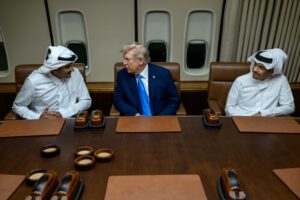
Presidents Trump and Erdoğan have shared a friendly relationship[xxvi] since the American President’s first term. Trump views Erdoğan as a dominant figure in the Middle East, with his neo-Ottoman aspirations being tacitly accepted in the context of a potential US disengagement from the region. The “Trump doctrine” would leave U.S. allies in the Middle East and beyond to fend for themselves, bearing the brunt of their own security operations. The most recent U.S. military operations, such as Midnight Hammer, remained short and decisive without drawing Washington into protracted and costly engagements. A weakened Iran combined with US retrenchment would elevate Turkey’s role by default.[xxvii] [xxviii]
Conclusions: The Mullah you know
As nuclear talks continue, Washington is simultaneously increasing its military posture in the region, keeping open the possibility of further strikes against Iran. Iran’s further weakening would, however, leave a power vacuum in the Middle East, one that Turkey is well positioned to exploit. This fits into President Erdoğan’s neo-Ottoman aspirations, tacitly accepted by the Trump administration. Ankara’s expanding regional posture could therefore alter Israel’s strategic environment, posing new security risks. Despite Erdoğan’s periodic tensions with Western institutions, Turkey remains embedded within NATO and the U.S. sphere of influence. A potentially elevated Turkish role in the region may be viewed in Washington as a manageable alternative, especially in the context of a gradual disengagement from the region.
Although Ankara remains cautious about the spillover effects that a potential regime change in Iran could bring about, it possesses the military and political instruments to manage instability, as demonstrated in Iraq and Syria. For Israel, the strategic dilemma may not be whether Iran is weakened, but what replaces it. A diminished but predictable Iran may pose a different kind of challenge than a more autonomous and regionally assertive Turkey. The emerging balance of power may therefore reshape, rather than resolve, the region’s underlying security tensions.
[i] Amnesty International (2026). “What happened at the protests in Iran?”, retrieved from: https://www.amnesty.org/en/latest/campaigns/2026/01/what-happened-at-the-protests-in-iran/.
[ii] Wilson, T. (2026). “Trump vows ‘very strong action’ if Iran executes protesters”, 14 January 2026, BBC News, retrieved from: https://www.bbc.com/news/articles/cqj2qgw8w08o.
[iii] PBS News (2026). “WATCH: Trump commends Iran for reportedly canceling hundreds of executions”, 16 January 2026, https://www.pbs.org/newshour/politics/watch-trump-commends-iran-for-reportedly-canceling-hundreds-of-executions.
[iv] Kurt, S. (2026). “US strengthening air, missile defenses across Middle East as part of preparation before striking Iran: Reports”, 2 January 2026, Anadolu, retrieved from: https://www.aa.com.tr/en/americas/us-strengthening-air-missile-defenses-across-middle-east-as-part-of-preparation-before-striking-iran-reports/3817305.
[v] Reuters (2026). “US aircraft carrier enters Middle East region, officials say”, 26 January 2026, retrieved from: https://www.reuters.com/business/aerospace-defense/us-aircraft-carrier-enters-middle-east-region-officials-say-2026-01-26/.
[vi] Tol, G. (2022). Erdoğan’s War: A Strongman’s Struggle at Home and in Syria, London: Hurst & Company.
[vii] Ibid.
[viii] Moran, M. (2016). “Turkey’s Article 5 Argument Finds No Takers”, Carnegie, retrieved from: 24 February 2016, https://www.carnegie.org/news/articles/turkeys-article-5-argument-finds-no-takers/.
[ix] DW (2015). “Russia responds to Turkish ‘stab in the back’”, DW, 24 November 2015, retrieved from: https://www.dw.com/en/putin-calls-downing-of-russian-jet-a-stab-in-the-back/a-18873942.
[x] Mehta, S. “Turkey officially kicked out of F-35 program, costing US half a billion dollars”, Defense News, 17 July 2019, retrieved from: https://www.defensenews.com/air/2019/07/17/turkey-officially-kicked-out-of-f-35-program/.
[xi] Mourenza, A. (2026). “Ahmed al-Sharaa, the former jihadist rehabilitated by Trump who has brought Syria in from the cold”, El Pais, 15 May 2025, retrieved from: https://english.elpais.com/international/2025-05-15/ahmed-al-sharaa-the-former-jihadist-rehabilitated-by-trump-who-has-brought-syria-in-from-the-cold.html.
[xii] Jewish Virtual Library. “Turkey-Israel Relations”, retrieved from: https://jewishvirtuallibrary.org/turkey-israel-relations.
[xiii] Ibid.
[xiv] Ibid.
[xv] Özkizilcik, Ö. (2026). “Turkey-Israel Rivalry in the New Syria”, Stimson, < https://www.stimson.org/2026/turkey-israel-rivalry-in-the-new-syria/.
[xvi] Sagman, S. (2026). “Anxiety, Apprehension, or Inspiration: How the Upheaval in Iran is Viewed Through Turkish Eyes?”, The Institute for National Security Studies, 4 February 2026, https://www.inss.org.il/publication/turkey-iran-2026/.
[xvii] Tol, G. and Vatanka, A. (2025). “War of words as Turkey-Iran tensions escalate over Syria, Iraq”, Middle East Institute, 18 March 2025, retrieved from: https://mei.edu/publication/war-words-turkey-iran-tensions-escalate-over-syria-iraq/.
[xviii] Khan, S. (2025). “Turkey’s Gas Diversification and Its Impact on Russia and Iran’s Energy Influence in Europe”, Modern Diplomacy, 8 October 2025, retrieved from: https://moderndiplomacy.eu/2025/10/08/title-turkeys-gas-diversification-and-its-impact-on-russia-and-irans-energy-influence-in-europe/.
[xix] Sezer, C. (2025). “Turkey’s gas shift threatens Russia and Iran’s last big European market”, Reuters, 8 October 205, retrieved from: https://www.reuters.com/business/energy/turkeys-gas-shift-threatens-russia-irans-last-big-european-market-2025-10-08/.
[xx] Tol and Vatanka (2025). “War of words as Turkey-Iran tensions escalate over Syria, Iraq”.
[xxi] Ibid.
[xxii] Vacher, P. (2026). “Turkey’s Lingering Influence in Syria’s New Army”, New Lines Magazine, 2 February 2026, retrieved from: https://newlinesmag.com/reportage/turkeys-lingering-influence-in-syrias-new-army/.
[xxiii] Tol and Vatanka (2025). “War of words as Turkey-Iran tensions escalate over Syria, Iraq”.
[xxiv] Ibid.
[xxv] Ali, F. (2026). “Al-Sharaa meets Putin as Russia seeks to secure military bases in Syria”, Al Jazeera, 28 January 2026, retrieved from: https://www.aljazeera.com/news/2026/1/28/syrias-al-sharaa-discusses-fate-of-russian-military-bases-with-putin.
[xxvi] Aydıntaşbaş, A. (2025). “A bromance revived: Erdoğan returns to the White House after 4 years”, Brookings, 23 September 2025, retrieved from: https://www.brookings.edu/articles/a-bromance-revived-erdogan-returns-to-the-white-house-after-4-years/.
[xxvii] Danylyu, O.V. (2025). “Criticism of the ‘Reverse Kissinger’”, RUSI, 11 July 2025, retrieved from: https://www.rusi.org/explore-our-research/publications/commentary/criticism-reverse-kissinger.
[xxviii] Vyas, K. (2025). “China, Russia, North Korea and Iran’s ‘axis of upheaval’ reshapes geopolitics”, ABC, 6 September 2025, retrieved from: https://www.abc.net.au/news/2025-09-07/axis-of-upheaval-china-north-korea-iran-russia/105721686.