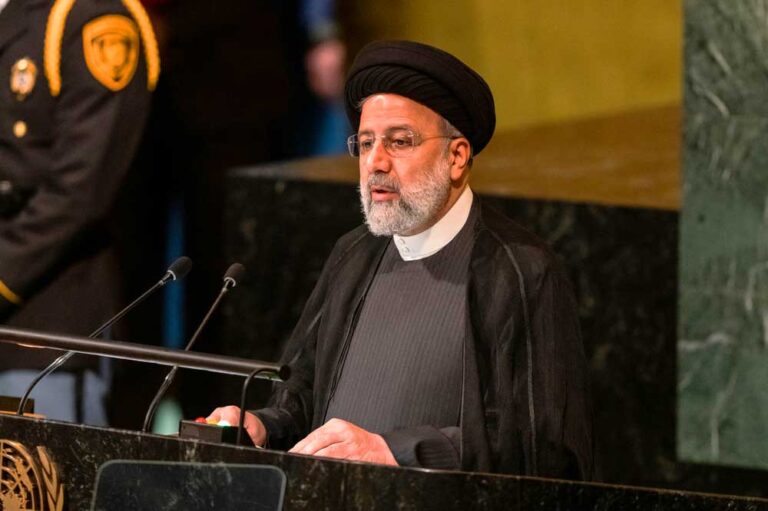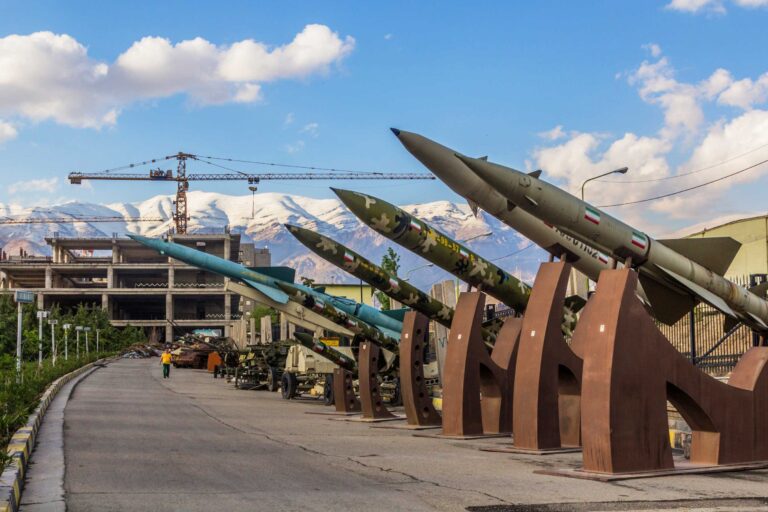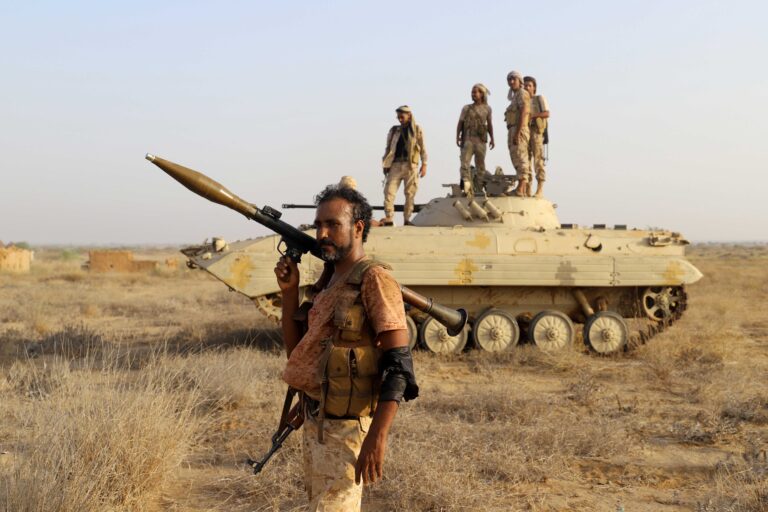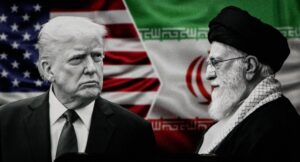
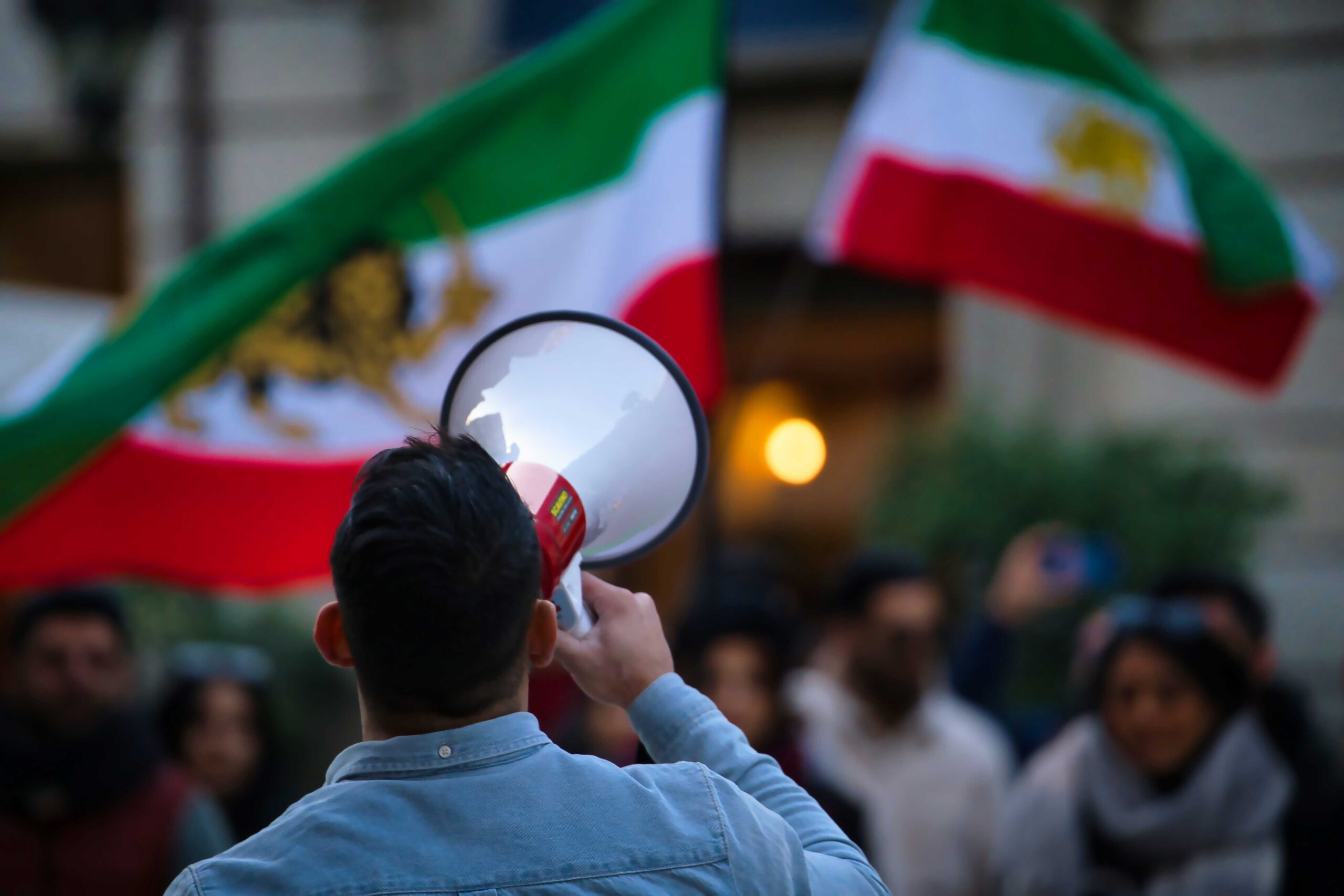
Until recently, regime change in Iran was approached apprehensively in the world of foreign policy. But now that the Iranian government has murdered thousands[i], if not tens of thousands[ii], of protesters in the streets while imposing an ongoing internet blackout[iii], the crisis is no longer about reaching a deal with Supreme Leader Ali Khamenei to halt Tehran’s nuclear ambitions. It is not even about a deal that would also end Iran’s missile programme and stop the regime from promoting global terrorism and supporting its proxies, such as Hamas, Hezbollah and the Houthis. The issue at stake now should be whether the world will continue to allow the regime in Tehran to survive or if it is ready to help the people of Iran to replace it. Iran and Gaza should not be viewed as separate crises but as two fronts of the same regional struggle against regimes that export instability and extremism.
Elsewhere in the Middle East, the same question applies regarding Hamas in the Gaza Strip and the standing of Hezbollah in Lebanon. Both Iran and Gaza are led by regimes fuelled by Islamic extremism. Both readily sacrifice the lives and well-being of their own people to maintain their power, and both seek to destroy Israel. What happens in Tehran will inevitably shape the balance of power in Gaza. Hamas’ endurance is inseparable from the ideological and material support it receives from Iran.
Washington is in a position to counter this extremist form of Islam – indeed, dismantling Hamas is a crucial part of the 20-point Gaza plan[iv], which was approved by the UN Security Council. Now is the right time as the signals indicate.
In Iran, mass protests have been followed by mass murder, and as a result, Washington embraced[v] the potential of regime change. The Pentagon sent[vi] a second aircraft carrier to the region, beefing up U.S. military presence near Iran[vii], saying the warship will be needed “in case we don’t make a deal.”[viii] During the previous round of military confrontation in June 2025, Iran was weakened by strikes on its nuclear and ballistic missile facilities. The capture of Nicolas Maduro, Iran’s staunch ally, in Venezuela since then also sent a message that the U.S. might be willing to cross lines previously thought unthinkable.
Yet even when multiple forces are pushing in the same direction, regime change is a huge task. Whether in Gaza or Iran, it is much more complicated than launching military strikes or even reaching a negotiated agreement on a narrow issue, like limiting Iran’s nuclear programme, releasing hostages or implementing a cease-fire.
To build a more peaceful, stable and prosperous Middle East, however – one where radical Islam plays no leadership role – the U.S. must not only embolden the Iranian people. If the citizens of Iran go back to the streets despite continued risk to their lives, the U.S. must make sure that help really is on its way, as President Donald Trump previously indicated.[ix] Promises should be backed up by actions. The U.S. must be prepared to act on the credible threat to civilians and protect the protesters not only by attacking Iranian missile and nuclear facilities but also any regime forces that continue to target them.
The accumulation of American power in the region represents a unique opportunity. Now that the Iranian people have shown the world how much they are willing to risk to be free of the repressive theocracy that binds them – and as the Iranian regime has shown how far it is willing to go to stay in power – the time is ripe to remove the ayatollahs through the combined effort of the people of Iran and the backing U.S. forces.
Seen in this light, Gaza is not a distraction from the Iran question but one of its most immediate manifestations. In Gaza, now that Israel has spent two years fighting Hamas militarily, the next stage[x] of the peace plan concerns disarming and dismantling Hamas. This plan could lead to a possible pathway to Palestinian self-determination if Palestinian leaders make wide-ranging reforms, abandon ideologies preaching Israel’s destruction, stop paying salaries to terrorists and are open to deradicalization initiatives. Hamas must be removed from power entirely, as a necessary, though not sufficient, condition for moving toward with the implementation of the second phase of President Trump’s Peace Plan. This is supposed to eventually open the door for Gaza’s complete reconstruction, and to a sustainable peace with a partner that accepts Israel’s right to exist as the state of the Jewish people. This will take time and patience, especially since so far there is no sign that such a deradicalization process can bear fruit in the near future. On the contrary, Hamas is strengthening its grip over the population of Gaza and is rearming rather than disarming.[xi]
The important debate about how the October 2023 terror attack on Israel will be remembered in Palestinian, Arab and Islamic memory is still ongoing. To make sure it will be seen as a terrible mistake never to be repeated, Hamas has to be disarmed and removed from power at minimum. This is also necessary to guarantee Israel is secure. Every step that reduces Iran’s capacity to project power also narrows the space in which Hamas can operate.
Therefore, Israel must also work towards making the 20-point Gaza plan succeed, because it includes a commitment of the U.S. and the international community – including Arab and Muslim countries – to disarm Hamas and remove the terror group from power. After all, the two alternative scenarios are worse: Israel administering Gaza indefinitely, or stepping down and handing Hamas what would amount to a victory.
Taken together, the situations in Iran and Gaza illustrate that the region’s conflicts are interconnected expressions of a broader contest over governance and the role of radical ideology in political power. The path forward requires clear-eyed recognition that the negotiation stage is over, both in Iran and in Gaza. It is not enough to degrade Hamas militarily while leaving its governing structures intact, or to attempt to reach agreements with Iran about nuclear limits. The goal must be a fundamental political transformation.
It is hard to know exactly what the day after will look like, whether in Gaza or Iran. Despite that concern, it is critical for the U.S. to maintain the understanding that regime change is both possible and preferable to the current situation for the Iranian people and for the Palestinians in the Gaza Strip – and to act on that understanding, with the backing of a credible military threat.
[i] Thomas, M. and Sardarizadeh, S. (2026). “New Iran videos show bodies piled in hospital and snipers on roofs”, BBC, 26 January 2026, retrieved from: https://www.bbc.com/news/articles/c1m7kde3y3zo.
[ii] Serjoie, K.A., Saberi, R. and Jamalpour, F. (2026). “Iran Protest Death Toll Could Top 30,000, According to Local Health Officials”, Time, 25 January 2026, retrieved from: https://time.com/7357635/more-than-30000-killed-in-iran-say-senior-officials/.
[iii] NetBlocks (2026). “Update: Iran’s internet blackout continues…”, Mastodon, 26 January 2026, retrieved from: https://mastodon.social/@netblocks/115960623813759479.
[iv] Federman, J. (2025). “Trump\s ceasefire plan for the Israel-Hamas war faces pitfalls as it moves into new phase”, PBS, 9 December 2025, retrieved from: https://www.pbs.org/newshour/world/trumps-ceasefire-plan-for-the-israel-hamas-war-faces-pitfalls-as-it-moves-into-new-phase.
[v] Holland, S. et al. (2026). “Trump says Iran regime change could be ‘best thing’ as second carrier heads to Middle East”, Reuters, 13 February 2026, retrieved from: https://www.reuters.com/business/aerospace-defense/second-us-aircraft-carrier-head-middle-east-amid-iran-tensions-us-media-reports-2026-02-13/.
[vi] Timotija, P. (2026). “US sending world’s biggest aircraft carrier to Middle East as tensions with Iran increase”, The Hill, 13 February 2026, retrieved from: https://thehill.com/policy/defense/5737201-uss-gerald-r-ford-middle-east-us-iran/.
[vii] Ibid.
[viii] PBS News (2026). “Iran and U.S. to hold nuclear talks in Geneva, Swiss minister says”, 14 February 2026, retrieved from: https://www.pbs.org/newshour/world/iran-and-u-s-to-hold-nuclear-talks-in-geneva-swiss-minister-says.
[ix] Elwelly, E., and Erickson, B. (2026). “Trump urges Iranians to keep protesting, saying ‘help is on its way’”, Reuters, 14 January 2026, retrieved from: https://www.reuters.com/world/china/iranian-mp-warns-greater-unrest-urging-government-address-grievances-2026-01-13/.
[x] Ravid, B. (2026). “White house announces ‘phase two’ of Gaza ceasefire deal”, Axios, 14 January 2026, retrieved from: https://www.axios.com/2026/01/14/gaza-phase-two-hamas-disarm-israel.
[xi] Williamson, L. (2026). “Hamas is reasserting control in Gaza despite its heavy losses fighting Israel”, BBC, 19 February 2026, retrieved from: https://www.bbc.com/news/articles/c98g1klxnpxo.