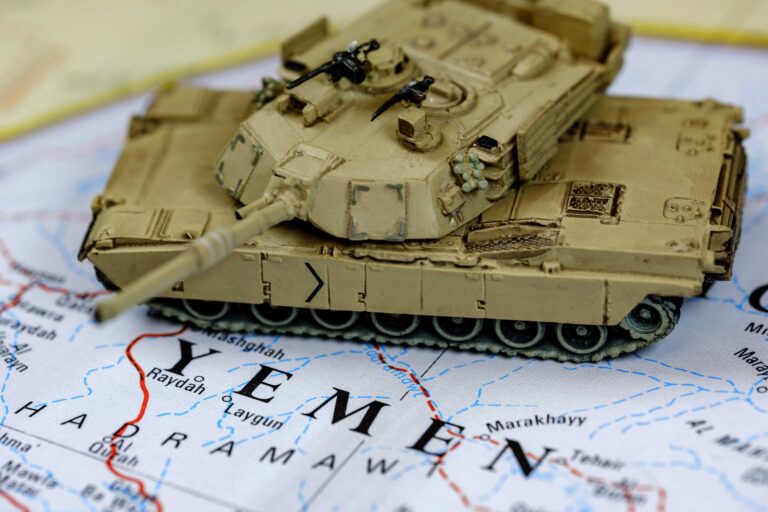
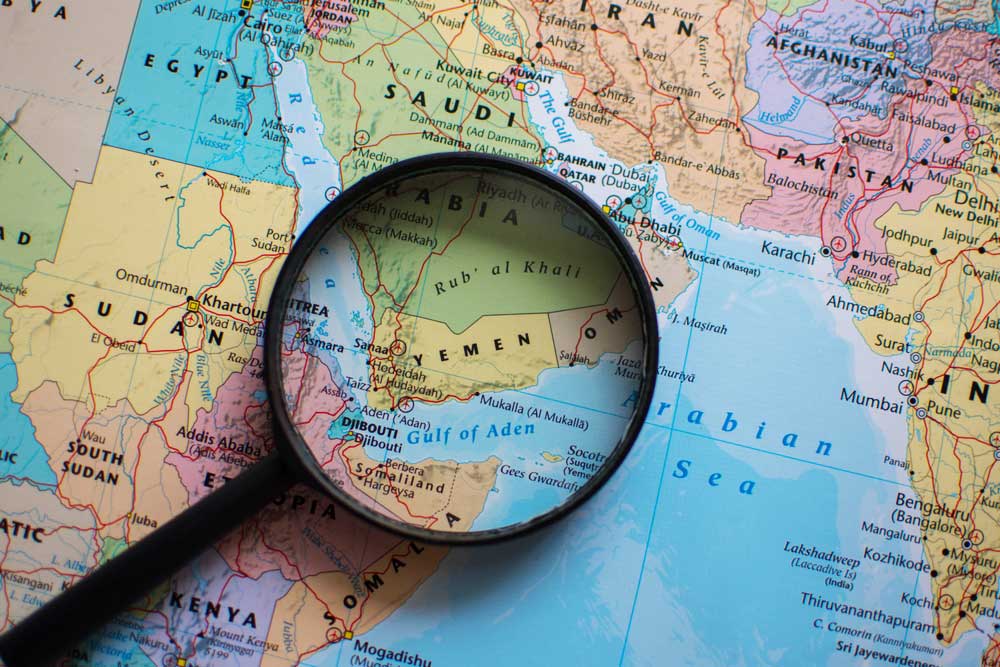
Beginning in early December 2025, UAE-backed Southern Transitional Council (STC) forces launched an offensive in eastern Yemen[i], seizing Seiyun and key military and administrative sites across Wadi Hadhramaut before advancing into al-Mahrah, as Saudi-aligned tribal and government units withdrew under mounting political and military pressure.
These developments reflect not only local power shifts but also structural tensions between the UAE and Saudi Arabia, competing visions for Gulf security, and the centrality of southern oil resources in shaping both regional economic leverage and international diplomacy. U.S. engagement, though limited, remains a key variable influencing the pace and scope of STC escalation.
Local and national implications
At the local level, the STC’s territorial gains carry immediate security, economic, and political consequences. The flashpoint is Hadhramaut[ii], Yemen’s largest governorate and primary oil-producing region. The STC launched a military campaign it labeled[iii] “The Promising Future,” framing the operation as an effort to impose security and reclaim local resources[iv] – rhetoric that obscures its broader political and economic objectives.
Hadhramaut, home to major oil fields and PetroMasila, Yemen’s largest oil company, constitutes a strategic prize. The Masila Basin and associated blocks, including Al-Maseelah, have long anchored Yemen’s crude output and export capacity.[v] Control over these assets enhances the STC’s ability to finance its operations independently of the central government, reinforcing longstanding ambitions for southern autonomy rooted in the pre-1990 South Yemen state. By securing pipelines, processing facilities, and critical installations, the STC gains leverage over revenue streams and supply chains, strengthening its bargaining position vis-à-vis both the internationally recognized government and its Gulf patrons.
The December 2025 offensive builds on prior STC attempts to expand eastward: in 2022, forces moved into Abyan and Shabwa[vi], and in 2023 into Hadhramaut[vii], only to be repelled by Saudi-backed militias and restrained by Omani diplomacy. Unlike earlier campaigns, which faltered due to limited Emirati coordination and robust Saudi-backed resistance, the 2025 advance reflects a recalibration of regional power projection, with Abu Dhabi leveraging financial, logistical, and intelligence support to expand the STC’s operational autonomy[viii] while Riyadh contends with the fragility of the internationally recognized Presidential Leadership Council (PLC), internal political pressures, and competing Gulf priorities. Omani mediation has been less effective given the STC’s assertive posture and Muscat’s careful balancing between Abu Dhabi and Riyadh.
Security dynamics have shifted decisively. STC control of the Wadi Hadhramaut corridor not only displaced Saudi-backed National Shield Forces and allied tribal factions but also established operational command over key transit routes, pipelines, and energy installations[ix], amplifying the council’s leverage vis-à-vis both the PLC and Gulf patrons. While the STC portrays its operations as securing the south from Houthis, al Qaeda, and other “terrorist threats,” clashes with coalition partners reveal persistent volatility in intra-coalition relations.[x]
Civilian populations face heightened risk of displacement, disruption of essential services, and economic instability. Demonstrations in Aden calling for STC President Aidarous al-Zubaidi to declare independence[xi] underscore the political undercurrents. These protests gained added weight after the STC announced its intention to hold a referendum on southern independence within the next two years.[xii] While lacking a recognised legal framework, the declaration formalises the council’s long-standing objective and signals confidence that recent territorial and resource gains can be translated into an institutionalised path toward separation.
Yemen’s humanitarian crisis compounds these risks. Indeed, Yemen’s humanitarian crisis shows no sign of abating[xiii], with an estimated 19.5 million people – more than half the population – requiring assistance in 2025, including 4.8 million internally displaced people. In December 2025 alone, fighting around Seiyun reportedly displaced at least 5,418 individuals toward Marib Governorate.[xiv] Hadhramaut itself has roughly 1.4 million residents[xv], meaning a substantial share of the population could face new insecurity, while local governance and essential services remain vulnerable.
At the national level, the STC’s advances expose the fragility of Yemen’s internationally recognized government. Aden, the temporary capital since the Houthis captured Sanaa in 2014, remains a coalition of competing factions[xvi] held together by shared opposition to the Houthis rather than functional political integration.
The advance drew the STC into direct confrontation with the Saudi-backed Presidential Leadership Council (PLC) and its allied local power brokers, notably the Hadramawt Tribal Alliance led by Sheikh Amr bin Habreish.[xvii] The STC’s takeover of Hadramout exposes the fragility of the PLC, whose cohesion rests largely on opposition to the Houthis. As government authority weakens, Saudi leverage diminishes, while the UAE gains leverage by backing the STC as an effective surrogate ahead of any future Saudi-Houthi settlement. The STC’s refusal to withdraw from Hadhramaut and al-Mahrah[xviii] signals just how conditional that unity has become.
Seeking to counter this narrative, PLC Chairman Rashad al-Alimi claimed that Saudi-backed Homeland Shield forces had achieved ‘record success’[xix] in retaking military and security positions near the Saudi border. The announcement highlights Riyadh’s continued capacity for localized security interventions, but also underscores the contrast between episodic tactical gains and the STC’s sustained control over territory, revenues, and governance.
Economically, STC control over Hadhramaut threatens fiscal viability[xx], as PetroMasila and associated energy revenues are critical for funding salaries, allied forces, and public services. A de facto divided economy entrenches fragmentation, complicating reconstruction and incentivizing further secessionist claims elsewhere.
Politically, the STC consolidates domestic legitimacy by portraying its operations as responsive to popular southern demands and essential for security. By claiming control over all eight southern governorates and presenting itself as Washington’s frontline partner[xxi] against Iran-backed Houthis, al-Qaeda affiliates, and Muslim Brotherhood factions, the STC signals an ambition for international recognition, or at least strategic leverage.
While these overtures align rhetorically with U.S. strategic interests in countering Iran and stabilizing the region, Washington is likely to respond cautiously; the council’s unilateral military actions, lack of formal integration into Yemen’s government, and legal and political risks associated with a de-facto secessionist actor limit the likelihood of immediate endorsement.
Regional implications
Regionally, the STC’s actions illuminate Gulf rivalries. Saudi Arabia and the UAE, historically close allies and OPEC members, have diverged significantly in foreign policy: Riyadh supports the internationally recognized government, while Abu Dhabi backs the STC’s secessionist ambitions. This divergence is operationalized through direct financial support, arms provision, and strategic advisement, making the STC a proxy for broader UAE-Saudi competition. It is not confined to Yemen: in Sudan, the UAE allegedly supports the Rapid Support Forces (RSF)[xxii] in opposition to Saudi-backed Sudanese Armed Forces (SAF).[xxiii] Prior clashes, including accusations of UAE airstrikes against Saudi-aligned forces in Yemen in 2019, demonstrate that Gulf competition directly shapes battlefield dynamics.
This rivalry has again surfaced publicly.[xxiv] The UAE accused Saudi Arabia of bombing the port city of Mukalla following allegations that Emirati vessels had delivered weapons and armored vehicles to separatist forces. Riyadh’s strike, and Abu Dhabi’s unusually direct response, illustrate how southern Yemen has become a contested arena not only for local proxies but for Gulf signaling itself, with each side willing to risk exposure of coalition fractures to protect its preferred endgame.
Hadhramaut’s 425-mile border with Saudi Arabia adds strategic urgency for Riyadh[xxv], given deep tribal and cultural ties, while Mahra’s proximity to Oman carries geopolitical significance[xxvi], as Muscat has historically mediated regional disputes and is sensitive to border instability.
Saudi demands for STC withdrawal[xxvii], coupled with Emirati public alignment with Riyadh’s call for the need for de-escalation[xxviii], indicate the delicacy of intra-coalition dynamics. Escalation between southern factions benefits the Houthis strategically by diverting coalition resources, while competition over oil and revenue streams threatens to undermine coordinated Gulf economic and security strategies, including OPEC+ policymaking.
U.S. diplomacy and strategic calculations
U.S. engagement in Yemen during 2025 has fluctuated between assertiveness and strategic de-prioritization. Following President Trump’s return to office, the administration relisted the Houthis (Ansar Allah) as a Foreign Terrorist Organization (FTO) on 4th March 2025[xxix], criminalizing material support and signaling a hardline stance. Operation Rough Rider[xxx] (March–May) targeted Houthi military personnel and aimed to restore freedom of navigation in the Red Sea. Yet, the operation ended abruptly, signaling a shift toward a lower-intensity approach. The bilateral truce remains, but Washington’s absence of a special envoy suggests Yemen is no longer a top-tier foreign policy priority.
The STC’s December advances occur against this backdrop of U.S. ambiguity. By positioning itself as a reliable partner against the Houthis and as a conduit for American investment, the STC attempts to leverage Washington’s presence – or absence – to cement its territorial and political gains. Secretary of State Marco Rubio’s 17th December call with Emirati Foreign Minister Abdullah bin Zayed emphasized[xxxi] “stability” and praised the diplomatic leadership of both Saudi Arabia and the UAE, signaling a desire to maintain coalition cohesion.
However, the U.S. administration’s mixed signals – muscular FTO designation and air campaign followed by de-prioritization – arguably incentivize unilateral STC action, allowing it to consolidate gains while rhetorically aligning with American interests. The U.S. lacks leverage over Gulf patrons to enforce coordinated policy, constraining its ability to shape the pace or scope of southern escalation.
Effectively, U.S. diplomacy is constrained. Aligning Saudi and Emirati positions on southern Yemen likely requires sustained, high-level intervention, potentially at the presidential level – a level of engagement that current U.S. priorities make uncertain. Without such intervention, the STC may continue consolidating power, Gulf rivalries may intensify, and the Houthis may exploit coalition distractions, compounding regional instability.
Potential trajectories
The December 2025 events suggest multiple intertwined trajectories.
Full escalation could involve a formal STC independence declaration, forcing northern actors – particularly the Houthis – to reassess strategy and potentially trigger large-scale fighting. Escalation risk is amplified by Riyadh’s constrained ability to project authority and Abu Dhabi’s vested interest in its southern proxy.
Alternatively, a managed de-escalation could occur under diplomatic pressure from Saudi Arabia, the UAE, and the U.S., limiting STC territorial gains while preserving nominal government authority. Riyadh has multiple levers[xxxii], including reducing or withdrawing funding for STC fighters, pursuing sanctions, and pressuring the UAE. A first step came via a joint statement from Iran, Saudi Arabia, and China[xxxiii] calling for a UN‑supervised settlement affirming Yemen’s territorial integrity. While such measures would lower immediate conflict risk, structural tensions over oil revenues, political ambitions, and southern autonomy would persist, leaving Yemen vulnerable to recurring crises.
A protracted stalemate is also plausible. The STC may retain control over southern provinces without formally declaring independence, normalizing armed-faction governance and constraining PLC authority. In this scenario, U.S. diplomacy functions primarily as a signaling mechanism, discouraging escalation but unable to resolve structural fragmentation.
Across these trajectories, local populations remain highly vulnerable to violence, displacement, and economic disruption. The authority of the internationally recognized government continues to erode, while Gulf competition compounds regional risk. The STC’s control over strategic oil resources, border territories, and critical infrastructure demonstrates how local ambitions, foreign patronage, and regional strategic rivalries intersect to magnify conflict, transforming a domestic struggle into a broader geopolitical challenge.
Escalation between southern factions also provides strategic openings for the Houthis, while Gulf competition over oil and revenue streams threatens coordinated policy, including OPEC+ decision-making. These dynamics illustrate how regional rivalries can convert localized conflicts into broader strategic contests.
Conclusion
The STC’s December advances in Hadhramaut and al-Mahrah highlight Yemen’s persistent southern fragmentation and the strategic interplay of local actors, Gulf patrons, and international stakeholders. By consolidating control over key oil resources, critical infrastructure, and border territories, the STC strengthens its bargaining position vis-à-vis both the internationally recognized government and its Gulf sponsors, illustrating how territorial gains translate into political and economic leverage. The offensive exposes the fragility of the PLC, underscores the limits of Saudi authority, and amplifies UAE influence through its proxy, reflecting broader Gulf competition that extends beyond Yemen.
U.S. engagement, while a stabilizing factor in rhetoric and selective action, remains constrained by limited leverage over Gulf patrons and structural prioritization elsewhere. The administration’s mixed signals have inadvertently incentivized unilateral STC action, highlighting the challenges of aligning coalition partners in a rapidly evolving operational environment.
Ultimately, the December events underscore that Yemen’s conflict is not solely a north-south struggle but a multidimensional contest shaped by local ambitions, foreign patronage, and regional rivalries that intersect with global economic and strategic interests. The STC’s overtures to Washington, though strategically calculated, are unlikely to receive immediate endorsement. Absent sustained, multilateral engagement addressing both internal fragmentation and Gulf competition, Yemen’s humanitarian, political, and economic crises are likely to deepen and prolong instability in a country now in its second decade of war.
[i] England, A. (2025). “Saudi-UAE tensions rise over Yemen clashes”, Financial Times, 10 December 2025, retrieved from: https://www.ft.com/content/09a3a84c-a3e8-45e2-943e-64e08a43d5d5#:~:text=Both%20Saudi%20Arabia%20and%20the,Houthis%2C%20who%20control%20the%20north.
[ii] Uddin, R. (2025). “UAE-backed forces raise South Yemen flag as they push east”, Middle East Eye, 4 December 2025, retrieved from: https://www.middleeasteye.net/news/uae-backed-forces-raise-south-yemen-flag-seizes-control-east.
[iii] Southern Transitional Council (2025). “The STC Statement on Security, Military and Political Developments in Hadhramaut Valley”, 3 December 2025, retrieved from: https://en.stcaden.com/posts/12587.
[iv] Reuters (2025). “Separatists claim broad control of southern Yemen”, 8 December 2025, retrieved from: https://www.reuters.com/world/middle-east/separatists-claim-broad-control-southern-yemen-2025-12-08/.
[v] Republic of Yemen Ministry of Oil and Minerals (2025). “Productive sectors”, retrieved from: https://mom-ye.com/site-en/%D8%A7%D9%84%D9%82%D8%B7%D8%A7%D8%B9%D8%A7%D8%AA-%D8%A7%D9%84%D8%A5%D9%86%D8%AA%D8%A7%D8%AC%D9%8A%D8%A9/.
[vi] Sana’a Center for Strategic Studies (2022). “STC Forces Move Farther into Abyan”, 13 October 2022, retrieved from: https://sanaacenter.org/the-yemen-review/september-2022/18808.
[vii] Reuters (2025). “Yemen’s Saudi-led coalition warns STC against moves in Hadhramout”, The Print, 27 December 2025, retrieved from: https://theprint.in/world/yemens-saudi-led-coalition-warns-stc-against-moves-in-hadramout/2813392/.
[viii] Toomey, B. (2025). “Southern Transitional Council Seizes Key Areas of Yemen’s Hadramawt Governorate from Rival Government Forces”, Foundation for Defense of Democracies, 4 December 2025, retrieved from: https://www.fdd.org/analysis/2025/12/04/southern-transitional-council-seizes-key-areas-of-yemens-hadramawt-governorate-from-rival-government-forces/.
[ix] Washington Center for Yemeni Studies (2025). “The Transitional Council’s Control of Eastern Yemen Provinces Puts the ‘Legitimacy’ in an Existential Dilemma and Exposes the Limits of Regional Influence”, 14 December 2025, retrieved from: https://wcys.org/the-transitional-councils-control-of-eastern-yemen-provinces-puts-the-legitimacy-in-an-existential-dilemma-and-exposes-the-limits-of-regional-influence/.
[x] Southern Transitional Council. “The STC Statement on Security, Military and Political Developments in Hadhramaut Valley”.
[xi] South24 (2025). “Tens of Thousands Rally in Aden Demanding Restoration of South Arabia State”, 21 December 2025, retrieved from: https://south24.net/news/newse.php?nid=5166.
[xii] Alhurra (2026). “Yemen is on the Brink as Southern Secession Looms”, 2 January 2026, retrieved from: https://alhurra.com/en/9938.
[xiii] UNHCR (2025). “Yemen”, retrieved from: https://www.unhcr.org/where-we-work/countries/yemen?dataset=POP&yearsMode=range&selectedYears=%5B2012%2C2026%5D&level=OPR&category=PTY&fundingSource=ALS&compareBy=%5B%22category%22%5D&levelCompare=%5B%5B%22OYEM_ABC%22%5D%5D&viewType=chart&chartType=bar&contextualDataset=BUD&tableDataView=absolute.
[xiv] Yemen Monitor (2025). “UN: Marib Receives Over 5,400 Displaced Fleeing ‘STC’ Escalation, Amid Aid Shortages”, 19 December 2025, retrieved from: https://www.yemenmonitor.com/en/Details/ArtMID/908/ArticleID/158756.
[xv] Data Commons (2025). “Hadhramaut Governorate”, retrieved from: https://datacommons.org/place/wikidataId/Q241135.
[xvi] Al Jazeera (2025). “Who are the groups controlling Yemen?”, 9 December 2025, retrieved from: https://www.aljazeera.com/news/2025/12/9/who-are-the-groups-controlling-yemen.
[xvii] Ozcelik, Dr B., Shiban, B. and Zoubi, A. (2025). “Southern Yemen’s Power Shift: the Houthis and the UAE-Saudi Rivalry”, RUSI, 15 December 2025, retrieved from: https://www.rusi.org/explore-our-research/publications/commentary/southern-yemens-power-shift-houthis-and-uae-saudi-rivalry.
[xviii] Yemen Monitor (2025). “STC Rejects Saudi Mediation to Withdraw from Hadramawt and Al-Mahra”, 14 December 2025, retrieved from: https://www.yemenmonitor.com/en/Details/ArtMID/908/ArticleID/158332.
[xix] Al Jazeera (2026). “Saudi-backed government forces retake multiple cities in southern Yemen”, 4 January 2026, retrieved from: https://www.aljazeera.com/news/2026/1/4/saudi-backed-government-forces-retake-multiple-cities-in-southern-yemen.
[xx] Naar, I. and Rasgon, A. (2025). “Saudi-Led Group in Yemen Tells Separatists to Withdraw, or Be ‘Dealt With’”, The New York Times, 27 December 2025, retrieved from: https://www.nytimes.com/2025/12/27/world/middleeast/yemen-saudi-arabia-airstrikes.html.
[xxi] Khoury, N.A. (2025). “The Reality and Threats of the STC’s Takeover of Eastern Yemen”, Arab Center Washington DC, 29 December 2025, retrieved from: https://arabcenterdc.org/resource/the-reality-and-threats-of-the-stcs-takeover-of-eastern-yemen/.
[xxii] Van Hollen, C. (2025). “Van Hollen, Jacobs confirm UAE Providing Weapons to RSF in Sudan, in Contradiction to its Assurances to US”, 24 January 2025, retrieved from: https://www.vanhollen.senate.gov/news/press-releases/van-hollen-jacobs-confirm-uae-providing-weapons-to-rsf-in-sudan-in-contradiction-to-its-assurances-to-us.
[xxiii] Ibrahim, E. (2025). “Saudi Arabia Chooses Sides in Sudan’s Civil War”, Responsible Statecraft, 3 April 2025, retrieved from: https://responsiblestatecraft.org/sudan-2671662242/.
[xxiv] Salem, M. (2025). “UAE says it will withdraw its remaining forces in Yemen after Saudi Arabia struck port city”, CNN World, 30 December 2025, retrieved from: https://edition.cnn.com/2025/12/30/middleeast/saudi-arabia-yemen-port-strike-uae-intl.
[xxv] Longley Alley, A. (2025). “Yemen’s Seismic Shift Has Consequences Beyond Its Borders”, The Washington Institute for Near East Policy, 22 December 2025, retrieved from: https://www.washingtoninstitute.org/policy-analysis/yemens-seismic-shift-has-consequences-beyond-its-borders.
[xxvi] Dall’Asta, L. (2025). “Oman’s Neutrality Under Pressure: Al-Mahra as the New Test for Muscat’s Diplomacy”, Italian Institute for International Political Studies, 27 November 2025, retrieved from: https://www.ispionline.it/en/publication/omans-neutrality-under-pressure-al-mahra-as-the-new-test-for-muscats-diplomacy-224253.
[xxvii] Al Jazeera (2025). “Saudi Arabia demands Yemeni separatists leave seized governorates”, 25 December 2025, retrieved from: https://www.aljazeera.com/news/2025/12/25/saudi-arabia-demands-yemeni-separatists-leave-seized-governorates.
[xxviii] The Arab Weekly (2025). “Gulf allies push de-escalation as Yemen’s south slides towards new conflict”, 26 December 2025, retrieved from: https://thearabweekly.com/gulf-allies-push-de-escalation-yemens-south-slides-towards-new-conflict.
[xxix] U.S. Department of State (2025). “Designation of Ansarallah as a Foreign Terrorist Organization”, 4 March 2025, retrieved from: https://www.state.gov/designation-of-ansarallah-as-a-foreign-terrorist-organization.
[xxx] Yemen Data Project (2025). “US Strikes: Operation Rough Rider”, retrieved from: https://yemendataproject.org/.
[xxxi] U.S. Department of State (2025). “Secretary Rubio’s Call with UAE Deputy Prime Minister and Foreign Minister Sheikh Abdullah bin Zayed Al Nahyan”, 17 December 2025, retrieved from: https://www.state.gov/releases/office-of-the-spokesperson/2025/12/secretary-rubios-call-with-uae-deputy-prime-minister-and-foreign-minister-sheikh-abdullah-bin-zayed-al-nahyan-3#:~:text=Secretary%20of%20State%20Marco%20Rubio,of%20State%20United%20Arab%20Emirates.
[xxxii] Sana’a Center for Strategic Studies (2025). “The STC Moves into Eastern Yemen – Reaction from Sana’a Center Experts”, 12 December 2025, retrieved from: https://sanaacenter.org/publications/analysis/25993.
[xxxiii] Yemen Online (2025). “Saudi Arabia and Iran Meet in Tehran, with China’s Mediation, to Support Comprehensive Political Solution in Yemen under UN Supervision”, 9 December 2025, retrieved from: https://yemenonline.info/politics/11027.