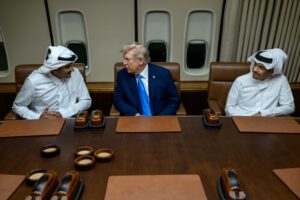
The recently announced U.S.-Saudi strategic defence agreement may become one of the most consequential security developments in the Middle East in years. While many of the technical details remain under negotiation, the political message is unmistakable: Washington is formalizing Riyadh’s position as a key security partner, essentially elevating it to the level of a major non-NATO ally at a moment when the region’s military balance is already fragile. Broader defence cooperation is expanding in parallel with this. Washington recently approved Saudi Arabia’s purchase of nearly 300 American tanks – an acquisition that boosts the kingdom’s military readiness and secures hundreds of American manufacturing jobs.
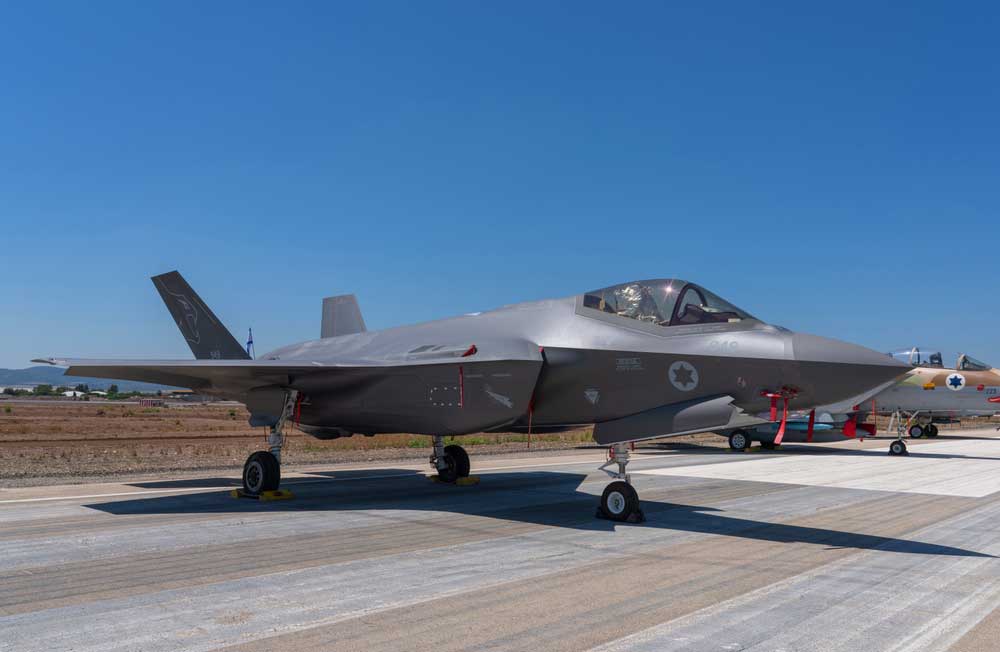
At the centre of this shift lies a single, highly symbolic question – whether Saudi Arabia may eventually gain access to the F-35, the world’s most advanced stealth fighter and an aircraft Israel has long considered as essential to preserving its qualitative military edge in the Middle East.
For decades, Israel has been the only Middle Eastern state operating the F-35. This monopoly has become the cornerstone of its air superiority and a core element of U.S. policy, reinforced through legislation ensuring that Israel maintains a “qualitative military edge” over its neighbours.[i] In a region where deterrence, survival, and rapid escalation coexist, the ability to dominate the skies is more than a military advantage; it is a political instrument that shapes how every other actor calculates risk.[ii]
The U.S.-Saudi agreement unsettles this long-standing arrangement. Even though Washington has not formally committed to selling the F-35 to Riyadh, the upgraded partnership signals that such a transfer is no longer unthinkable. The deal includes deeper defence cooperation, new layers of air and missile defence, and unprecedented coordination in intelligence.[iii] In strategic terms, the agreement brings Saudi Arabia closer to a class of capabilities that have long been reserved for Israel alone. From a realist perspective, states react not only to shifts in hard power, but also to signals about the future intentions of other actors. For Israel, the signal is clear: its privileged position is no longer guaranteed. This is further validated by President Donald Trump’s comment on Israel’s preference for Riyadh only receiving warplanes of a lower calibre.
Israel’s unease is already visible. Senior officials have openly warned that any future F-35 sale to Saudi Arabia would undermine Israel’s qualitative military edge and complicate its ability to deter both state and non-state rivals.[iv] Israeli dominance of the skies has allowed it to project power far beyond its borders and to operate with a level of freedom unmatched in the region. The idea that another state in the Middle East – even one that is not currently hostile towards Israel – could acquire comparable technology represents a profound strategic shift.
The UAE’s experience reinforces why this moment matters. Abu Dhabi joined the Abraham Accords partly in expectation that normalization with Israel would unlock access to the F-35.[v] Initially, interest in obtaining F-35 jets was expressed by the UAE following the signing of the Abraham Accords in late 2020, but negotiations with the U.S. stalled in 2021.[vi] Letters of agreement (LOAs) to secure the jets and other defence equipment were finalized with the U.S. government. The LOAs detailed the terms of the UAE purchase, including costs, technical specifications and anticipated delivery schedules.[vii]
Yet the deal stalled amid Israeli objections, U.S. concerns over Chinese technology in the UAE, and changes in Washington’s regional priorities.[viii] The lesson for Gulf states was clear: normalization alone is not enough. Saudi Arabia appears determined not to repeat that path. Instead, Riyadh is securing defence guarantees first, ensuring that any future diplomatic shifts begin from a position of strength.
The implications reach far beyond the Gulf. Iran could interpret the U.S.-Saudi defence pact as part of a broader containment strategy, and its likely response will be to strengthen asymmetric capabilities – including ballistic missiles, drones, and regional proxy networks, despite its exhaustion from its recent war with Israel.[ix] The Houthis in Yemen, already entrenched in confrontation with Riyadh, may view enhanced Saudi defences as a provocation rather than a deterrent, potentially escalating cross-border drone and missile attacks. Meanwhile, Israeli leaders may intensify pressure on Washington to preserve strict limitations on what Saudi Arabia can acquire. Furthermore, a second layer of concern lies in the nuclear dimension of the U.S.-Saudi partnership. Washington and Riyadh are advancing a civilian nuclear cooperation framework that, while officially limited to peaceful energy use, introduces strategic uncertainty in a region already defined by deep mistrust in nuclear matters. For Iran, any Saudi access to U.S.-backed nuclear infrastructure – however tightly regulated – signals the emergence of a rival latent nuclear capability in the region. Even the perception of a future Saudi enrichment pathway could accelerate Tehran’s own nuclear ambitions, adding yet another pressure point to an already volatile balance of power.
These developments risk setting off a new arms race in the Middle East. If Saudi Arabia inches closer to F-35-level technology, other Gulf states are likely to demand the same. Israel, facing the possibility of losing its monopoly, will seek accelerated access to next-generation aircraft. Iran, unable to match advanced aviation platforms, will double down on the development of missiles, drones, and electronic warfare. The result is a regional security environment defined less by stability than by competitive procurement and strategic mistrust.
Although Saudi Arabia’s prospective acquisition of the F-35 would not immediately replicate Israel’s air superiority, it would still represent a strategic shift. Israel’s F-35I Adir remains a uniquely customized variant, equipped with indigenous electronic warfare suites, command-and-control systems, and domestically developed weapons integration – features no other F-35 operator possesses.[x] These elements preserve Israel’s long-standing U.S.-guaranteed Qualitative Military Edge. Yet, even this advantage can be impacted by future challenges. Riyadh’s growing cooperation with U.S. and Western firms in artificial intelligence and advanced digital technologies introduces a degree of uncertainty: over time, Saudi Arabia could potentially develop its own software enhancements, data-analysis tools, or mission-planning capabilities for any future F-35 fleet. Such developments would not mirror the depth of Israel’s customization, but they could gradually narrow the technological gap, chipping away at Israel’s qualitative edge step by step.
The U.S.-Saudi deal, therefore, represents more than bilateral realignment. It is part of a broader redistribution of power in a Middle East already undergoing rapid transformation. Israel’s uncontested air superiority may be entering a period of proliferating challenges. Saudi Arabia, no longer content with playing a secondary military role, is positioning itself in a manner where it is set to become a central security actor in the region. Iran could view these developments as a tightening of the strategic circle around it, while non-state actors may respond with increased escalation.
In realist terms, the region is entering a classic phase of balancing and counter-balancing. Air superiority, once treated as an Israeli constant, could become a variable in flux. The future of the Middle East’s skies – and the strategic calculations that follow it – will depend on how Washington manages its commitments, how Riyadh pursues its ambitions, and how Israel adapts to a new era in which its technological lead might be challenged.
[i] U.S. Library of Congress, Congressional Research Service (2024). “Possible U.S.–Saudi Agreements and Normalization with Israel”, CRS Report R48162.
[ii] Katz, J. (2023). “Airpower in the Middle East: Strategic Implications for the United States and Its Partners”, RAND Corporation.
[iii] Smith, S.M. (2025). “The China Factor in U.S.–Saudi Talks for a Defence Pact”, Mediterranean Politics, 30: 4.
[iv] Al Jazeera (2025). “Saudi Arabia Designated Major Non-NATO Ally of US, Gets F-35 Warplanes Deal”, 19 November 2025.
[v] Rumley, G. (2022). “Unpacking the UAE F-35 Negotiations,” The Washington Institute for Near East Policy, 15 February 2022, retrieved from: https://www.washingtoninstitute.org/policy-analysis/unpacking-uae-f-35- negotiations.
[vi] U.S. Embassy Abu Dhabi (2021). “The UAE and the F-35: Frontline Defense for the UAE, US and Partners”, May 2021, retrieved from: https://www.uae-embassy.org/sites/default/files/2021-11/f-35_white_paper.pdf.
[vii] Ibid.
[viii] Coonan, N. (2025). “Gulf Arabs Fear Israel is Becoming Goliath,” Middle East Institute, 12 August 2025.
[ix] Legrain, P. (2025). “An Emergent U.S.-Favoured Regional Order in the Middle East and its Challenges,” Foreign Policy Research Institute, 23 July 2025.
[x] Grudo, G. (2017). “Israeli F-35s,” Air & Space Forces Magazine (April/May 2017), 62–65.