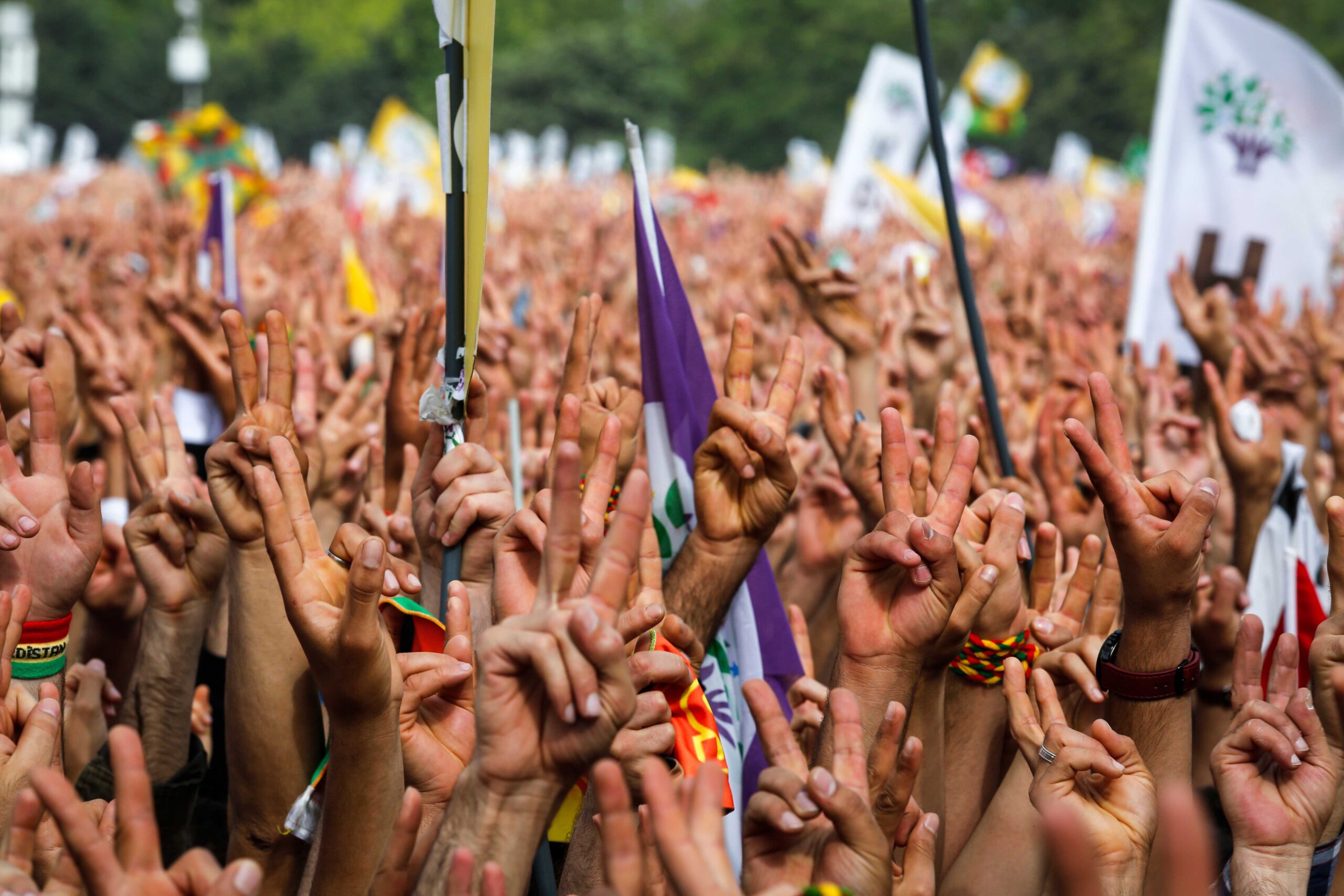
The Kurdish issue has shaped the political and security trajectory of the Turkish Republic since its foundation in 1923.[i] The early republic adopted a highly centralized nation‑building strategy that suppressed expressions of Kurdish identity and banned the public use of the Kurdish language.[ii] A series of uprisings, including Zilan, Ararat, and Dersim were crushed militarily, entrenching decades of assimilation policies and deep mistrust between the state and its Kurdish population.[iii] Although the political landscape has evolved since then, the underlying conflict remains unresolved. Periods of reduced violence have alternated with renewed armed confrontation between the Kurdistan Workers’ Party (PKK) and the Turkish state whenever political openings collapsed. In recent years, however, developments on both sides have revived the possibility of renewed dialogue. For Europe, this emerging process carries significant implications, as a sustainable peace settlement would support migration management, stabilize Türkiye’s southeastern regions, reduce regional tensions, and create new openings for trade and investment.
The current situation
The contours of today’s peace initiative become clearer when placed against the history of earlier attempts. Informal contacts between the Turkish state and Kurdish representatives began in the early 1990s, later evolving into structured negotiations between 2009 and 2011 and, most ambitiously, the 2013–2015 “solution process.”[iv] That period raised expectations for a political settlement but collapsed in mid‑2015 amid shifting domestic politics and the growing regional turbulence generated by the Syrian war. The return to armed clashes quickly reversed many of the political gains of the preceding two years.[v]
Against this background, a new phase emerged in late 2024 and early 2025. According to documented timelines, Abdullah Öcalan, the imprisoned founder and long‑time leader of the PKK, issued a historic call on 27 February 2025 for the PKK to dissolve itself and end armed struggle, following indirect contacts facilitated by political intermediaries and mediated exchanges with elected Kurdish representatives.[vi] The PKK responded shortly thereafter by declaring a ceasefire and signaling its readiness to comply with Öcalan’s roadmap, though it tied full demobilization to the establishment of a clear legal framework governing reintegration.[vii]
Developments inside Türkiye unfolded in parallel. Parliament established the “National Solidarity, Brotherhood and Democracy Commission,” mandated to consult with civil society and propose steps toward political reform.[viii] Official rhetoric framed this as part of a broader effort to achieve national unity and a “terror‑free Türkiye,” yet the political context remains delicate.[ix] President Erdoğan faces term limits and limited electoral leverage, as his current mandate prevents him from running again in 2028 unless the constitutional framework is changed.[x] These constraints increase his dependence on nationalist coalition partners, especially the Nationalist Movement Party (MHP), whose leadership has publicly advocated for constitutional amendments enabling an additional Erdoğan term.[xi] At the same time, Kurdish opposition parties, most notably the Peoples’ Equality and Democracy Party (DEM), see the moment as an opportunity to advance cultural rights and political recognition, as their parliamentary support has become increasingly relevant to Ankara’s constitutional ambitions.[xii]
Although concrete reforms have thus far been limited, the process has moved beyond symbolic discourse. A disarmament ceremony held in the Kurdistan Region of Iraq in July 2025 underscored that gestures toward de-escalation are translating into visible steps on the ground.[xiii] Whether this opening can evolve into durable structural change, however, remains uncertain, as both domestic politics and regional dynamics continue to shape the trajectory of the process.
Risks and dependencies
The renewed peace effort faces several interconnected risks, beginning with the domestic political landscape. The process unfolds in an environment where political authority is highly centralized and closely tied to President Erdoğan and his ruling Justice and Development Party (AKP).[xiv] Analysts have noted that elements of the initiative risk serving short‑term political objectives, such as gaining parliamentary support for constitutional amendments, rather than long‑term institutional reform.[xv] If the Kurdish political movement perceives the process primarily as an electoral or constitutional bargaining tool, trust may erode quickly.
These domestic uncertainties are reinforced by internal dynamics within the Kurdish movement itself. While Öcalan’s 2025 declaration marked a symbolic turning point, it remains unclear how far the PKK’s leadership in the Qandil Mountains will go without formal guarantees and legal mechanisms that outline the terms of demobilization and reintegration.[xvi] The potential divergence between Öcalan’s position and the organizational dynamics of the PKK introduces an additional layer of fragility to the process.
The complexity deepens once regional factors are considered. In Syria, Ankara continues to view the Kurdish‑led Autonomous Administration and its military component, the Syrian Democratic Forces (SDF), as extensions of the PKK. As a result, discussions surrounding a settlement intersect with Turkish policy in northern Syria, where security concerns remain acute.[xvii] In Iraq, Türkiye’s ongoing operations against PKK bases continue to generate friction, while the Kurdistan Regional Government (KRG) must balance internal divisions with the need to preserve functional relations with Ankara. Meanwhile, Iran perceives any political gains for Kurds, whether in Iraq, Syria, or Türkiye, as potentially destabilizing for its own Kurdish regions, adding yet another external constraint.[xviii]
Taken together, these domestic and regional factors interact with wider geopolitical developments, including deteriorating Iran-Israel relations and the recalibration of U.S.-Türkiye ties. This convergence of pressures creates an environment in which the peace process remains exposed to developments far beyond the immediate negotiating table, making its trajectory highly sensitive to shifts both within and beyond Türkiye’s borders.
Europe’s interests
Europe has direct and substantial interests in a stable and long‑term resolution to the Kurdish–Turkish conflict. At the security level, peace would reduce volatility in a key NATO member’s territory and mitigate tensions between Türkiye and Western partners related to counterterrorism, military cooperation, and policies toward the SDF. According to several analyses, resolving the Kurdish question could remove one of the major points of friction in U.S.–Türkiye relations and improve overall NATO cohesion.[xix]
Migration is an equally significant consideration. Conflict in southeastern Türkiye and northern Syria has historically contributed to displacement. Stability brought about by a peace process could help stem irregular migration flows and reduce reliance on short‑term mitigation strategies. European research institutions have highlighted the close relationship between the Kurdish issue, Türkiye’s migration dynamics, and the EU’s border management agenda.[xx]
Economically, southeastern Türkiye represents an underdeveloped region with substantial potential. Peace could unlock investment, improve infrastructure, and secure trade corridors that connect Europe to Iraq and the Gulf. European companies operating in Türkiye would benefit from reduced political risk and a more predictable operating environment.[xxi]
Finally, Europe’s normative commitments and historical influence in shaping the political geography of the Middle East give the EU a moral and political rationale to support conflict resolution. A stable Türkiye would further Europe’s long‑term strategic interests in the region and prevent external powers from monopolizing diplomatic influence.
Policy recommendations
First, the EU should support institutional mechanisms that enhance transparency and accountability throughout the peace process. Confidence‑building measures, technical monitoring, and assistance for local governance can strengthen the credibility of negotiations and reduce the risk of abrupt breakdowns. By improving communication channels among political actors, civil society, and international partners, the EU would help consolidate a more resilient framework for dialogue.
Second, European engagement should include targeted migration and humanitarian instruments aligned with broader peacebuilding objectives. Stabilizing southeastern Türkiye and northern Syria remains essential for reducing displacement pressures. The EU’s experience with civilian monitoring missions and border‑management support could be adapted to this context, ensuring that stabilization efforts contribute to long‑term regional security rather than short‑term crisis mitigation.[xxii]
Third, the EU should prioritize forms of economic cooperation that create tangible incentives for peace. Trade facilitation, investment guarantees, and development programs tailored to Türkiye’s southeast would signal that political stability brings concrete economic dividends. Such engagement could also decrease Ankara’s reliance on more coercive regional partners and foster more equitable economic development within Türkiye.
Fourth, the EU’s involvement should be grounded in its broader commitment to human rights, minority protection, and inclusive governance. Given the historical and geopolitical legacies that shaped the Kurdish issue, European support for reforms, ranging from cultural rights and political participation to judicial safeguards, would reinforce the normative foundations of a sustainable settlement. Yet EU policy continues to face significant barriers, including deteriorating rule‑of‑law conditions in Turkey[xxiii], limited access to conflict‑affected regions due to centralized state control and the limited acceptance of external actors in sensitive areas[xxiv], and the prospect of further political polarization that could narrow the space for reform‑oriented engagement in the future.[xxv]
Finally, Europe should recognize that engagement in the peace process is not only supportive but strategically necessary. Without meaningful EU involvement, the trajectory of the process may be shaped disproportionately by regional powers whose interests diverge from Europe’s. Recent analyses show that Türkiye’s regional environment is increasingly shaped by influential actors such as the Gulf states, Iran, and Israel, whose geopolitical priorities often diverge from Europe’s.[xxvi] At the same time, Türkiye’s pursuit of strategic autonomy has further widened the gap between its regional approach and the EU’s emphasis on political pluralism and long‑term stability.[xxvii] To remain a relevant diplomatic actor and safeguard its long‑term interests, the EU must pursue a coherent strategy that aligns its political, economic, and security objectives with the broader aim of fostering a stable and inclusive Türkiye.
[i] Mohammed, S.J. and Romano, D. (2023). “The Kurdish Conflict in Turkey: The Central Role of Identity Recognition (or Lack Thereof), Ethnopolitics, 24:3, 260-277, DOI: 10.1080/17449057.2023.2275229.
[ii] Washington Kurdish Institute (2025). “Turkey’s Peace Process with the Kurds: History, Challenges, and the Path Forward”, retrieved from: https://dckurd.org/2025/09/26/turkeys-peace-with-kurds/.
[iii] Ciddi, S. and Bodette, M. (2025). “Turkey’s Kurdish peace talks: A genuine effort or Erdoğan’s power play?
Erdoğan is arguably negotiating with the Kurds mainly as a means of securing Kurdish parliamentarians’ votes to extend his rule as president”, 26 March 2025, retrieved from: https://www.fdd.org/analysis/op_eds/2025/03/26/turkeys-kurdish-peace-talks-a-genuine-effort-or-erdogans-power-play/.
[iv] Cevik, S. (2025). “A New Phase in Turkey’s Kurdish Conflict: Ocalan’s Call and Its Implications”, 12 March 2025, retrieved from: https://arabcenterdc.org/resource/a-new-phase-in-turkeys-kurdish-conflict-ocalans-call-and-its-implications/.
[v] Lindenstrauss, G. (2016). “Back to Square One? The Collapse of the Peace Process with the Kurds in Turkey“, January 2016, retrieved from: https://www.inss.org.il/strategic_assessment/back-to-square-one-the-collapse-of-the-peace-process-with-the-kurds-in-turkey/.
[vi] Bodette, M. (2025). “Timeline: 2024-2025 Kurdish Peace Talks in Turkey and Syria”, 24 January 2025, retrieved from: https://www.kurdishpeace.org/research/conflict-resolution-and-peacebuilding/timeline-2024-2025-kurdish-peace-talks-in-turkey-and-syria/.
[vii] Salih, M.A. (2025). “Renewed Turkey–Kurd Peace Push Presents Opportunities for Regional Stability”, 17 March 2025, retrieved from: https://www.fpri.org/article/2025/03/renewed-turkey-kurd-peace-push/.
[viii] Korkmaz, S.S. (2025). “Türkiye’s renewed Kurdish peace process: Implications for Europe”, 23 October 2025, retrieved from: https://www.epc.eu/publication/turkiyes-renewed-kurdish-peace-process-implications-for-europe/.
[ix] Cetinguc, C. (2025). “Erdoğan: ‘Terror-Free Türkiye’ Will Elevate Economy and National Unity”, 17 May 2025, retrieved from: https://www.paturkey.com/news/2025/erdogan-terror-free-turkiye-will-elevate-economy-and-national-unity-20735/.
[x] AP News (2025). “Turkey’s Erdogan appoints legal team to draft new constitution, sparking fears of extended rule”, 28 May 2025, retrieved from: https://apnews.com/article/turkey-erdogan-new-constitution-legal-expert-156d44cd84104f0be076a3d2287fc501.
[xi] Hayatsever, H., Spice, J. and Maclean, W. (2024). “Politician in Turkey pushes for constitutional amendment extending presidential term limits”, 6 November 2024, retrieved from: https://constitutionnet.org/news/politician-turkey-pushes-constitutional-amendment-extending-presidential-term-limits.
[xii] Stratfor Worldview (2024). “To Gain Support for Its Constitutional Reform, Turkey’s Government Turns to the Kurds”, 5 November 2024, retrieved from: https://worldview.stratfor.com/article/gain-support-its-constitutional-reform-turkeys-government-turns-kurds.
[xiii] Baser, B., Gasco, R. and Abrami, S.C.A. (2025). “Turkish-Kurdish Peace Talks Must Navigate Domestic Politics and Regional Shifts”, retrieved from: https://mecouncil.org/blog_posts/turkish-kurdish-peace-talks-must-navigate-domestic-politics-and-regional-shifts/.
[xiv] LPS Alliance (2025). „From decentralization to recentralization in Turkey”, 22 September, retrieved from: https://decentralization.net/2025/09/from-decentralization-to-recentralization-in-turkey/.
[xv] Genc, Ö. (2024). “The Kurdish Issue Revisited: Türkiye’s Complex Road to Peace” November 2024, retrieved from: https://mecouncil.org/publication/the-kurdish-issue-revisited-turkiyes-complex-road-to-peace/.
[xvi] Hassan, K. (2025). “Kurdish Peace Process Makes Slow Gains, With Regional Ramifications”, 17 December 2025, retrieved from: https://www.stimson.org/2025/kurdish-peace-process-makes-slow-gains-with-regional-ramifications/.
[xvii] Krzyżanowska, Z. (2025). “A ‘new Kurdish opening’ in Turkey: a bumpy road to peace”, 27 Februar 2025, retrieved from: https://www.osw.waw.pl/en/publikacje/analizy/2025-02-27/nowe-kurdyjskie-otwarcie-w-turcji-wyboista-droga-do-pokoju.
[xviii] Van Wilgenburg, W. (2025). “Caution and Fear of a Crackdown: Iranian Kurdish Opposition Responses to the Israel-Iran Conflict”, 2 July 2025, retrieved from: https://www.washingtoninstitute.org/policy-analysis/caution-and-fear-crackdown-iranian-kurdish-opposition-responses-israel-iran.
[xix] Centre for Kurdish Progress. (2025). “Turkey–Kurdish Peace Process Overview”, 12 September 2025, retrieved from: https://www.kurdishprogress.com/kurdish_turkish_peace_process.
[xx] Coskun, A. (2025). “What’s Behind the Monumental Shift Between Türkiye and the PKK”, 10 March 2025, retrieved from: https://carnegieendowment.org/emissary/2025/03/turkey-pkk-disarm-disband-impact-explainer.
[xxi] Celik, B.C. (2025). “New and Revived Energy Partnerships Boost Turkey and East-West Trade Routes”, 23 October 2025, retrieved from: https://www.stimson.org/2025/new-and-revived-energy-partnerships-boost-turkey-and-east-west-trade-routes/.
[xxii] Yildirim, A.K. (2025). “Turkey’s Strategy in the Kurdish Peace Process”, 29 July 2025, retrieved from: https://www.bakerinstitute.org/research/turkeys-strategy-kurdish-peace-process.
[xxiii] Stanicek, B. (2020). “EU–Turkey relations in light of the Syrian conflict and refugee crisis”, March 2020, retrieved from: https://www.europarl.europa.eu/RegData/etudes/BRIE/2020/649327/EPRS_BRI(2020)649327_EN.pdf.
[xxiv] Kurda, Z.A. (2022). “The European Union and the Kurds in Turkey”. In: The European Union and the Kurdish Issue. United Nations University Series on Regionalism, vol 23. Springer, Cham. DOI: https://doi.org/10.1007/978-3-031-05186-9_4.
[xxv] Scazzieri, L. (2024). “The EU and Türkiye: A relationship adrift”, 21 October 2024, retrieved from https://www.cer.eu/insights/eu-and-turkiye-relationship-adrift.
[xxvi] Cevik, S. (2025). “Turkey’s Repositioning in the Middle East’s Emerging Order“, 17 June 2025, retrieved from: https://arabcenterdc.org/resource/turkeys-repositioning-in-the-middle-easts-emerging-order/.
[xxvii] Ülgen, S., Besch, S. & Toygür, I. (2024). “Strategic Autonomy as a Dynamic of Convergence in Türkiye-EU Relations”, 22 October 2024, retrieved from: https://carnegieendowment.org/research/2024/10/strategic-autonomy-as-a-dynamic-of-convergence-in-turkiye-eu-relations?lang=en.