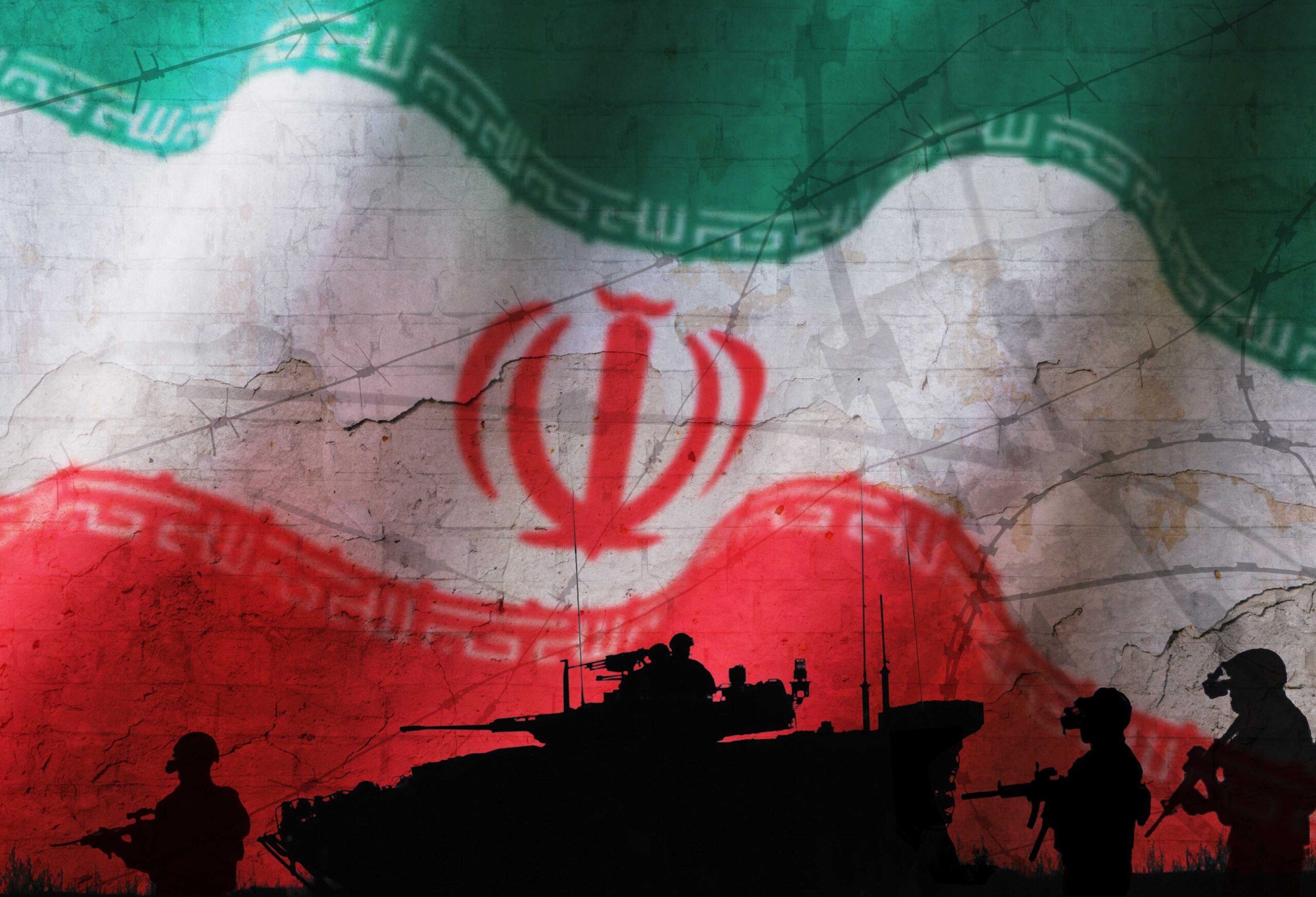
The Kurds enter the spotlight amid the ongoing Iran war as patterns of strikes[i] in the country’s Kurdish-majority provinces appear aimed at opening a new front along the Iran-Iraq border. Reports that the United States is considering partnering with[ii] Iranian Kurdish groups to open a western front against Tehran intensifies the debate among observers and the Iranian opposition, having drawn a sharp pushback from supporters of Crown Prince Reza Pahlavi. If such plans move forward, Iranian Kurds could be thrust into the war as part of primary ground forces, potentially fuelling ethnic tensions and creating the conditions for an insurgency movement inside Iran.
While Iranian Kurdish forces are among the most organized and reliable opposition groups, arming them without building a broad, cross-ethnic Iranian opposition coalition might risk fuelling sectarian tensions and widening the war, potentially drawing other countries in the region into the conflict. Washington must weigh the short-term tactical gains of such a policy against its long-term interests. Any support for Kurdish groups should be embedded in a broader effort to form a national coalition uniting fragmented opposition groups around the shared vision of a democratic and pluralistic Iran. Such an opposition could form a government-in-exile to build diplomatic support and serve as the nucleus of a postwar transitional authority in the event of the regime’s downfall.
Iranian Kurdish parties have already formed a political alliance[iii] to coordinate their activities and advance Kurdish political aspirations. The next step is to create an inter-group alliance among the country’s ethnic minorities including Azeris, the Baluch, and Arabs. A similar dynamic helped shape the Iraqi opposition’s role in both the prewar mobilization and postwar state-building process after the 2003 Iraq War.
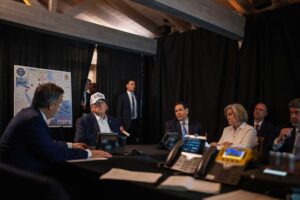
On 2nd March, Axios[iv] reported that President Donald Trump held phone calls with the heads of the two main Kurdish political parties in the Kurdistan Region of Iraq: Massoud Barzani of the Kurdistan Democratic Party and Bafel Talabani of the Patriotic Union of Kurdistan. The two parties have governed the Kurdish region since it gained a measure of autonomy following the first Gulf War. They have also forged close ties with neighboring states such as Turkey and Iran, which are among Iraqi Kurdistan’s largest economic partners. Conventional wisdom holds that the Kurdistan Democratic Party maintains stronger relations with Ankara, while the Patriotic Union of Kurdistan has historically been closer to Tehran. Trump also spoke[v] with Mustafa Hijri, leader of the Democratic Party of Iranian Kurdistan.
The Kurds have long relied on external support to advance their cause. In 1946, the leaders of Kurdish movements in Iran and Iraq – Qazi Muhammad and Mustafa Barzani – joined forces to declare the Republic of Kurdistan in Mahabad, with backing from the Soviet Union. The fledgling state, however, proved short-lived. Under pressure from Western powers, including the United States, the Soviet Union withdrew from northern Iran, leaving the republic isolated and vulnerable to its eventual destruction by Mohammad Reza Shah Pahlavi.
Later, in 1972, the U.S. began covertly arming Barzani’s rebellion against Saddam Hussein’s Ba’athist regime at the request of the Shah of Iran. While Barzani sought Kurdish autonomy in Iraq, Washington’s objective was to fuel an insurgency that would drain Iraqi resources amid fears of a renewed Arab-Israeli war. Israel, which had long-standing ties with the Kurds, also participated in the effort as part of its “periphery doctrine,” aimed[vi] at building strategic alliances with non-Arab ethnic minority groups on the margins of the Middle East to counter hostile neighboring states. These partnerships were often driven less by Kurdish aspirations than by the shifting strategic interests of regional and global powers.
In the current landscape, the position of Iranian Kurdish groups is deeply precarious. Although President Trump has called on[vii] the Kurds to stage an insurgency against Iran, it would be risky to assume that a Kurdish-led ground campaign could be feasible or sustainable without substantial external support. Iranian Kurdish parties could nonetheless find themselves drawn into a war without a clearly defined objective or endgame – and with little preparation for the political realities that might follow.
Common aspirations, separate realities
The Kurds, one of the largest stateless ethnic groups in the Middle East, were dispersed across Iran, Iraq, Turkey, and Syria following the post-World War I redrawing of borders by Britain and France. Although they share aspirations for statehood, Kurdish struggles for cultural and political rights have largely developed in the context of distinct movements shaped by the political realities of the states in which they live.
Recent developments in the region illustrate both the potential and the limits of intra-Kurdish solidarity. In 2014, when the Kurdish town of Kobani in northeast Syria was besieged by militants from the Islamic State, Iraqi Kurdish Peshmerga forces crossed into Syria to support their fellow Kurds. That intervention, however, took place within the framework of a U.S.-led global coalition to defeat ISIS – with Turkey facilitating their passage – rather than a short-term military tactic or a purely independent Kurdish military initiative. More recently, in January 2026, Kurds across the region and in the diaspora expressed an outpouring of solidarity[viii] with their fellow Kurds in Syria as interim government forces consolidated control over territory held by the Kurdish-led Syrian Democratic Forces in the northeast. These episodes underscore the enduring sense of shared national identity among the Kurds even when their political and military movements are constrained by state boundaries.
In reality, however, Kurdish political movements remain keenly aware that their struggles are shaped by distinct national contexts, complicating simplistic perceptions of a unified Kurdish agenda. Their political and military wings operate within separate territorial spheres, limiting the potential for coordinated action across borders.
This pragmatism is evident in Iraqi Kurdish authorities’ repeated appeals to the Kurdistan Workers’ Party (PKK) not to use their territories as a launching pad against Turkey, a key economic partner. Kurdish authorities have also mediated between Ankara and the PKK, welcoming[ix] the group’s decision to dissolve[x] itself and end four decades of armed insurgency from its northern Iraqi strongholds. They have also encouraged[xi] their Syrian Kurdish counterparts to pursue their aspirations through engagement with Damascus.
Opportunities and risks
For Iraq’s Kurdish parties, joining a war against Iran would be a high-risk, low-reward endeavour. Between 2022 and 2024, the Kurdistan Region of Iraq was repeatedly targeted by Iranian ballistic missiles and drone strikes. In 2024, Iran struck the residence of a prominent Kurdish businessman[xii] in Erbil, alleging it was a Mossad base. A similar attack occurred in 2022 against another businessman’s home[xiii], though an Iraqi government investigation later found no evidence to support Tehran’s claims.
Relations between the Kurdistan region and Iran have shown signs of thawing, particularly following President Nechirvan Barzani’s visit[xiv] to Tehran in 2024. Nevertheless, Iran-aligned Iraqi militias have continued to target the region’s critical infrastructure, including the Khor Mor gas field and Erbil International Airport. Since the outbreak of the war, multiple drone strikes have also been reported against the U.S. consulate, coalition forces’ bases in Erbil, and other sites in Erbil and Sulaymaniyah.
For Iranian Kurdish groups, the prospect of joining the war against Tehran may seem more tempting, though no less perilous, particularly given the absence of a clear strategy from Washington. Iranian Kurds continue to face severe restrictions on basic cultural and political rights. The Kurdish language is heavily restricted[xv] in formal education, and several activists have been imprisoned for promoting instruction in their mother tongue. Kurds also experience disproportionately high execution[xvi] rates for various offenses. Chronic state neglect has left Kurdish areas among the most underdeveloped regions in Iran, with persistent unemployment and limited economic opportunities forcing many residents into precarious, low-wage labour. Political parties remain banned, and Iranian Kurdish groups operate in forced exile from the Kurdistan Region of Iraq. Their military bases, along with the civilian settlements in the town of Koye, have repeatedly been targeted[xvii] by ballistic missile and drone strikes by the Iranian regime.
Over the past two decades, the Iraq War and the campaign against ISIS have elevated Kurdish armed groups into some of Washington’s most effective local partners in the Middle East. In 2003, after the Turkish parliament denied[xviii] the U.S. permission to open a northern front through its territory, Washington turned to Iraqi Kurds as indispensable partners, with Peshmerga forces working closely with U.S. Special Forces against Saddam Hussein’s Ba’athist regime.
Similarly, Kurdish Peshmerga forces and the Syrian Democratic Forces played a critical role in reclaiming large swathes of territory in northern Iraq and northeast Syria from ISIS, serving as the boots on the ground while the U.S. provided airpower, training, and logistical support. In each case, the militant and political groups benefited from both regional and international support, including train-and-equip programmes, logistical assistance, intelligence sharing, and financial backing.
That said, unlike the Iraqi Kurdish Peshmerga or the Syrian Democratic Forces, Iranian Kurdish groups lack the training, heavy weaponry, and international support needed for sustained conventional warfare. Most Iranian Kurdish parties seek autonomy within a federal Iran rather than full secession, and they are unlikely to march on Tehran beyond liberating the Kurdish-majority areas along the Iran-Iraq border. It also remains unclear whether Washington would be willing to provide comparable military support – including deploying military advisors on the ground – if Iranian Kurdish groups were to assume a frontline role. Without substantial backing from the U.S. and a clearly defined strategic objective, such a move could expose the Kurdistan Region to severe retaliation from Iran.
Complicating matters further is the lack of coordination within the broader Iranian opposition. While Iranian Kurdish parties are arguably the most organized and militarized segment of the opposition to the Islamic Republic, they operate largely in isolation from other movements, including Azeri, Baluch, and Persian political factions.
This fragmentation stands in stark contrast to the Iraqi opposition prior to the 2003 Iraq War, when disparate actors coordinated under the umbrella of the Iraqi National Congress and broadly shared a vision for a post-Saddam political order. Elite cohesion[xix] proved critical not only for mobilizing external support but also for shaping postwar institutional arrangements that ultimately granted the Kurds significant autonomy within a federal Iraq. Although Iranian Kurdish groups have expressed openness to cooperating with other Iranian opposition movements, no meaningful cross-ethnic coalition has yet emerged.
The Kurdish authorities in Iraq therefore face a stark dilemma. Supporting their fellow Kurds in Iran may carry historic appeal, but direct involvement in a war with Tehran risks jeopardizing the hard-won stability and economic gains the region has achieved over the past two decades. The economy depends heavily on trade with both Iran and Turkey, the latter serving as the region’s gateway to global markets and its primary route for oil exports. Having cultivated a pragmatic relationship with its neighbors, Iraq’s Kurdish leadership may be reluctant to incur the severe economic and security costs that an open confrontation with Iran could bring.
Conclusion
For Iranian Kurds, this moment may offer a rare and long-awaited opportunity. However, lessons from Iraq show that internal divisions can undermine postwar political settlements even under more favourable opposition dynamics. Intra-Kurdish rivalry after the Gulf War plunged Iraqi Kurdistan into civil war, undermining the Western-imposed safe haven and humanitarian relief efforts. The Kurds also do not want to be mere pawns[xx] in Western foreign policy calculations; ignoring their agency and preferences risks repeating a long pattern of short-term partnerships followed by abandonment[xxi] as geopolitical priorities shift.
Washington must prioritize building a cross-ethnic opposition coalition – similar to the one that emerged among Iraqi opposition groups before 2003 – with meaningful buy-in from major political factions. Arming Kurdish forces in isolation could further fragment Iran’s already divided opposition. Without a broader cross-ethnic coalition and a clearly defined political roadmap for post-war Iran, supporting Iranian Kurdish groups risks repeating past mistakes, in which tactical partnerships outpaced strategic planning. Washington may find Kurdish forces to be capable battlefield partners, but relying on them alone could deepen internal divisions inside Iran while exposing Iraqi Kurdistan to Iranian retaliation. Without a political groundwork, a Kurdish-led military strategy risks deepening Iran’s internal fractures rather than accelerating meaningful political change.
[i] ACLED (2026). “ACLED spokesperson on Kurdish dynamics in Iran’s western war zone”, 7 March 2026, retrieved from: https://acleddata.com/expert-comment/acled-spokesperson-kurdish-dynamics-irans-western-war-zone.
[ii] Bertrand, N. et al. (2026). “CIA working to arm Kurdish forces to spark uprising in Iran, sources say”, CNN Politics, 4 March 2026, retrieved from: https://edition.cnn.com/2026/03/03/politics/cia-arming-kurds-iran?Date=20260303&Profile=CNN&utm_content=1772579178&utm_medium=social&utm_source=twitter.
[iii] Sharifi, K. and Askary, H. (2023). “Exiled Kurdish Groups Form New Alliance As They Seek to Capitalize on Iran’s Frailty”, Radio Free Europe, 23 February 2026, retrieved from: https://www.rferl.org/a/iran-exiled-kurdish-alliance-tehran/33685461.html.
[iv] Ravid, B. and Caputo, M. (2026). “Scoop: Trump calls Kuridsh leaders in Iran war effort”, Axios, 3 March 2026, retrieved from: https://www.axios.com/2026/03/02/trump-iran-war-kurds-iraq.
[v] Lawal, S. (2026). “Is the CIA planning to arm Kurdish forces to start an uprising in Iran?”, Al Jazeera, 4 March 2026, retrieved from: https://www.aljazeera.com/news/2026/3/4/is-the-cia-planning-to-arm-kurdish-forces-to-spark-an-uprising-in-iran.
[vi] Bengio, O. (2014). “Surprising Ties between Israel and the Kurds”, Middle East Forum, 21(3), retrieved from: https://www.meforum.org/middle-east-quarterly/israel-kurds.
[vii] DeYoung, K. et al. (2026). “Trump calls on Kurds to aid U.S. effort in Iran”, 5 March 2026, retrieved from: https://www.washingtonpost.com/national-security/2026/03/05/trump-iran-kurds-iraq/.
[viii] Rodgers, W.M. (2026). “What recent developments in Syria mean for the Kurds”, Chatham House, 10 February 2026, retrieved from: https://www.chathamhouse.org/2026/02/what-recent-developments-syria-mean-kurds.
[ix] Kurdistan Region Presidency (2025). “Statement from President Nechirvan Barzani regarding the Congress and the disbandment of the PKK”, 12 May 2025, retrieved from: https://presidency.gov.krd/en/statement-from-president-nechirvan-barzani-regarding-the-congress-and-the-disbandment-of-the-pkk/.
[x] Yeung, J. and Tuysuz, G. (2025). “Kurdish PKK militants announce decision to dissolve after decades of conflict with Turkey”, CNN World, 12 May 2025, retrieved from: https://edition.cnn.com/2025/05/12/middleeast/turkey-pkk-militia-dissolves-intl-hnk.
[xi] Kurdistan Region Presidency (2025). “Statement from President Nechirvan Barzani…”
[xii] Iddon, P. (2024). “Iranian Ballistic Missile Strike Kills Prominent Businessman in Iraqi Kurdistan”, Forbes, 15 January 2024, retrieved from: https://www.forbes.com/sites/pauliddon/2024/01/15/iranian-ballistic-missile-strike-kills-prominent-businessman-in-iraqi-kurdistan/.
[xiii] Ismail, A. (2022). “Iraqi Kurdish businessman says not involved in gas export talks, region’s capacity low”, Reuters, 30 March 2022, retrieved from: https://www.reuters.com/business/energy/iraqi-kurdish-businessman-says-not-involved-gas-export-talks-regions-capacity-2022-03-30/.
[xiv] Okuducu, I. (2024). “Breaking the Ice: Erbil-Tehran Relatiopns after Barzani’s Visit”, WINEP, 17 July 2024, retrieved from: https://www.washingtoninstitute.org/policy-analysis/breaking-ice-erbil-tehran-relations-after-barzanis-visit.
[xv] Front Line Defenders (2025). “Iran: Continued judicial harassment and dismissal of Kurdish teachers’ rights defenders”, 23 October 2025, retrieved from: https://www.frontlinedefenders.org/en/statement-report/iran-continued-judicial-harassment-and-dismissal-kurdish-teachers-rights-defenders.
[xvi] Khezri, H. (2024). “Despite UN warnings, Iran’s execution of Kurds and political dissidents continues unchecked”, The Conversation, 5 March 2024, retrieved from: https://theconversation.com/despite-un-warnings-irans-execution-of-kurds-and-political-dissidents-continues-unchecked-223138.
[xvii] Reuters (2022). “Thirteen reported killed as Iran Revolutionary Guards target dissident sites in Iraq”, 28 September 2022, retrieved from: https://www.reuters.com/world/middle-east/irans-revolutionary-guards-targeted-terrorists-iraq-irna-2022-09-28/.
[xviii] CNN International (2003). “Turkey rejects U.S. troops proposal”, 2 March 2003, retrieved from: https://edition.cnn.com/2003/WORLD/meast/03/01/sprj.irq.main/.
[xix] Mako, S. (2023). “Divided Opposition, Fragmented Statebuilding: Elite Bargaining in Pre- and Post-2003 Iraq.” International Peacekeeping 30 (5): 585–610. doi:10.1080/13533312.2023.2221854.
[xx] Larkham, Z. (2026). “Will Kurds join the war on Iran?”, Prospect, 9 March 2026, retrieved from: https://www.prospectmagazine.co.uk/world/middle-east/72660/will-kurds-join-the-war-on-iran.
[xxi] Fazil, S. (2026). “What Mustafa Barzani’s 1975 Letter to Kissinger Tells Us About the U.S. Abandonment of the SDF”, The Amargi, 30 January 2026, retrieved from: https://theamargi.com/posts/what-mustafa-barzanis-1975-letter-to-kissinger-tells-us-about-the-u-s-abandonment-of-the-sdf.