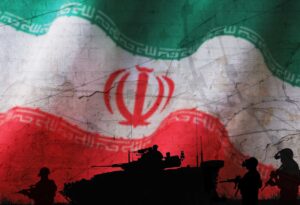
The airstrikes that hit western Iraq on 23rd March, killing more than a dozen members of the Popular Mobilization Forces (PMF), including a senior operations commander, were not an isolated incident. Nor was the strike that targeted the residence of the head of the PMF in Mosul – an attack that underscored the reach of the campaign, even its intended target was not on site at the time. Together, these developments send a clear and troubling message: Iraq has entered a new and far more dangerous phase of the regional conflict unfolding between the United States, Israel, and Iran.
The Ministerial Council for National Security has authorized the Popular Mobilization Forces and other security agencies to act under the principle of the right of response and self-defence
This reality was further reinforced by a recent decision that the Ministerial Council for National Security has authorized the Popular Mobilization Forces and other security agencies to act under the principle of the right of response and self-defence against military attacks targeting their positions. This step, while framed as a sovereign and defensive measure, reflects the depth of the crisis facing the Iraqi state, as it formally acknowledges a security environment in which escalation has become institutionalized.
For years, Iraq has tried to position itself as a country of balance, maintaining working relations with Washington while preserving deep political, economic, and security ties with Tehran. This approach, often described as “positive neutrality,” was always fragile. Today, it is no longer sustainable.
What is unfolding now is not simply an escalation of armed conflict, but a structural transformation of Iraq’s position in the Middle East. Airstrikes are increasingly targeting not only camps and depots, but leadership networks and operational command within the Popular Mobilization Forces – an entity that is, by law, part of the Iraqi security establishment. Iraqi officials have repeatedly stressed that this force operates under the authority of the commander-in-chief and is embedded within the state’s legal framework.
This is precisely where the crisis becomes most acute. The PMF represent a legally recognized component of Iraq’s military system, yet many of their factions simultaneously maintain operational, ideological, and logistical ties beyond Iraq’s borders. This hybrid reality – rendering it part state institution, part transnational actor – has become the central dilemma of the Iraqi state.
Senior regional experts have long warned of its implications. Some have described the system as one in which armed groups have “one foot in the state and one foot out of the state,” highlighting how deeply embedded these factions have become within official institutions. The consequence is a state that formally commands these forces, but in practice struggles to fully control them.
The recent wave of strikes has extended across multiple provinces – from Anbar to areas around Baghdad and along the western desert corridor – suggesting a sustained campaign rather than isolated operations. At the same time, factions aligned with the PMF have escalated their own responses. The repeated drone and rocket strikes against the U.S. Embassy in Baghdad, as well as attacks on American positions in western Iraq and threats in the Kurdistan Region, illustrate the growing scope of retaliation.
More concerning still is the expansion of the conflict beyond Iraq’s borders. Attacks on U.S. bases in eastern Syria, often coordinated or justified by Iraqi factions, and reported threats or attempted actions toward targets in Kuwait indicate a shift toward a broader regional confrontation. These actions are frequently framed by faction leaders as legitimate responses, arguing that any location hosting U.S. forces involved in strikes on Iraq or Iran falls within the scope of retaliation.
In their official statements, these factions have consistently justified their operations as defensive, describing the airstrikes as violations of Iraqi sovereignty and the targeting of their members as an attack on a state-recognized force. This narrative, while politically powerful, further complicates the position of the Iraqi government, which must simultaneously assert sovereignty and manage forces that claim to act in its name.
The result is a cycle that Iraq does not fully control. Airstrikes provoke retaliation. Retaliation invites further strikes. Each iteration erodes the authority of the state and reinforces the perception that Iraq is both a battlefield and a launch point.
This dynamic is also having a direct impact on Iraq’s political system. The formation of a new government – already a complex process shaped by internal rivalries – has become even more difficult under the weight of escalating security tensions. Political blocs are increasingly divided not only over domestic priorities, but over how to position Iraq within the conflict itself. Some view the confrontation as a strategic alignment with regional partners, while others see it as an existential threat to state sovereignty. The result is delay, fragmentation, and a weakening of political consensus at a moment when cohesion is most needed.
The economic consequences are equally serious. Iraq’s heavy reliance on oil revenues leaves it highly vulnerable to regional instability. As the conflict expands, risks to export routes, shipping lanes, and investor confidence increase. Even without direct damage to infrastructure, the perception of Iraq as a conflict zone raises costs, deters investment, and undermines long-term economic planning.
For the Iraqi government, the challenge is therefore not only military or political, but structural. It must respond to external strikes on forces it considers part of its own military, while simultaneously facing internal actors that operate with a degree of autonomy that the state cannot easily restrain. The recent authorization to act under the principle of self-defence may provide legal and political cover, but it also signals how narrow the government’s room for manoeuvre has become.
The government will continue to face a fundamental contradiction: it is held responsible for forces it does not fully control, and targeted because of actions it cannot entirely prevent.
Iraq is not simply caught between two external powers; it is constrained by an internal configuration of power that limits its ability to act decisively. As long as this dual structure persists, the government will continue to face a fundamental contradiction: it is held responsible for forces it does not fully control, and targeted because of actions it cannot entirely prevent.
History shows that such situations are rarely stable. States that operate with overlapping chains of authority and fragmented control over armed actors often find themselves vulnerable to external intervention and internal fragmentation. Iraq today stands at such a moment.
The airstrikes, the retaliatory attacks, the cross-border escalation into Syria and beyond, and the paralysis in government formation are not separate developments. They are interconnected symptoms of a deeper structural imbalance, entailing that Iraq can no longer remain a bystander to this war.