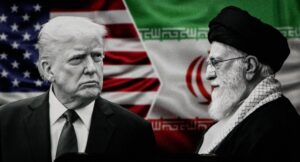
Since Russian President Vladimir Putin launched what he calls a “special military operation” in Ukraine – widely described internationally as a full-scale invasion – the Kremlin has not only lost its influence in the post-Soviet space but also among key partners around the globe. This year alone, the United States has significantly expanded its influence in Venezuela following the forceful removal of Nicolas Maduro, and is now moving toward doing the same in Iran – Moscow’s long-standing strategic partner in the Middle East. But what will await Russia if the Islamic Republic falls?
While Washington carried out regime-change operations around the world, the Kremlin largely refrained from intervening. In some historical examples – in Serbia[i] in 2000 and Afghanistan in 2001[ii] – it even assisted its American partners to achieve their geostrategic goals.
In Ukraine in 2014, as President Putin repeatedly stressed[iii], he effectively abandoned the allegedly pro-Russian Ukrainian President Viktor Yanukovych at the request of the United States, pressuring him not to use force against Western-backed protesters. As a result, Yanukovych was overthrown[iv] and Ukraine moved decisively out of Russia’s geopolitical orbit.
During the Syrian civil war, Moscow supported[v] Bashar al-Assad while at the same time limiting the scale of its intervention, which some analysts argue[vi] left the Syrian government vulnerable. Even when his forces made significant gains, the Kremlin ensured[vii] that he did not completely annihilate the rebels. Under this strategy, Assad was ultimately forced from power in December 2024.
The Kremlin did not provide direct military support to Armenia[viii] either – its ally in the Collective Security Treaty Organization (CSTO). During the 44-day war Armenia and Azerbaijan fought over Nagorno-Karabakh, the Kremlin did not provide any military assistance to Yerevan. As a result, Baku, firmly backed by its ally, Turkey, resolved the conflict in its favour. Now both Azerbaijan and Armenia seek to distance themselves from Moscow.[ix]
But this is not the end of Russia’s abandonment of its allies and partners. In June 2025, during the 12‑day war between Israel and Iran, Russia did not take any meaningful action to assist Tehran, despite the 20-year Comprehensive Strategic Partnership Treaty the two nations signed in 2025[x], and the fact that the Islamic Republic helped Moscow develop drone production.[xi] In the past, Iran has repeatedly showed interest in purchasing Russian air-defence system, but Moscow has always turned down the request[xii], most likely under pressure from Israel and the United States.
The Kremlin’s credibility as a serious security partner has therefore been questioned in the global arena. Iran is now confronting the consequences of this dynamic. On 28th February, the United States and Israel launched their “major combat operation” against the Islamic Republic. While Iranian cities are facing sustained military strikes, the Kremlin is benefiting from rising oil prices. Although the Russian Foreign Ministry warns that the closure of the Strait of Hormuz threatens to destabilize global oil and gas markets[xiii], in reality that is exactly what serves Moscow’s short-term interests.
The Russian economy remains heavily dependent on energy exports. For Iran, China has traditionally been one of the major importers of its oil. If Tehran, as a result of US President Donald Trump’s military actions, is unable to supply Beijing with oil, the Kremlin may attempt to fill the gap by increasing its own energy exports to China.
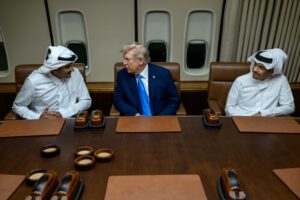
More importantly, if the situation in the Middle East escalates and Gulf states halt, or even reduce oil supplies to Europe, Moscow likely hopes that the European Union will bypass its own sanctions on Russia and resume importing Russian oil. Such an outcome would have a positive impact on the Russian economy.
Prior to the US and Israeli attacks on Iran, representatives of the United States, Russia, and Ukraine held a series of talks in Abu Dhabi. According to official reports, no progress has been made[xiv] toward a peace – or at least a ceasefire – agreement. However, while the US remains preoccupied with the Islamic Republic, Russia is relatively passive in Ukraine. It has reduced strikes on Ukraine’s energy infrastructure and is apparently not even looking to turn international developments in its favour.
Moscow’s approach lets Washington operate undisturbed, while putting the war in Ukraine “on hold.” However, the problem for the United States is that its officials have begun using the same approach that Putin used in the early days of his “special military operation” in Ukraine. The White House is increasingly using Kremlin-style rhetoric, labelling its operation in Iran a “major combat operation,”[xv] claiming that the US “hasn’t even started,”[xvi] calling on anti-Islamic Republic activists to overthrow the government, and emphasizing that Washington “did not start the war, but is finishing it.”[xvii]
These are the same phrases Putin used in 2022 after the Russian military failed to capture Kyiv. Trump’s rapid initial military campaign in Iran also appears to stretch out, as the Islamic Republic finds new ways to resilience. The conflict could evolve into a longer war of attrition.
However, what Russia and the United States have in common – besides apparent similarities between their leaders’ rhetoric – is that some allies have shown increasing caution in cooperating with them. In Ukraine, the Kremlin is on its own and cannot even count on the support of Belarus, its only remaining ally in Europe. In Iran, at this point, Washington may not be able to rely on the United Kingdom to the same extent as in previous military operations in the Middle East, while its European partners are not particularly eager to participate in Trump’s Iran campaign either – both for ideological reasons and in light of recent animosity between Washington and European capitals with regard to trade and Greenland.
Still, if the US manages to achieve its goals in Iran, it will serve as another geopolitical defeat for Russia. Russian Foreign Minister Sergey Lavrov’s statement[xviii] that the United States “will not stop at Venezuela, Cuba, and Iran” clearly suggests that at least some policymakers in Moscow are concerned Russia could eventually become a target of increased U.S. pressure.
If the Islamic Republic were to fall, it would likely reshape not only the geopolitical map of the Middle East but also the existing international order. This process is already underway to some extent. Russia, unable to achieve its objectives in Ukraine after four years of warfare, will almost certainly find itself in an even more unfavorable position. Russia could find itself making significant concessions to Washington. Meanwhile, the US – emboldened by a potential victory in Iran – could shift its focus from the Middle East to Eastern Europe, especially given Trump’s frustrations with not making progress on the question of Ukraine, despite having promised that he would resolve the conflict in the matter of days if he became president again.[xix]
Although Russia remains a nuclear power and a recognized great power, current events signal the gradual weakening of Moscow as a geopolitical actor capable of projecting power and matching the United States in certain areas of interest, especially as the war in Ukraine continues to strain its resources.
[i] Meduza (2020). “Background: Who was Milosevic and how did he hold onto power?”, 8 October 2020, retrieved from: https://amp.meduza.io/en/feature/2020/10/08/the-regime-changers.
[ii] Baev, P.K. (2021). “Russia and America’s overlapping legacies in Afghanistan”, Brookings, 18 August 2021, retrieved from: https://www.brookings.edu/articles/russia-and-americas-overlapping-legacies-in-afghanistan/.
[iii] YouTube (2019). “Putin: After a call form the U.S., I persuaded Yanukovich not to disperse…”, retrieved from: https://www.youtube.com/watch?v=QY4hJQ9BIgM.
[iv] BBC News (2014). “Ukraine’s ousted President Viktor Yanukovych”, 28 February 2014, retrieved from: https://www.bbc.co.uk/news/world-europe-25182830.
[v] BBC News (2015). “Russia joins war in Syria: Five key points”, 1 October 2015, retrieved from: https://www.bbc.co.uk/news/world-middle-east-34416519.
[vi] Mikovic, N. (2022). “When Israel bombs Syria, Russia turns a blind eye”, The Arab Weekly, 1 March 2022, retrieved from: https://thearabweekly.com/when-israel-bombs-syria-russia-turns-blind-eye.
[vii] BBC News (2019). “Syria war: Russia announces ceasefire in Idlib rebel stronghold”, 30 August 2019, retrieved from: https://www.bbc.co.uk/news/world-middle-east-49527419.
[viii] Mikovic, N. (2020). “Russia Could Have Betrayed Armenia for Oil and Gas”, Byline Times, 23 November 2020, retrieved from: https://bylinetimes.com/2020/11/23/russia-could-have-betrayed-armenia-for-oil-and-gas/.
[ix] Mikovic, N. (2024). “Russia conundrum in the Caucasus and beyond”, The Interpreter, 15 April 2024, retrieved from: https://www.lowyinstitute.org/the-interpreter/russia-conundrum-caucasus-beyond.
[x] Reuters (2025). “Iran parliament approves strategic pact with Russia”, 21 May 2025, retrieved from: https://www.reuters.com/business/aerospace-defense/iran-parliament-approves-strategic-pact-with-russia-2025-05-21/.
[xi] Iran International (2024). “How Iran’s drones supercharged Russia’s 1,000-day fight in Ukraine”, 19 November 2024, retrieved from: https://www.iranintl.com/en/202411197064.
[xii] Mikovic, N. (2022). “Russia keeps Iran waiting on advanced weapons”, The Arab Weekly, 11 January 2022, retrieved from: https://thearabweekly.com/russia-keeps-iran-waiting-advanced-weapons.
[xiii] Reuters (2026). ”Russia warns of oil choke due to closure of Strait of Hormuz”, 1 March 2026, retrieved from: https://www.reuters.com/world/middle-east/russia-warns-oil-choke-due-closure-strait-hormuz-2026-03-01/.
[xiv] Sauer, P. (2026). “Second day of Ukraine-Russia peace talks in UAE end without breakthrough”, The Guardian, 5 February 2026, retrieved from: https://www.theguardian.com/world/2026/feb/05/second-day-of-ukraine-russia-peace-talks-in-uae-end-without-breakthrough.
[xv] The White House (2026). “Peace Through Strength…”, 1 March 2026, retrieved from: https://www.whitehouse.gov/articles/2026/03/peace-through-strength-president-trump-launches-operation-epic-fury-to-crush-iranian-regime-end-nuclear-threat/.
[xvi] Kutielieva, I. and Oliynyk, T. (2026). “Trump on operation against Iran: We haven’t even started yet”, Ukrainska Pravda, 2 March 2026, retrieved from: https://www.pravda.com.ua/eng/news/2026/03/02/8023530/.
[xvii] OPB (2026). “Hegseth: ‘We didn’t start this war but under President Trump we’re finishing it’”, 2 March 2026, retrieved from: https://www.opb.org/article/2026/03/02/hegseth-we-didn-t-start-this-war-but-under-president-trump-were-finishing-it/.
[xviii] TASS (2026). “US not to limit itself to desire to rule Venezuela, Cuba and Iran – Lavrov”, 3 March 2026, retrieved from: https://tass.com/politics/2095619.
[xix] Baker, P. (2025). “Trump Vowed to End the Ukraine War Before Taking Office. The War Rages On”, The New York Times, 19 January 2025, retrieved from: https://www.nytimes.com/2025/01/19/us/politics/trump-promise-ending-ukraine-war.html.