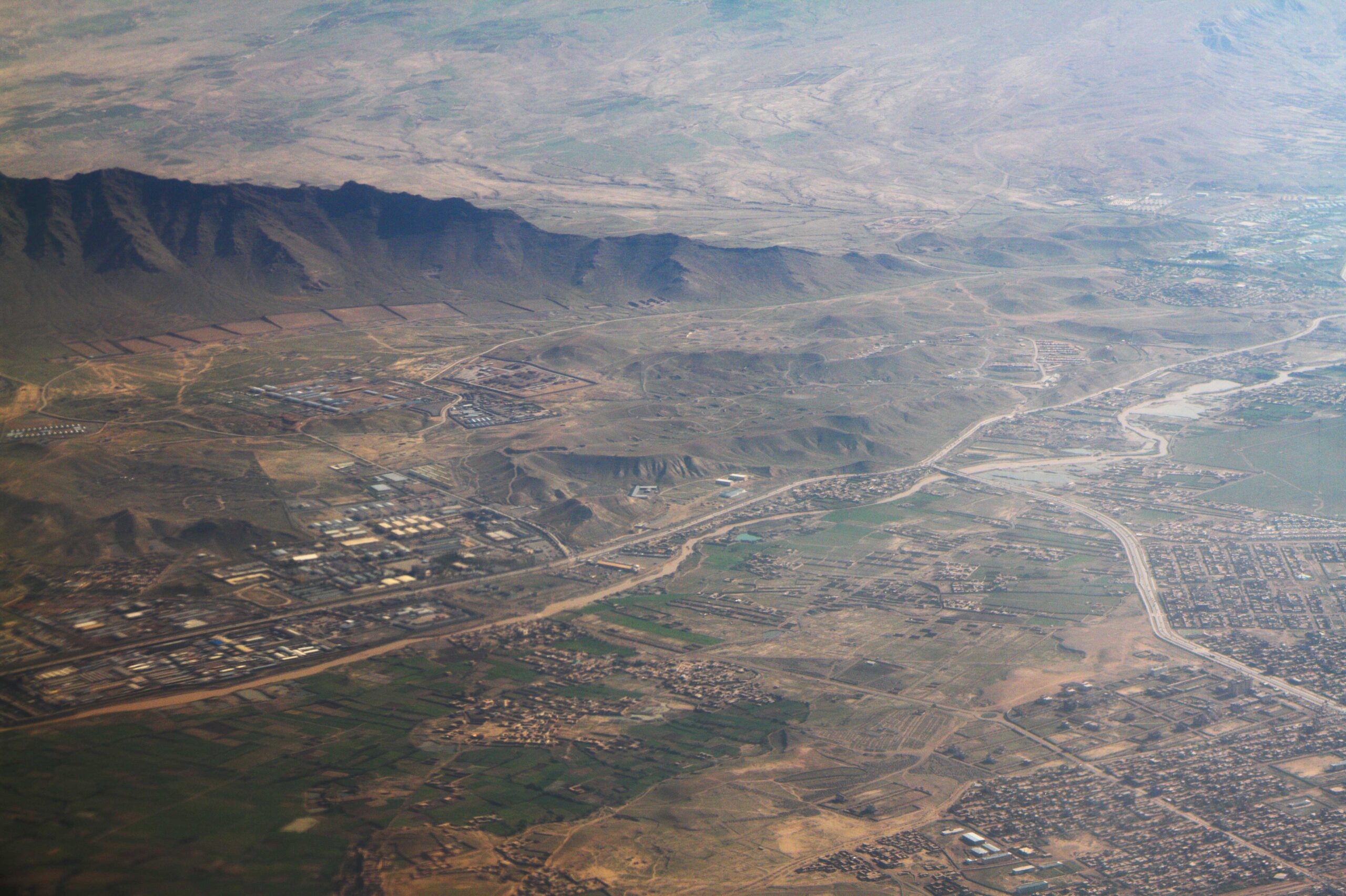
Amidst the uncertainty following the death of Iranian Supreme Leader Ayatollah Ali Khamenei, Iran stands on the precipice, similar to the one its neighbour, Afghanistan, faced exactly thirty-seven years ago.
The shadows of Jalalabad
On 5th March 1989, the Battle of Jalalabad began in Afghanistan. The withdrawal of Soviet forces at that time left a power vacuum contested by the Najibullah regime and Mujahideen factions backed by the United States and Pakistan.[i] The Western coalition bet that the regime in Kabul would collapse within weeks. Instead, what followed was a protracted civil war that dismantled the very foundations of the country for decades.[ii] [iii] The failure at Jalalabad proved that military force driven by political euphoria rarely produces stability.[iv]
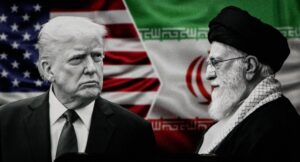
Today, a haunting pattern re-emerges. The United States and Israel, viewing Khamenei’s death as a “golden opportunity” to decapitate Iran’s nuclear and military infrastructure, seem to be repeating the same worn-out thesis: that external military power can dictate a political transition in the midst of a leadership vacuum.
Attacking during Ramadan: A strategy that might backfire
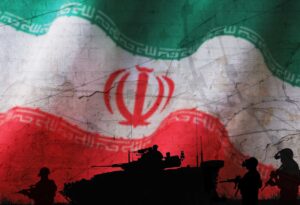
Joint US-Israeli military strikes were launched on 28th February 2026 against Iran. Conducting the offensive during the month of Ramadan, while millions of Iranians are observing the fast, represents a high-stakes psychological gamble. Tactically, this might seem advantageous on a military planning board. However, in the socio-cultural context of the Middle East, it brings significant risks too.
Rather than diminishing the resolve to resist, foreign hostility during the holy month could incite a “rally ’round the flag” phenomenon.[v] Citizens who previously resisted domestic oppression now face a stark choice: support a government they detest or watch their nation be devastated by foreign powers. In the shadow of bomb threats, authentic struggles for liberty are often suppressed, branded as “enemies of the state.”
The #FreeIran slogan echoes across multiple digital platforms, symbolizing the genuine desire of the population for freedom. However, the events of Jalalabad stand as a reminder that when local hopes are usurped by foreign military involvement, the outcome seldom leads to a stable democracy.[vi] Should the Islamic Revolutionary Guard Corps (IRGC) perceive themselves as being existentially threatened, they will not shy away from plunging Iran into a civil war to retain their grip on power, employing the narrative of “Sacred Defence” to stifle any remaining reformist voices.[vii] [viii]
Alternative approaches in case of a deadlock
In the midst of a potential military deadlock between US-Israeli forces and the remaining backbone of the Iranian regime, nations not involved in the war could step up to offer an alternative third way. The history of Indonesian diplomacy provides a highly relevant blueprint through the Jakarta Informal Meeting (JIM), initiated by Foreign Minister Ali Alatas in 1988 and 1989 in the context of the conflict in Cambodia.
The core of JIM’s success lay in an informal diplomatic framework that allowed warring factions to sit at the same table without rigid state attributes.[ix] Alatas understood that political pride inherently brings about deadlocks. By creating a space where dialogue could take place without the pressure of formal protocol at the outset, JIM succeeded in breaking a stalemate that had lasted for years.[x] This approach could be utilized today to unite moderate groups in Iran with Gulf regional powers in an impartial roundtable discussion, unencumbered by the overshadowing presence of the ongoing war.
Beyond the Alatas model, the pragmatic approach of Jusuf Kalla in de-escalating the Aceh conflict in Indonesia through the 2005 Helsinki Agreement offers another lesson. Kalla utilized the principle of “self-determination within a sovereign state” and an approach that touched upon economic roots and honour.[xi] [xii]
In the Helsinki negotiations, the key was providing a “dignified exit” for the conflicting parties. Kalla did not demand total surrender; instead, he sought reintegration with dignity (Schulze, 2007).[xiii] If this approach were applied to the Iranian crisis, the international community must be able to guarantee that the power transition after Khamenei will not end in “purges” or unilateral trials of all state elements. Kalla proved that peace can only be achieved if all parties are willing to relinquish their maximalist ambitions for long-term stability. He emphasized “dignity for all”, a principle that might prove useful in Tehran today so that military factions do not feel pushed to fight to the last drop of blood.
Conclusion: Rejecting the echoes of history
Freedom and stability can rarely be dropped from the wings of fighter jets. Indonesia’s historical engagement with warring factions in Southeast Asia and within its own borders through the diplomatic efforts of JIM and Helsinki present alternative approaches that succeeded during times of deadlock.
As the threat of a Jalalabad-style democracy hangs over Iran, one that leaves behind rubble, resentment, and civil war, international actors should consider the ways in which the Iranian people could still achieve a future determined by their own will. If the U.S. and Israeli operations continue without such a vision, they may find that instead of liberating Iran, they might open the gates of chaos that will haunt the region for the next forty years.
[i] Coll, S. (2004). Ghost wars: The secret history of the CIA, Afghanistan, and Bin Laden, from the Soviet invasion to September 10, 2001. Penguin Press.
[ii] Roy, O. (1990). Islam and resistance in Afghanistan. Cambridge University Press.
[iii] Rubin, B. R. (1995). The fragmentation of Afghanistan: State formation and collapse in the international system. Yale University Press.
[iv] Grau, L. W. (Ed.). (1996). The bear went over the mountain: Soviet combat tactics in Afghanistan. National Defense University Press.
[v] Mueller, J. E. (1970). “Presidential popularity from Truman to Johnson”, American Political Science Review, 64(1), 18–34.
[vi] Takeyh, R. (2009). Guardians of the revolution: Iran and the world in the age of the ayatollahs. Oxford University Press.
[vii] Alfoneh, A. (2013). Iran unveiled: How the revolutionary guards is transforming Iran from theocracy into military dictatorship. AEI Press.
[viii] Wehrey, F., Green, J., Nader, A., & Bensahel, N. (2009). “The rise of the Pasdaran: Assessing the domestic roles of Iran’s Islamic Revolutionary Guards Corps”, RAND Corporation.
[ix] Acharya, A. (2012). The making of Southeast Asia: International relations of a region. Cornell University Press.
[x] Alatas, A. (2006). The pebble in the shoe: The diplomatic struggle for East Timor. Aksara Karunia.
[xi] Aspinall, E. (2009). Islam and nation: Separatist rebellion in Aceh. Stanford University Press.
[xii] Kingsbury, D. (2006). Peace in Aceh: A personal account of the Helsinki peace process. Equinox Publishing.
[xiii] Schulze, K. E. (2007). Mission not so impossible: The Aceh Monitoring Mission and lessons learned for the EU. S. Rajaratnam School of International Studies, No. 131.