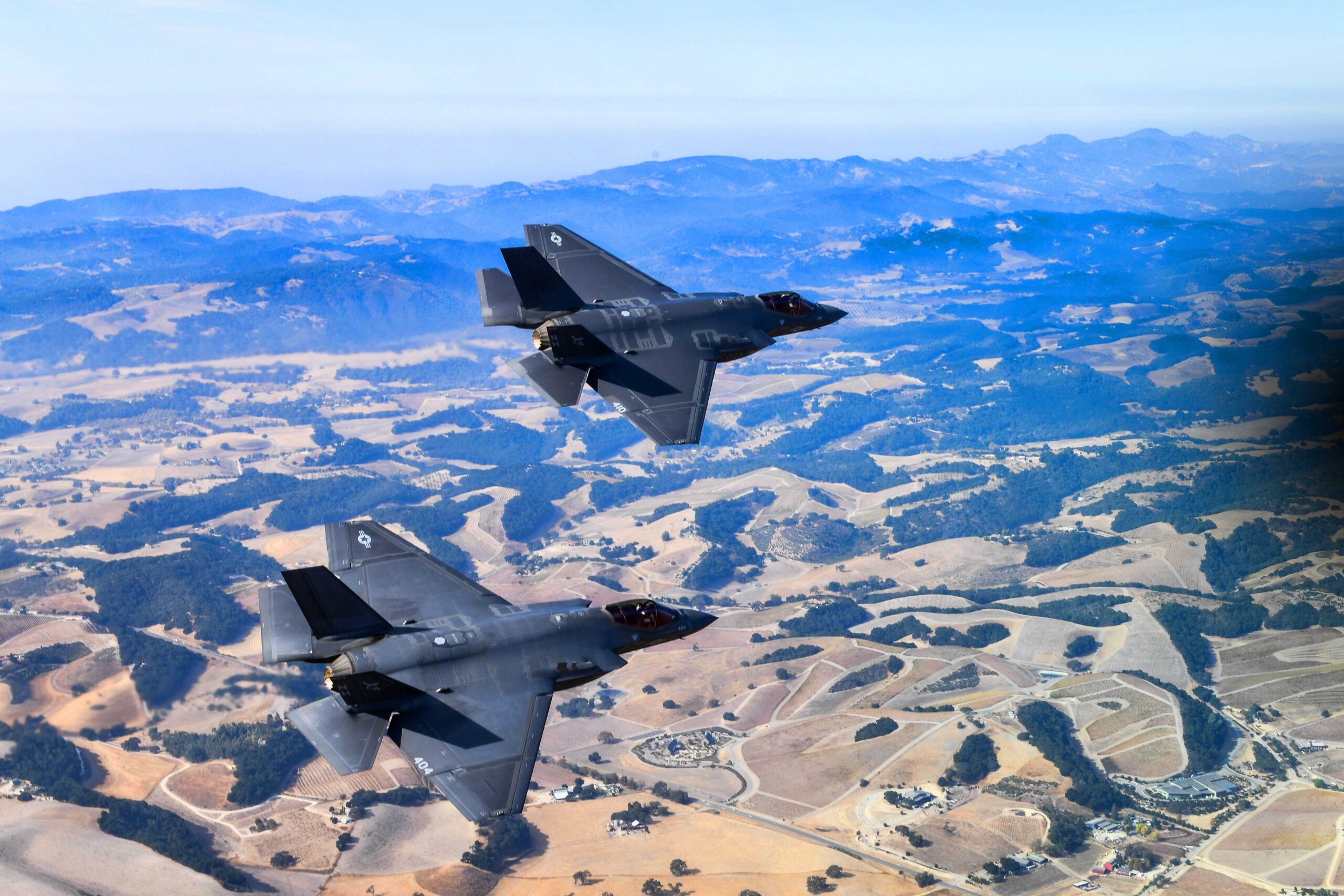
Recent reports about Türkiye considering to return the S-400 air defence system to Russia[i] mark the latest chapter in Ankara’s labyrinthine quest to be readmitted to the U.S.’ F-35 programme. No doubt, the F-35 is an unrivalled fighter jet, which Russia’s SU-57 and China’s J-20 struggle to compete with. Ankara’s geopolitical considerations are clear: regional competitors, notably including Israel and Greece, are set to wield a growing number of F-35s, altering the balance of air power at Türkiye’s expense.
Türkiye has been looking for ways to return to the F-35 programme ever since its expulsion. Nevertheless, this has taken place alongside the pursuit of alternative options, leaving some U.S. analysts confused. Such views overstate the importance Turkish decision makers attribute to the material capabilities of the F-35. There are powerful symbolic motivations for Türkiye’s actions too. French sociologist Pierre Bourdieu once remarked that “symbolic power is a power which is exercised only if it is recognised.” The U.S. should also appreciate Türkiye’s symbolic considerations. In this sense, the F-35 is not merely a weapon but a marker of recognition and respect in international relations.
Türkiye with and without the F-35
The U.S. removed Türkiye from the F-35 programme in 2019[ii], due to Ankara’s decision to purchase the Russian-made S-400 air defence system. Washington argued that the presence of the Russian system and closer cooperation between Türkiye and Russia in the security sphere could put the F-35’s advanced stealth tech in danger.
Since then, Turkish policymakers have made concerted efforts to rectify the situation. Turkish President Recep Tayyip Erdogan made reacceptance into the programme a key aspiration at his recent state visit to the U.S. Despite adding sweeteners to the deal, such as the purchase of 225 Boeing aircraft[iii], talks stalled in Washington.
Notwithstanding, rumours that Türkiye is seeking to return the S-400 to Russia – although denied by the Russians[iv] – show that Ankara is willing to spend great political and economic capital in its pursuit.
In the absence of the F-35 Türkiye has not remained idle, having looked for alternatives both at home and abroad. Domestically, it has been developing its own fifth generation fighter jet, the KAAN, set to fly in April 2026.[v] The KAAN platform is domestically produced and will serve as a long-term supplier for the Turkish Air Force. Early reports suggest even NATO allies such as Spain are considering purchasing the KAAN over the F-35[vi], primarily due to recent tensions in the transatlantic relationship. Internationally, Türkiye recently purchased 20 Eurofighter Typhoons from the UK.[vii] The Eurofighter Typhoons are largely seen in Türkiye as a stopgap measure[viii] until the KAAN reaches combat readiness.
Türkiye’s symbolic considerations
Despite the impressive capabilities of the KAAN, it is unlikely it could match the F-35 in the foreseeable future. Yet, this mismatch in capabilities cannot fully account for Türkiye’s actions. A key, often underplayed factor is the symbolism of the F-35, and what operating the platform represents.
Türkiye has historically grappled with its partial outsider status in the U.S.-led, Western system of international relations. Scholars such as Cambridge University’s Ayse Zarakol have long written on Türkiye’s entrenched determination to be treated as an equal to its Western partners.[ix] This has been compounded by Türkiye’s maze-like EU accession process.
Türkiye has been a key U.S. ally, including in strategic arenas such as Gaza, Syria and Ukraine. Nevertheless, reacceptance to the F-35 programme and broader integration into the Western framework eludes Ankara. As the U.S. has granted the F-35s to other Middle Eastern allies such as Israel and Saudi Arabia, Türkiye’s feelings of being treated differently only grew.
U.S. President Donald Trump remains aware of the importance of Türkiye and has been praising President Erdogan. In reference to Gaza[x], President Trump stated that Erdogan has been “my friend, and every time I’ve ever needed him, he’s been there for me.” In reference to Syria, he stated that Türkiye will “hold the key” to what happens in the rapidly changing country.[xi]
These statements bear strong symbolic weight in Türkiye but are not enough to dislodge long-standing views of American exploitation. A 2024 Pew Research Centre poll found nearly 80% of Turkish respondents had a very or somewhat unfavourable view of the U.S.[xii] While this is likely due to a variety of reasons, and the average Turkish citizen does not dwell on the F-35 programme, there remains a view, dating as far back as the formation of the Turkish republic that the U.S. does not hold Türkiye to a similar standard as its other partners, particularly those in the West. Türkiye, with its history on the periphery of Europe, is acutely aware of its partial outsider status.
A shift in negotiations?
This can render what, to those in Washington, is a straightforward geopolitical calculation into a fraught clash of identity politics. U.S. policymakers and analysts must appreciate this. They must recognise that while economic and military concessions are materially important, there is a great deal of power in symbolism.
The F-35 saga goes beyond geopolitics. It has become a proxy for a deeper debate over Türkiye’s status in the U.S.’ pantheon of allies. Critics frame Turkish behaviour as opportunistic and transactional, but these narratives fall into the material determinism that can so often dominates Western analysis. For Türkiye, access to the F-35 is not only about replacing the F-16 but about affirmation of its standing as a full and respected member of the U.S.-led Western alliance.
[i] Middle East Eye (2025). “Turkey asked Russia to take back S-400 system: Report”, 18 December 2025, retrieved from: https://www.middleeasteye.net/news/turkey-asked-russia-take-back-s-400-system-report.
[ii] BBC News (2019). “US removes Turkey from F-35 jet programme”, 17 July 2019, retrieved from: https://www.bbc.co.uk/news/world-us-canada-49023115.
[iii] Sezer, C. and Butler, D. (2025). “Turkish Airlines completes deal to buy 225 Boeing planed after Erdogan-Trump talks”, 26 September 2025, retrieved from: https://www.reuters.com/business/aerospace-defense/turkish-airlines-agrees-225-boeing-aircraft-orders-subject-engine-talks-2025-09-26/.
[iv] Daily Sabah (2025). “Kremlin dismisses reports on Turkiye’s return of S-400s”, 18 December 2025, retrieved from: https://www.dailysabah.com/politics/kremlin-dismisses-reports-on-turkiyes-return-of-s-400s/news.
[v] AA (2025). “Turkish fighter jet KAAN will fly in April 2026”, 25 July 2025, retrieved from: https://www.aa.com.tr/en/turkiye/turkish-fighter-jet-kaan-will-fly-in-april-2026/3642389.
[vi] Casimiro, C. (2025). “Spain Eyes Turkish KAAN Fighter Jet After Scrapping F-35 Plan: Report”, The Defense Post, 6 October 2025, retrieved from: https://thedefensepost.com/2025/10/06/spain-eyes-turkish-kaan-fighter/.
[vii] UK Government (2025). “20,000 UK jobs secured as Turkiye buys 20 Typhoon jets in biggest fighter jet deal in a generation”, 27 October 2025, retrieved from: https://www.gov.uk/government/news/20000-uk-jobs-secured-as-turkiye-buys-20-typhoon-jets-in-biggest-fighter-jet-deal-in-a-generation.
[viii] Kasapoglu, C. (2025). “Turkey’s Eurofighter stopgap: The best available, not the best possible”, Atlantic Council, 10 November 2025, retrieved from: https://www.atlanticcouncil.org/blogs/turkeysource/turkeys-eurofighter-stopgap-the-best-available-not-the-best-possible/.
[ix] Bilge Criss, N. (2013). “After Defeat, How the East Learned to Live with the West”, The Political Psychology of Turkish Political Behaviour, 14, 1, retrieved from: https://www.tandfonline.com/doi/pdf/10.1080/14683849.2013.770641.
[x] Daily Sabah (2025). “Trump thanks Erdogan for role in Gaza cease-fire”, 13 October 2025, retrieved from: https://www.dailysabah.com/politics/diplomacy/trump-thanks-erdogan-for-role-in-gaza-cease-fire.
[xi] Mason, J. (2024). “Trump says Turkey holds the key to Syria’s future”, Reuters, 16 December 2024, retrieved from: https://www.reuters.com/world/middle-east/trump-says-turkey-holds-key-syrias-future-2024-12-16/.
[xii] The Chicago Council on Global Affairs (2024). “Turkish Views of Foreign Actors Diverge from Erdogan’s East-West Balance”, 13 November 2024, retrieved from: https://globalaffairs.org/commentary/blogs/turkish-views-foreign-actors-diverge-erdogans-east-west-balance.