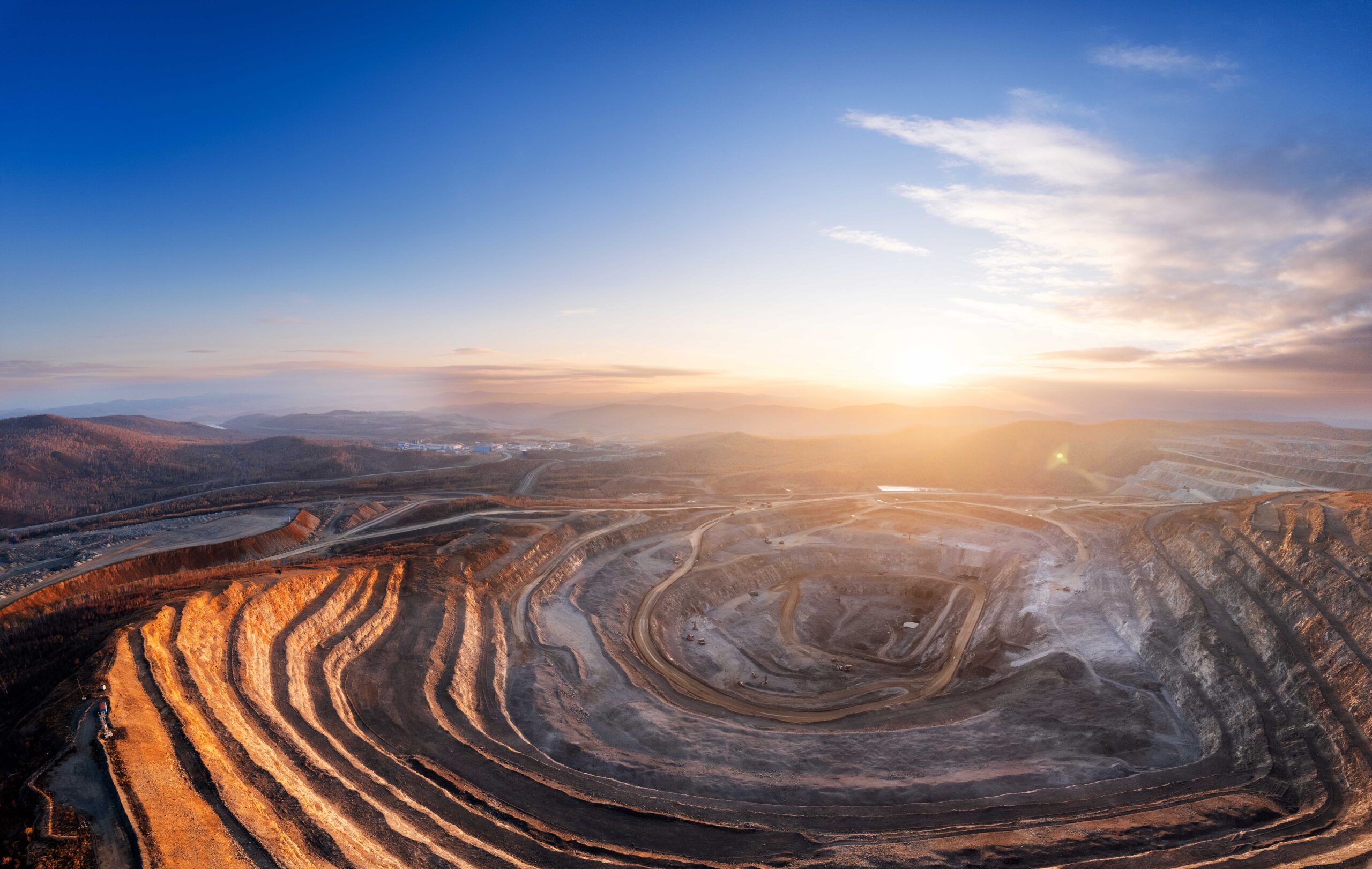
In June 2025, Niger’s military government announced it would nationalise SOMAÏR, a uranium mine in the north of the country operated for decades by the French nuclear company Orano.[i] A few months later, a tribunal at the World Bank’s International Centre for Settlement of Investment Disputes (ICSID) ordered Niger not to sell or transfer the mine’s stockpiled uranium pending the outcome of Orano’s claims.[ii] Niger has claimed it may put the uranium on the open market anyway, insisting on its “legitimate right” to sell national resources even as Orano values the seized stock at hundreds of millions of dollars.[iii]
At first glance, this dispute looks like a narrowly Franco-African issue; a former colony challenging a partially state-owned French company over a long-standing joint mining venture. Yet the implications stretch well beyond that.
There are three trends here that matter for UK-MENA policy: the return of resource nationalism, intensifying great-power competition over nuclear fuel and critical minerals, and growing scepticism towards Western-centred arbitration. How the UK responds will help determine whether its new critical minerals diplomacy offers something genuinely different from the extractive patterns that produced this crisis.
The history
Uranium has tied Niger to France since the 1970s. The latter has made use of exploitative post-independence economic agreements since deposits near the town of Arlit uncovered an energy source central to French energy aspirations. SOMAÏR and, until recently, COMINAK alone have produced more than 70,000 tonnes of uranium.[iv] For decades, Orano and its predecessors enjoyed a quasi-monopoly over Niger’s uranium exports under joint-venture arrangements in which the French side held a controlling stake. Nigerien officials and civil-society groups have long argued that these arrangements deliver lopsided financial results and leave environmental and social costs concentrated in the north.
The 2023 coup and subsequent breakdown in relations with France provided an opening for the junta to front uranium as the symbol of a wider grievance: a resource that had enriched others while impoverishing Niger, as PM Ali Lamine Zeine put it.[v]
Nationalising SOMAÏR is as much a political act as an economic one. It is far more than just another instance of political instability in the Sahel. It asserts control over a strategic sector, rebuffing its past dependency, and creates room to court new partners, particularly Russia, who are already active in the region.[vi] It is easy to underestimate how asymmetry can unravel in even technically watertight contracts.
Uranium and the markets
The Orano debacle is unfolding at a moment when the nuclear fuel and critical minerals landscapes are already under strain. The EU’s aforementioned shift from Russian goods elevated the importance of non-Russian suppliers such as Kazakhstan, Canada and, until now, Niger.
Meanwhile, several MENA states are expanding or initiating nuclear power programmes. The UAE’s Barakah plant, Egypt’s El Dabaa and Turkey’s (Russian-built) Akkuyu projects are all under construction. Saudi Arabia and Jordan are well into the planning stages. These programmes are all sensitive to questions of fuel security, pricing and supplier diversification.
At the same time, MENA governments and Gulf-based investors are increasingly active on the African mining and energy scene, including in critical minerals such as cobalt, rare earths and phosphates.
In other words, the corridor linking African resource producers, MENA energy consumers and external powers is becoming denser and more contested. A high-profile breakdown like in the case of the Niger–Orano debate should therefore be watched carefully as a data point in assessing the reliability of Western commercial and legal arrangements.
The UK
The UK’s Critical Minerals Strategy sets out three headline goals:
- Accelerate domestic capabilities
- Collaborate with international partners
- Enhance international markets to promote responsiveness, transparency and responsibility[vii]
Recently, UK analysts have stressed that this requires moving beyond a purely defensive “de-risking from Russia/China” mindset towards a more proactive role in shaping standards and financing for responsible extraction.[viii] [ix]
Some elements of that shift are already visible. Britain has signalled interest in co-financing mining and processing projects with partners such as Saudi Arabia, and in working with MENA states on digital tools to monitor critical mineral supply chains.[x] [xi]
Yet, Niger’s uranium standoff suggests that rhetoric about “responsible” partnerships will ring hollow unless the UK’s approach looks and feels meaningfully different to both governments and local communities. A strategy that rests solely on state-to-state deals and investor protections risks being perceived, fairly or not, as a rebranded version of the model now being rejected by Niger.
What, then, should a UK–MENA critical minerals policy learn from Niger? First, design contracts for political turnover, not just for the incumbent. The Orano ventures tied Niger’s uranium exports closely to a single European partner under terms negotiated with a small domestic elite. Once that elite collapsed, the legitimacy of the whole arrangement rapidly unravelled. For UK deals in Africa and the wider MENA region, they should include transparent fiscal regimes, visible local revenue sharing, and clear public-goods components; features that opposition parties and civil society can defend even when they are out of power.
Second, take resource sovereignty seriously and channel it into upgrading. Niger’s leaders are not wrong to resent a model that stole uranium profits from their economy. But the answer cannot be autarky or sales to the highest bidder. For the UK and MENA, the more sustainable route is to support local capacity in areas that make deals durable on both sides. You need reliable regulatory oversight, environmental management, technical training, and, where commercially sensible, some degree of local processing. This legitimises the British strategy’s emphasis on “responsible” markets.
Third, fix the legitimacy problem. ICSID’s interim measures in favour of Orano unintentionally reinforce a perception that investment arbitration is a one-way system designed to constrain the autonomy of weaker states. If the UK wants success in the critical minerals space, it cannot simply insist that partners trust it. It should also push for greater transparency in proceedings, more systematic inclusion of local legal expertise, and stronger mechanisms for grievance handling and contract adjustment. A system that is seen as open to scrutiny is more likely to endure than one that treats its rules as beyond question.
Conclusion
Niger’s confrontation with Orano will continue to move through legal and diplomatic channels for years. It may yet result in some form of settlement that allows uranium exports to resume under a new arrangement. But for the UK and MENA, the case already serves a useful purpose. It shows how quickly a strategic asset can become a liability when contracts are perceived as opaque, when benefits are concentrated, and when legal protections lack political legitimacy on the ground.
The UK’s emerging critical minerals diplomacy has the advantage of starting later. It can learn from both the colonial-era monopolies that shaped Niger’s uranium sector and the recent effects of great-power competition in Africa. If Britain uses that opportunity to promote transparent agreements rather than resourcing hoarding for its own sake, then Niger’s uranium gambit could become a turning point in responsible foreign critical mineral policy.
[i] Reuters Staff (2025). Niger to Nationalise Uranium Mine Operated by France’s Orano as Relations Sour. Reuters. [online] 20 Jun. Available at: https://www.reuters.com/world/africa/niger-nationalize-somair-uranium-venture-operated-by-frances-orano-2025-06-19/
[ii] Orano Group (2026). The ICSID Arbitral Tribunal Opposes the Sale by the State of Niger of Uranium Produced by SOMAIR | Orano. [online] orano.group. Available at: https://www.orano.group/en/news/news-group/2025/september/the-icsid-arbitral-tribunal-opposes-the-sale-by-the-state-of-niger-of-uranium-produced-by-somair.
[iii] Dalton, D. (2025). Niger to Put Somair Uranium on Open Market, Says State Media. [online] The Independent Global Nuclear News Agency. Available at: https://www.nucnet.org/news/niger-to-put-somair-uranium-on-open-market-says-state-media-12-1-2025.
[iv] Adombila, M.A. (2025). France’s Orano Says 1,500 Tons Uranium Stockpiled at Seized Niger Site. Reuters. [online] 30 Sep. Available at: https://www.reuters.com/world/africa/frances-orano-says-1500-tons-uranium-stockpiled-seized-niger-site-2025-09-30/.
[v] Umar, B. (2025). Niger Leader Tells UNGA France Must ‘remember and Recognise Its crimes’ in Sahel Nation since 1899. [online] Trtworld.com. Available at: https://www.trtworld.com/article/c3cb5385aaf8.
[vi] Timbuktu Institute (2025). REPORT – Russia’s Repositioning in the Sahel: From Wagner to Africa Corps. [online] Timbuktu-institute.org. Available at: https://timbuktu-institute.org/index.php/toutes-l-actualites/item/1262-report-russia-s-repositioning-in-the-sahel-from-wagner-to-africa-corps.
[vii] Department for Business and Trade and Department for Energy Security and Net Zero (2025). Industrial Strategy Critical Minerals Strategy. [online] Available at: https://assets.publishing.service.gov.uk/media/6937fa7833c7ace9c4a41e25/uk-critical-minerals-strategy-vision-2035.pdf.
[viii] Haenlein, C. and Marks, D. (2025). Priorities for the New UK Critical Minerals Strategy. [online] rusi.org. Available at: https://www.rusi.org/explore-our-research/publications/commentary/priorities-new-uk-critical-minerals-strategy.
[ix] Vandome, C. (2023). Written Evidence Submitted by Africa Programme, Chatham House. [online] Available at: https://committees.parliament.uk/writtenevidence/118825/pdf/.
[x] Department for Business, Energy & Industrial Strategy (2023). UK and Saudi Arabia Pledge to Deliver Closer co-operation on Critical Minerals. [online] GOV.UK. Available at: https://www.gov.uk/government/news/uk-and-saudi-arabia-pledge-to-deliver-closer-co-operation-on-critical-minerals.
[xi] Dempsey, H. and Cornish, C. (2024). How Gulf States Are Putting Their Money into Mining. [online] www.ft.com. Available at: https://www.ft.com/content/59298650-540a-43cd-86f8-a6c6db0aa906.