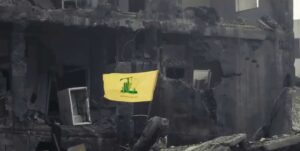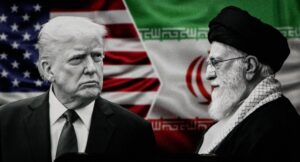

The 2026 Iran war has embroiled[i] the Middle East in ways not seen since Saddam’s invasion of Kuwait. Without a concrete resolution favorable to both the U.S. and the Iranian regime, the war continues to escalate.
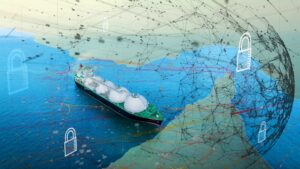
The Islamic Republic of Iran has been incapable of catching up to the conventional military capabilities of both the U.S. and Israel but played its most effective contingency by closing off the Strait of Hormuz. The closure of the Strait of Hormuz[ii] has led to a global energy and fertilizer crisis[iii], with economies reeling from the situation in various continents.
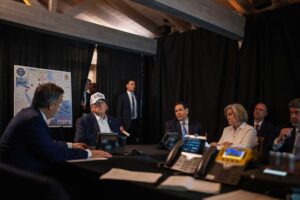
Furthermore, the Trump administration has admonished NATO allies[iv] for not directly intervening in a war of choice – especially as the Pentagon confirmed that Iran did not pose an imminent threat.[v] With only Israel taking part in bombing campaigns alongside them, the U.S. may have found itself in its own Suez Canal Crisis[vi] that will change the landscape of the Middle East with wider global implications.
2026 Iran War and closure of the Strait of Hormuz
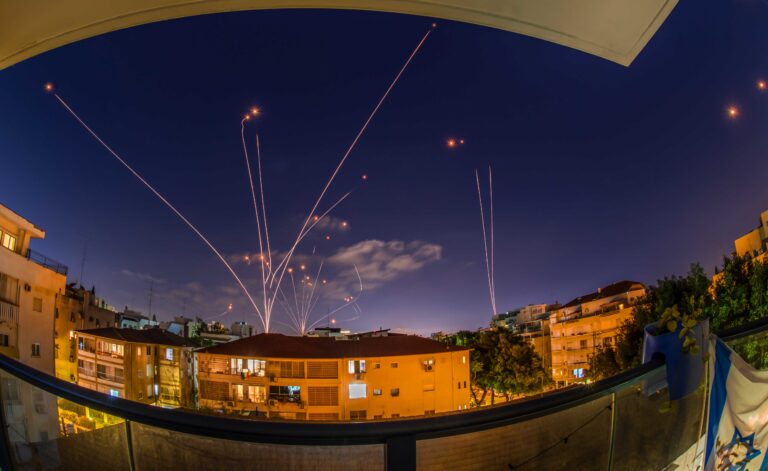
On 28th February, the U.S. and Israel initiated[vii] a heavy bombing campaign against Iran that has seen the latter’s air force and missile launchers decimated. Both the American and Israeli air forces were able to rapidly dominate through the air as Iran’s air defenses were primarily taken out during the 12 Day War[viii] with the remaining being outdated.
The Islamic Revolutionary Guards Corps (IRGC) could not keep up conventionally against U.S. and Israeli aerial dominance and, seeing the war as existential, played its last card by firing at tankers and closing the Strait of Hormuz.[ix] Current shipping disruptions have seen energy prices increase to the 2022 levels.[x] $200 barrel prices could potentially emerge if the war is not resolved[xi] in the next several months.
The lack of fertilizer exported from the region (20%-30% of regional trade[xii]) will also have profound effects on the global crops, especially as it is now harvesting season. A potential domino effect could see rising food prices and impoverishment[xiii] in less developed countries.
The Asian market[xiv] has been particularly affected with critical rationing of energy consumption being taken in countries such as Malaysia, South Korea, Pakistan, and others. Furthermore, strikes on energy infrastructure have critical effects on supply chains, such as the lack of helium[xv] needed for critical chips and medical facilities.
The growing rift between the U.S. and its allies
A major divergence in the war thus far is the growing rift[xvi] between America and its European allies. The Trump Administration has admonished[xvii] Europe, and in particular NATO, for not directly intervening in helping to open up the Strait of Hormuz, even though the defensive alliance’s own articles do not allow it to conduct broad missions.
NATO operates in the North Atlantic and other areas of operations (AO) such as the Mediterranean, where member countries are located. Article VI[xviii] prohibits offensive operations outside the AO, and as the United States was not attacked first, Article V on mutual defense cannot be activated.
Turkey is the only NATO country that Iran directly attacked with missiles, and as Ankara did not trigger Article V on mutual defence, the alliance is not needed. Still, the U.S. administration has used frustration over the Strait of Hormuz as a potential future pretext for NATO withdrawal. However, this cannot happen without a two-thirds congressional vote.[xix]
Arguably, NATO’s biggest divergence came over the Greenland crisis[xx] when the Trump Administration implied military action was on the table to seize Danish territory, which Europe actively prepared defensive measures for.[xxi] Furthermore, direct insults to the sacrifices of NATO troops[xxii] during the Afghan and Iraq wars by President Trump only soured public opinion[xxiii] on the United States. Without direct Western allies supplementing the U.S. war effort as they did in the Balkans, Afghanistan, Iraq, and Libya, America finds itself in a reverse situation of the 1956 Suez Canal Crisis.
The Suez Canal crisis
Against the backdrop of World War II, Western European countries attempted[xxiv] to retain influence in their former or then current colonial spheres of influence. Two of those countries were France and the UK, whose economic lifelines stemmed from overseas force projection.
In October 1956, Gamal Abdel Nasser, Egypt’s then-President, nationalized the Suez Canal[xxv], much to the condemnation of the United Kingdom and France. Despite the U.S. pushing for a diplomatic resolution as then President Eisenhower worked to put Egypt into the American sphere of influence, the UK, France, and Israel secretly planned military action.[xxvi]
The operation took place[xxvii] on 29th October 1956, and the UK, France, and Israel nearly completed their military objectives, but ultimately lost politically. Without consulting the United States, condemned[xxviii] by the international community, and facing the threat of military action by the Soviet Union, the Suez Canal crisis ended in humiliation.
The blowback directly affected France and the UK, which were put under vassalage of the United States, and neither London nor Paris could make major foreign policy decisions without consulting Washington first. America’s authority over the aforementioned European states would be conveyed by British Prime Minister Harold MacMillan’s famous ‘winds of change’[xxix] speech.
Has the United States run into a Suez Canal trap?
Akin to the mistakes France and the UK made in 1956, the United States unilaterally initiated a war of choice[xxx] with Israel against Iran without informing its allies and due to this, finds itself in a bind. As the Iranian regime has not budged to tens of thousands of airstrikes and still has firm control over the Strait of Hormuz, a ground operation could loom in the future if the 7th April ceasefire[xxxi] breaks down, which could also have repercussions for President Trump and Israel in political terms.
The global economy is bracing for an economic shock[xxxii] from the war that could be worse than the 2008 financial crisis. After already implementing damaging economic policies such as tariffs[xxxiii] along with cuts in healthcare and sciences[xxxiv], the Trump Administration risks future election chances for Republicans if the war exacerbates socioeconomic conditions.
Israel, already facing a major global realignment[xxxv] following the Gaza War and losing support[xxxvi] amongst younger generation sin the West, could see further isolation amongst American voters who see the ongoing war as Israeli-led, at least partially.
Furthermore, a potential ground operation to reopen the Strait could have haunting implications. The Strait of Hormuz has a narrow passageway surrounded by near-impassable mountains. Iran’s coastline represents a major kill-box for any invading military akin to Turkey’s Dardanelles. Even a limited operation against a few islands comes with risks of sustained short-range missile, mortar, and first-person view (FPV) drone fire, which could lead to heavy American casualties.
America’s general public is historically sensitive and activist[xxxvii] when it comes to U.S. casualties – particularly on wars of option such as Vietnam and Iraq – and the Iranian regime would look to inflict losses that could sway general opinion to end the war in a settlement in their favour.
Already becoming one of the most unpopular administrations[xxxviii] in history, with few allies having the appetite to follow his strategy, President Trump finds himself in the same trap Britain and France faced in 1956. Unless a total war or solid diplomatic measures lead to a resolution, the U.S. will face a Suez Canal Crisis trap of its own, with the possibility that Iran could potentially have control over a critical international shipping lanes in the end.
[i] Chtatou, Dr M. (2026). “The Third Gulf War and the World it is Already Remaking”, Eurasia Review, 26 March 2026, retrieved from: https://www.eurasiareview.com/26032026-the-third-gulf-war-and-the-world-it-is-already-remaking-analysis/.
[ii] Jeyaretnam, M. (2026). “What to Know About Iran’s ‘Selective’ Closure of the Strait of Horum”, Time, 7 April 2026, retrieved from: https://time.com/article/2026/04/07/strait-of-hormuz-countries-pass-deals-iran-us-war-trump/.
[iii] CSIS (2026). “Chokepoint: How the War with Iran Threatens Global Food Security”, 11 March 2026, retrieved from: https://www.csis.org/analysis/chokepoint-how-war-iran-threatens-global-food-security.
[iv] NBC News (2026). “Rebuffed by allies, Trump now says U.S. doesn’t need help defending the Strait of Hormuz”, 17 March 2026, retrieved from: https://www.nbcnews.com/politics/donald-trump/rebuffed-allies-trump-help-defending-strait-hormuz-rcna263917.
[v] Stewart, P. and Pamuk, H. (2026). “Pentagon tells Congress no sign that Iran was going to attack US first”, Reuters, 2 March 2026, retrieved from: https://www.reuters.com/world/us/pentagon-tells-congress-no-sign-that-iran-was-going-attack-us-first-sources-say-2026-03-02/.
[vi] Robert Menzies Institute (N.D.). “The Suez Crisis”, retrieved from: https://www.robertmenziesinstitute.org.au/on-this-day/the-suez-crisis/.
[vii] McBride, J. (2026). “The War Against Time in the Middle East”, Atlas Institute for International Affairs, 10 March 2026, retrieved from: https://atlasinstitute.org/the-war-against-time-in-the-middle-east/.
[viii] ACLED (2025). “Twelve days that shook the region: Inside the Iran-Israel war”, 4 July 2025, retrieved from: https://acleddata.com/qa/qa-twelve-days-shook-region-inside-iran-israel-war#:~:text=Israel%20was%20quick%20to%20secure,on%20airpower%20to%20overwhelm%20adversaries.
[ix] Gross, S., Talmadge, C. and Sisson, M.E. (2026). “Why Iran’s disruption of the Strait of Hormuz matters”, Brookings, 19 March 2026, retrieved from: https://www.brookings.edu/articles/why-irans-disruption-of-the-strait-of-hormuz-matters/.
[x] Murray, B. (2026). “US Supply Chains Are Straining Like It’s 2022 Again”, 7 April 2026, retrieved from: https://www.bloomberg.com/news/newsletters/2026-04-07/us-supply-chains-and-diesel-prices.
[xi] Conley, J. (2026). “Oil prices could hit $200 per barrel if the war in Iran continues into summer”, Yahoo, 27 March 2026, retrieved from: https://finance.yahoo.com/news/oil-prices-could-hit-200-per-barrel-if-the-war-in-iran-continues-into-summer-150224508.html.
[xii] Goldman Sachs (2026). “How the Conflict in the Strait of Hormuz Could Affect Global Agriculture Prices”, 1 April 2026, retrieved from: https://www.goldmansachs.com/insights/articles/how-the-conflict-in-the-strait-of-hormuz-could-affect-global-agriculture-prices.
[xiii] UNCTAD (2026). “From gas to grain: Fertilizer disruptions raise risks for food security and trade”, 30 March 2026, retrieved from: https://unctad.org/news/gas-grain-fertilizer-disruptions-raise-risks-food-security-and-trade.
[xiv] Dembinski, Z. (2026). “Iran War Energy Shocks Reverberate Across Asia”, Steptoe, 1 April 2026, retrieved from: https://www.steptoe.com/en/news-publications/stepwise-risk-outlook/iran-war-energy-shocks-reverberate-across-asia.html#:~:text=The%20war%20in%20Iran%20has,Strait%20are%20bound%20for%20Asia.
[xv] Brumfiel, G. et al. (2026). “The world is running out of helium”, NPR, 6 April 2026, retrieved from: https://www.npr.org/2026/04/06/nx-s1-5770505/helium-shortage-iran-war.
[xvi] Bergmann, M. (2025). “Transatlantic Relations Under Trump: An Uneasy Peace”, CSIS, 6 October 2025, retrieved from: https://www.csis.org/analysis/transatlantic-relations-under-trump-uneasy-peace.
[xvii] Menon, R. (2026). “Will the Strait of Hormuz Sink NATO?”, TIME, 4 April 2026, retrieved from: https://time.com/article/2026/04/02/will-the-strait-of-hormuz-sink-nato-/.
[xviii] Novotny, I. (2019). “Scope and Historical Developments of Article 6”, Emory International Law Review, 34(0), retrieved from: https://scholarlycommons.law.emory.edu/cgi/viewcontent.cgi?article=1226&context=eilr.
[xix] Sokol, K. (2026). “Separation of Powers and NATO Withdrawal”, Congress.gov, 27 February 2026, retrieved from: https://www.congress.gov/crs-product/R48868.
[xx] Antunes, T., Leonard, M. and O’Brien, J. (2026). “Lessons from the Greenland crisis”, European Council on Foreign Relations, 13 February 2026, retrieved from: https://ecfr.eu/podcasts/episode/lessons-from-the-greenland-crisis/.
[xxi] Bryant, M. (2026). “Denmark reportedly flew blood bags to Greenland in preparation for a US attack”, The Guardian, 19 March 2026, retrieved from: https://www.theguardian.com/world/2026/mar/19/denmark-prepared-for-us-attack-donald-trump-greenland.
[xxii] Pylas, P. (2026). “Starmer calls Trump’s remarks on NATO troops in Afghanistan ‘insulting’ and ‘appaling’”, PBS, 23 January 2026, retrieved from: https://www.pbs.org/newshour/politics/the-ultimate-insult-trump-diminishing-natos-afghanistan-involvement-causes-distress-in-uk.
[xxiii] Clayton, F. (2026). “’We heard the call, we came running’: Trump’s NATO troop remarks have shaken allied veterans”, NBC News, 1 February 2026, retrieved from: https://www.nbcnews.com/world/united-kingdom/trump-nato-afghanistan-veterans-frontline-rcna256084.
[xxiv] Goldberg, J. (2025). “The Trump Administration Accidentally Texted Me Its War Plans”, The Atlantic, 24 March 2025, retrieved from: https://www.theatlantic.com/politics/archive/2025/03/trump-administration-accidentally-texted-me-its-war-plans/682151/.
[xxv] CVCE (N.D.). “Decree of Gamal Abdel Nasser on the nationalization of the Suez Canal Company”, retrieved from: https://www.cvce.eu/content/publication/2001/10/9/50e44f1f-78d5-4aab-a0ae-8689874d12e6/publishable_en.pdf.
[xxvi] Bucknam, M.A. (N.D.). “The Eisenhower Administration and the Suez Crisis: Spying on Allies and Friends”, retrieved from: https://nwc.ndu.edu/Portals/71/Images/Publications/Spying%20on%20Allies%20and%20Friends.pdf/.
[xxvii] Hahn, P. (N.D.). “The Suez Crisis (1956)”, Origins, retrieved from: https://origins.osu.edu/milestones/suez-crisis-1956.
[xxviii] Broadwater, J. (N.D.). “Eisenhower and the Suez Canal Crisis”, Bill of Rights Institute, retrieved from: https://billofrightsinstitute.org/essays/eisenhower-and-the-suez-canal-crisis/.
[xxix] International Relations Security Network (N.D.). “Winds of Change Speech by British Prime Minister Maurice Harold Macmillan”, retrieved from: https://www.files.ethz.ch/isn/125398/1158_macmillanwinds.pdf.
[xxx] Jurecic, Q. (2026). “Trump’s Unauthorized War”, The Atlantic, 6 March 2026, retrieved from: https://www.theatlantic.com/ideas/2026/03/trump-unauthorized-war-iran/686239/.
[xxxi] Mroue, B. et al. (2026). “Ceasefire is threatened as Israel expands Lebanon strikes and Iran closes strait again”, AP, 9 April 2026, retrieved from: https://apnews.com/article/iran-us-israel-trump-lebanon-april-8-2026-38d75d5e4f1c7339a1456fc99415bb2a.
[xxxii] Inman, P. and Makortoff, K. (2026). “Why an Iran war inflation shock could wreck global economic recovery”, 8 March 2026, retrieved from: https://www.theguardian.com/business/2026/mar/08/iran-israel-us-war-inflation-interest-rates-global-economy-middle-east.
[xxxiii] Clausing, K. and Obstfeld, M. (2026). “What the Supreme Court’s tariff ruling changes, and what it doesn’t”, PIIE, 23 February 2026, retrieved from: https://www.piie.com/blogs/realtime-economics/2026/what-supreme-courts-tariff-ruling-changes-and-what-it-doesnt.
[xxxiv] Frieden, J. (2026). “Trump’s Budget Again Calls for Billions in NIH Cuts”, MEDPAGe Today, 3 April 2026, retrieved from: https://www.medpagetoday.com/publichealthpolicy/healthpolicy/120647.
[xxxv] Michael, K. (2026). “Israel’s Challenges in 2026: Between War and Peace”, Jerusalem Center for Security and Foreign Affairs, 25 January 2026, retrieved from: https://jcfa.org/israels-challenges-in-2026-between-war-and-peace/.
[xxxvi] Galston, W.A. and Muchnick, J. (2025). “Support for Israel continues to deteriorate, especially among Democrats and young people”, Brookings, 6 August 2025, retrieved from: https://www.brookings.edu/articles/support-for-israel-continues-to-deteriorate-especially-among-democrats-and-young-people/.
[xxxvii] Lee, C.A. (2022). “Polarization, casualty sensitivity, and military operations: evidence from a survey experiment”, PMC, retrieved from: https://pmc.ncbi.nlm.nih.gov/articles/PMC8926088/#:~:text=Yet%2C%20Americans%20are%20indeed%20more,;%20Gartner%20and%20Segura%202000).
[xxxviii] Gallup (2026). “Presidential Approval Ratings – Donald Trump”, retrieved from: https://news.gallup.com/poll/203198/presidential-approval-ratings-donald-trump.aspx.