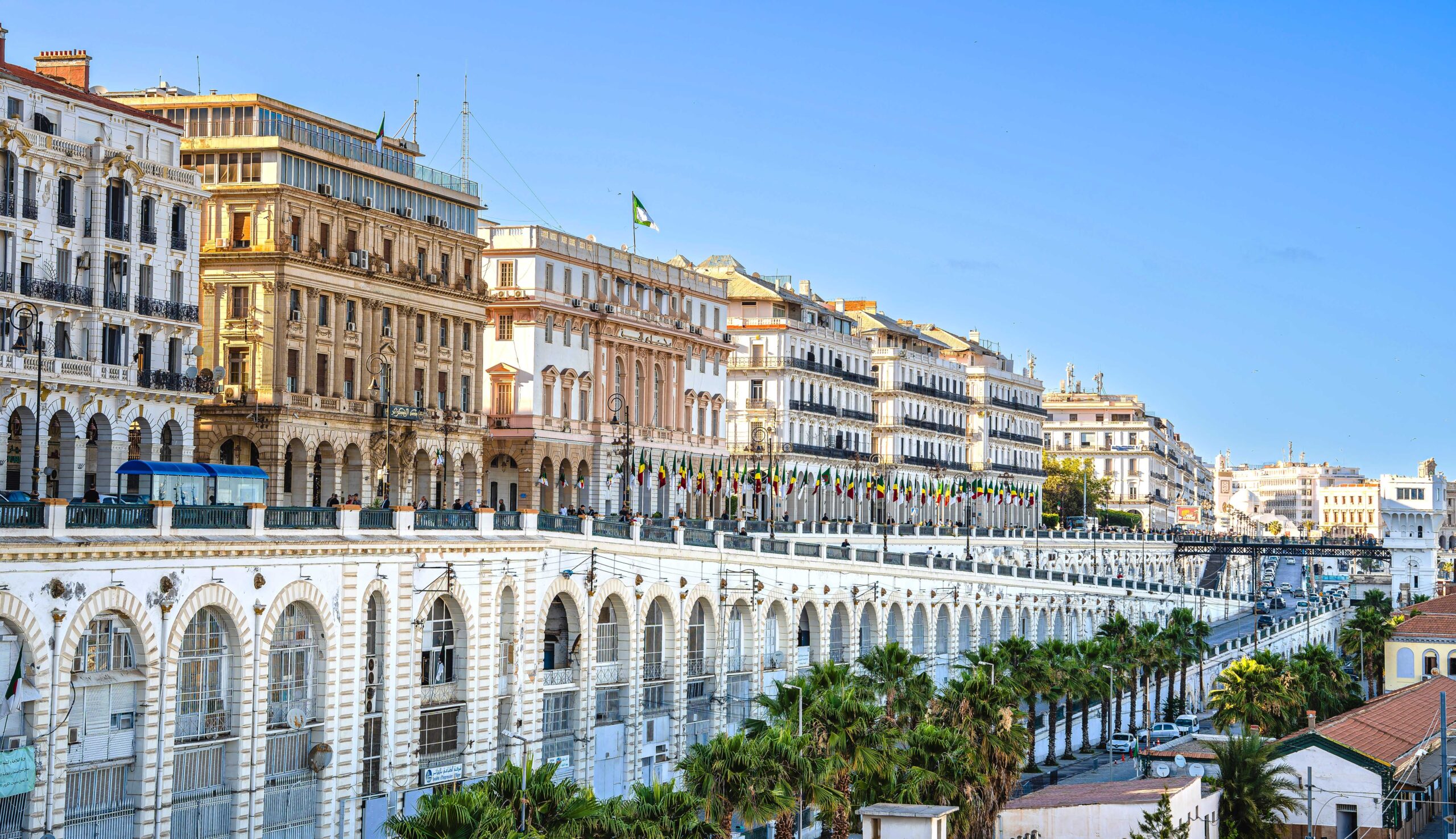
In Washington’s crowded mental map of the Middle East and North Africa, Algeria occupies an unusual space: neither ally nor adversary, neither client state nor crisis theatre. Many observers interpret this relative absence as neglect. In reality, it reflects a durable equilibrium. Algeria’s strategic value lies less in alignment than in calibrated distance.
Unlike Morocco, Egypt, or the Gulf monarchies, Algeria seeks no proximity to U.S. power. It hosts no American bases, relies on no U.S. aid, and remains outside U.S.-led security frameworks. Yet the United States has consistently avoided confrontation, respected Algerian autonomy, and maintained stable relations, a testament to the reliability of restraint.
Non-engagement with Algeria is therefore not a diplomatic gap but an operational adjustment. As the United States recalibrates its Africa and MENA posture amid renewed great-power competition, Algeria’s role appears less as a partner to mobilize than as a stabilizer to preserve. Its autonomy, restraint, and strategic silence offer lessons for a superpower stretched across multiple crises.
Algeria as a shock absorber in North Africa
Algeria’s most underappreciated contribution is its capacity to absorb regional shocks without transmitting instability outward.
When Libya collapsed after 2011, neighbouring states became entangled in its conflict: Egypt and the United Arab Emirates intervened militarily; Turkey and Russia entered the battlefield; and Tunisia absorbed refugee flows and cross-border threats. Algeria, however, did none of these. Instead, it patrolled its 1,000-kilometer-long border, expanded counterterrorism surveillance, and quietly hosted mediation channels with competing Libyan factions[i].The outcome was significant: Libya’s war did not spill into Algerian territory, and Algeria did not become a proxy battleground. In a region where collapse often spreads instability, as seen in Syria and Iraq, Algeria functioned as a firewall.
A similar pattern emerged in the Sahel. As Mali and Niger faced jihadist insurgencies and coups, France, the United States, and Russia competed for influence in this arena. Algeria, again, refused external military presence while quietly coordinating intelligence sharing and joint patrols. These measures reduced arms trafficking and cross-border militant flows, preventing wider destabilization.[ii] Rather than projecting force or inviting foreign protection, Algeria contained turbulence at its frontiers.
Even Tunisia’s recurring crises have not impacted Algeria to a great extent. In 2022, when Tunisia faced severe fiscal deficits and energy shortages, Algeria provided more than $200 million in support and covered roughly 10–13 percent of Tunisia’s electricity needs[iii]. This low-profile intervention stabilized – and continues to stabilize – Tunisia without asserting political dominance.
Across Libya, Mali, and Tunisia, Algeria acted neither as hegemon nor proxy, but as a self-reliant actor. This posture reflects a deeper doctrine of security autonomy.
Strategic silence, security autonomy, and structured non-alignment
Since independence in 1962, Algeria’s foreign policy has displayed remarkable constancy. Its non-alignment is not rhetorical neutrality but a structured doctrine built on enduring pillars: security cooperation without dependency, commercial engagement without subordination, and diplomatic diversification without rupture.
From Washington’s perspective, relations have remained stable across administrations. Cooperation has included Algeria’s mediation of the Algiers Accords, which paved the way for the resolution of the Iran hostage crisis and the settlement of outstanding disputes between Iran and the United States, as well as counterterrorism coordination after 9/11 and intelligence exchanges on Sahelian instability.[iv] Yet, Algeria has consistently refused to host foreign military bases, alliance commitments, or external security umbrellas. Sovereignty remains the anchor of its defence posture. This configuration defies the traditional buffer-state model. Algeria borders seven countries yet remains militarily autonomous and fiscally independent. For Washington, this produces a rare outcome: a capable regional actor contributing to stability without demanding protection, aid, or sponsorship.
Europe shares a similar structural view. The European Union considers Algeria central to Mediterranean stability. After the 2022 Ukraine war disrupted energy markets, Algeria’s supply of roughly 49 billion cubic meters of gas annually became key to European diversification in 2025[v]. Yet, interdependence did not translate into coercive leverage: Algeria did not weaponize supply, and Europe refrained from securitizing the relationship beyond pragmatic cooperation. Energy, thus, reinforces Algerian autonomy rather than weakening it. While Algeria supplies Europe, Europe diversifies and the United States benefits indirectly through strengthened European resilience, without making new commitments.
Even diplomatic tensions with Paris have not altered this balance. The 2023 Boualem Sansal controversy intensified friction, yet Germany played a moderating role, while Italy, Greece, and Slovenia deepened cooperation through multi-billion-dollar agreements in energy, infrastructure, and industry[vi]. Algeria’s European importance is systemic, not bilateral.
Notwithstanding, concerns persist in Western capitals regarding Algeria’s ties with Moscow and Beijing. Russia supplies roughly 73 percent of Algeria’s military equipment[vii], while trade with China reached $12.4 billion in 2024, with more than 1,300 Chinese companies operating locally[viii]. Yet these relationships are structural components of Algeria’s balancing strategy, not signs of ideological alignment. Despite U.S. and EU countries’ (including France, Belgium, and Spain) support for Morocco’s claim of sovereignty over Western Sahara, a position explicitly opposed in Algiers, the disagreement never escalated into a broader diplomatic crisis with Algeria. Instead, it underscored a recurring feature of Algeria’s external posture: even when confronted with sensitive regional issues involving the United States or the European Union, Algiers tends to manage tensions through calibrated signalling rather than rupture, preserving strategic cooperation while maintaining distance.
President Abdelmadjid Tebboune’s diplomatic posture also illustrates continuity rather than rupture. His effort to deepen ties with Europe and the United States while maintaining relations with Russia and China reflects a long-standing objective: remain engaged with all powers, but dependent on none. This consistency, on Algerian, American, and European sides alike, has prevented major crises despite intensifying global polarization.
Internal stability and the “year of execution”
External equilibrium provides domestic manoeuvring space. By avoiding dependency on any single power, Algeria preserves flexibility for internal restructuring. The beginning of 2026 has been framed domestically as a “year of execution,” marked by major industrial launches: the Gara Djebilet iron mine[ix], with reserves exceeding 20 billion tons; the integrated phosphate complex at El Hamdania[x]; and zinc and lead extraction at Oued Amizour[xi], among others. Together, these initiatives signal an effort to move beyond hydrocarbon dependence toward diversified mineral-industrial production.
Their significance is political as much as economic. For a youth population facing unemployment more than 29.4 percent[xii], large-scale industrial projects represent both material opportunity and symbolic renewal. In the short term, construction phases generate tens of thousands of jobs and stabilize the domestic front. Whether stabilization endures will depend on execution. If these projects mature into export-generating industries, they could reinforce Algeria’s external balancing with internal resilience. If they stall, stability may remain provisional. Foreign policy constancy and domestic execution are therefore interlinked components of the same strategic logic.
Why Algeria cannot become “another ally”
Algeria’s geography, military capacity, and diplomatic reach might suggest the logic of formal partnership with Washington. Yet, transforming Algeria into a conventional ally would likely reduce, rather than sustain, stability. Algeria’s value lies in its credibility as an autonomous actor. It can mediate and engage diverse partners precisely because it is not embedded in Western security architecture. Formal alignment would narrow that space and reduce its usefulness.
Domestically, visible alignment carries risks. Algeria’s legitimacy remains rooted in sovereignty and anti-colonial memory. Hosting foreign bases or entering binding frameworks would likely provoke nationalist reflexes and internal scepticism. Geopolitically, alliance would harden pressures rather than alleviate them. Algeria’s ties with Moscow and Beijing are instruments of balance. Institutional alignment with Washington would transform flexible equilibrium into rigid bloc positioning.
Nor does Algeria require a security umbrella. It possesses territorial depth, a capable military, and total reserves (including gold, current US$) exceeding $82 billion dollars[xiii]. For the United States, a formal alliance would create obligations without proportional gain. The current arrangement, however, cooperation without dependency, already delivers stability at a low cost.
[i] Al Jazeera (2020). “Algeria offers mediating role in Libya as UN condemns mass graves”, 13 June 2020, retrieved from: https://www.aljazeera.com/news/2020/6/13/algeria-offers-mediating-role-in-libya-as-un-condemns-mass-graves.
[ii] Arieff, A. (2011). “U.S.-Algerian Security Cooperation and Regional Counterterrorism”, Institut Français de Relations Internationales, 20 July 2011, retrieved from: https://www.ifri.org/en/papers/us-algerian-security-cooperation-and-regional-counterterrorism; Lebovich, A. (2015). “Deciphering Algeria: The Stirrings of Reform”, European Council on Foreign Relations, 9 December 2015 retrieved from: https://ecfr.eu/publication/deciphering_algeria_the_stirrings_of_reform5047/.
[iii] Sakia, A. and Henache, D. (2022). “Algeria Lends Tunisia $200M, Grants it $100M”, Echoroukonline, 27 December 2022, retrieved from: https://www.echoroukonline.com/algeria-lends-tunisia-200m-grants-it-100m#google_vignette.
[iv] Gherieb, H. (2017). “US-Algeria Cooperation in Transnational Counterterrorism” Washington Institute, 27 March 2017, retrieved from: https://www.washingtoninstitute.org/policy-analysis/us-algeria-cooperation-transnational-counterterrorism.
[v] Ghilès, F. (2026). A Tale of Two Gas Suppliers, CIDOB, January 2026, retrieved from: https://www.cidob.org/en/publications/tale-two-gas-suppliers-europe-algeria-and-libya.
[vi] See “Algeria and Slovenia Sign Strategic Energy Agreement”, AEP, 15 May 2025, retrieved from: https://africa-energy-portal.org/news/algeria-and-slovenia-sign-strategic-energy-agreement; and “Algeria-Greece: moving towards stronger economic cooperation”, Algeria Invest, 25 January 2025, retrieved from: https://www.algeriainvest.com/en/premium-news/algerie-grece-cap-sur-une-cooperation-economique-renforcee; Amante (2025) “Italy and Algeria boost cooperation with new security and business deals” 23 July 2025, retrieved from: https://www.reuters.com/business/media-telecom/italy-algeria-boost-cooperation-with-new-security-business-deals-2025-07-23/.
[vii] Zoubir, Y. H. (2024). “Algeria‑Russia Ties: Beyond Military Cooperation?”, Issue Brief, Middle East Council on Global Affairs, 11 January 2024, retrieved from: https://mecouncil.org/publication/algerian-russian-relations-military-cooperation/; and Hussain, Z. and Dr Tartir, A. (2025). “Recent trends in international arms transfers in the Middle East and North Africa, SIPRI, 10 April 2025, retrieved from: https://www.sipri.org/commentary/topical-backgrounder/2025/recent-trends-international-arms-transfers-middle-east-and-north-africa.
[viii] Ministry of Foreign Affairs of the People’s Republic of China (2024). “China and Algeria”, fmprc.gov.cn, retrieved from: https://www.fmprc.gov.cn/eng/gjhdq_665435/2913_665441/2798_663596/.
[ix] BFMTV (2026). “L’Algérie inaugure une ligne ferroviaire de près de 1 000 km dans le désert pour desservir une mine du Sahara”, BFMTV, 2 février 2026, retrieved from: https://www.bfmtv.com/economie/entreprises/industries/pres-de-1-000-kilometres-dans-le-desert-l-algerie-inaugure-une-ligne-ferroviaire-strategique-vers-une-mine-du-sahara_AD-202602020155.html#:~:text=Le%20pr%C3%A9sident%20alg%C3%A9rien%20Abdelmadjid%20Tebboune,de%20l’Alg%C3%A9rie%20ind%C3%A9pendante%22.
[x] State Council Information Office, People’s Republic of China (2018). “Belt and Road Initiative”, English.SCIO.gov.cn, 22 November 2018, retrieved from: http://english.scio.gov.cn/beltandroad/2018-11/22/content_74198723.html.
[xi] Algeria invest (N.D.). “Mine de zinc‑plomb de Oued Amizour : la dernière ligne droite”, Algeriainvest.com, retrieved from: https://algeriainvest.com/premium-news/mine-de-zinc-plomb-de-oued-amizour-la-derniere-ligne-droite.
[xii] See “Unemployment, youth total (% of total labor force ages 15-24) (modeled ILO estimate) – Algeria”, World Bank Group, 17 January 2026, retrieved from: https://data.worldbank.org/indicator/SL.UEM.1524.ZS?locations=DZ.
[xiii] See “Total reserves (includes gold, current US$)”, World Bank, 2024, retrieved from: https://data.worldbank.org/indicator/FI.RES.TOTL.CD?locations=DZ.