As conflict between Iran and a U.S.-Israeli coalition reshapes the strategic landscape of the Middle East, long-suppressed national questions are re-emerging across the region. Among them is the future of Iran’s Kurds, a community that has faced decades of political repression, cultural marginalization, and violent crackdowns under the Islamic Republic.
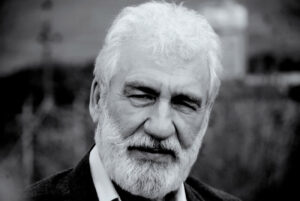
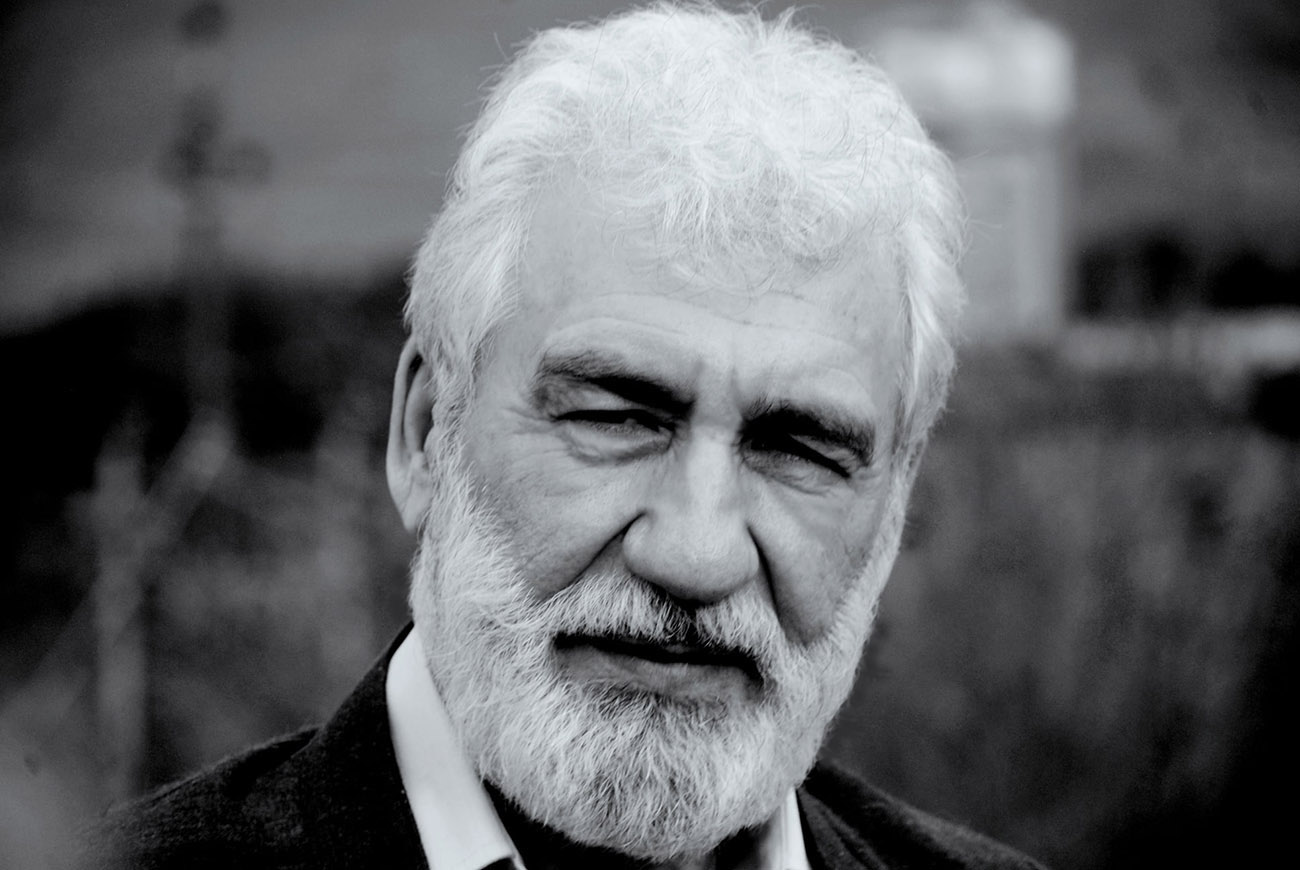
Abdulla Pashew (born 1946 near Erbil) is one of the most prominent voices of modern Kurdish poetry. A leading figure in Kurdish literary modernism, Pashew has a doctorate in literature. Over the decades he lived in several countries – including Germany, Latvia, Finland, and Russia – experiences that deeply influenced his poetry, which often reflects themes of displacement, identity, and the Kurdish national struggle. He is often considered the greatest living Kurdish poet and writer.
In this interview, Pashew speaks with Joseph Hammond about whether the current conflict represents an opening for Kurdish self-determination, the challenges facing Kurdish political unity, and the enduring role of culture in sustaining Kurdish identity across borders.
Kurds and the current war
JOSEPH HAMMOND: The war between Iran and the U.S.-Israeli coalition has opened a new strategic moment. Do you believe Iranian Kurds see this conflict as an opportunity for autonomy, or is there a fear that Kurdish aspirations could once again be used by outside powers and then abandoned?
ABDULLA PASHEW: The Kurdish issue in Iran is profoundly complex, not only within Iran but also across the Middle East as a whole. On one hand, the Kurds, like all Iranian peoples who have co-authored both ancient and modern civilization, share in the collective glories and tragedies that have befallen the country, particularly following the consolidation of theocratic rule by the clerics and Ayatollahs. This regime has imposed a systematic deprivation of rights, an absence of freedom of expression, the violation of women’s rights, the prohibition of artistic activities such as music, and the curtailment of personal liberties like dress style. Furthermore, the imposition of a single religion and sect, alongside widespread poverty and unemployment, results from the state allocating the “lion’s share” of national revenue to regional extremist groups, the development of weaponry, and the “herding” of society through the fabrication of imaginary enemies like Israel and the United States.
While these are calamities for all peoples of Iran, the oppression of the Kurdish people by this regime carries unique characteristics; for Kurds, remaining within the framework of the current Iranian state is a matter of survival. The seizure of the entirety of Iranian civilization as “Persian” property – and the subsequent deprivation of Kurds and other nations of that heritage – is the looting of their greatest spiritual and intellectual capital. Undoubtedly, European scientific and academic institutions share a significant portion of the blame for this misconception. The “Persianization” of Iranian history and culture is a major crime against non-Persian peoples.
The marginalization of Kurdish language and literature, combined with the suppression of the region’s true historical legacy, is driving the Kurdish people toward a “silent” assimilation. As a predominantly Sunni minority, Kurds are barred from attaining high-ranking positions. The Islamic Republic does not officially recognize the Kurdish language; children are denied an education in their mother tongue, and speaking Kurdish is even prohibited in administrative settings. Political parties are banned, and the reach of state-sponsored terror extends to Kurdish leaders not only within Iran but also abroad, as seen in the assassinations of Drs. Qassimlou in Vienna and Sharafkandi in Berlin.
I do not believe in an autonomy won in the trenches of war; war is fought for independence. Autonomy is best suited for a country where a “tradition” of democracy has flourished and the culture of mutual acceptance has reached a high level, as seen in European nations like Switzerland, the UK, Finland, and Belgium. Iran cannot endure in its current form; it must either fracture or transform into a “Switzerland of the Middle East.
Kurdish unity and political strategy
JH: Several Iranian Kurdish parties have recently formed a new coalition calling for regime change and Kurdish self-determination. In your view, does this alliance represent genuine Kurdish unity, or are ideological and historical divisions still a major obstacle?
AP: The extent to which the Kurdish political parties of Eastern Kurdistan have prepared themselves for these transformations remains a matter of significant concern. Ultimately, a comprehensive pact, reinforced by a transparent strategic mandate, should have been ratified well in advance of the current hostilities. Nevertheless, “delayed corrective action is better than total inaction.”
It is an objective assessment to assert that the Kurds represent the singular nation within the Middle East that consistently pursues an authentic and enduring alliance with the West and the United States. For decades, our forces have operated in unparalleled synergy – a relationship that reached its zenith during the campaign against ISIS. On those battlefields, Kurdish and American blood were intermingled, a profound testament to a partnership forged in shared sacrifice.
However, the Kurdish people maintain a profoundly disillusioned perspective regarding historical engagements with the West. While it is an established tenet of international relations that the U.S. and Western powers prioritize their respective national interests, a baseline of ethical responsibility must persist within global statecraft. One need only look to the recent past, when the U.S. abruptly withdrew its support from Western Kurdistan (Rojava), leaving Kurdish forces to confront the very extremist elements now consolidated in Damascus. After sacrificing over 11,000 lives in the war with ISIS, the sudden termination of support remains a painful precedent.
While geopolitical interests are inherently fluid, they should not be devoid of moral consistency. Leaders in Washington and Europe are indeed beholden to their electorates; however, the Kurdish leadership must reciprocate by developing comprehensive contingency frameworks for all potential outcomes. It is obvious that both the U.S. and Israel benefit from an alliance with the Kurds, who form one of the largest ethnic groups in the region. For Israel, the Kurdish people provide human depth and a strategic geographic corridor characterized by substantial energy and water reserves. Conversely, Israel offers Kurds unparalleled technological and media capabilities, bolstered by a significant Kurdish-Jewish diaspora that serves as a vital cultural and diplomatic bridge.
Ultimately, Kurdish political culture must transition away from traditional “Diwakhan” methodologies toward institutional diplomacy. The leadership must clearly define the parameters of its alliances, the specific dividends of such partnerships, and their projected durations. Kurdish goals align with superpowers’ interests at this turning point, but the scars from repeated betrayals have made them more cautious than ever.
Culture, poetry, and Kurdish identity
JH: You have spent decades writing about Kurdish identity and exile. In moments of war and political upheaval like today, what role do poetry and cultural memory play in shaping Kurdish political consciousness?
AP: Not only poetry and other literary forms, but also Kurdish music, dance, and traditional clothing for both women and men play a vital role in bolstering Kurdish patriotism, strengthening a profound sense of belonging to a shared history, culture, and geography.
The boundless advance of mass media and the knowledge technology revolution has forged an electronic “United Digital Kurdistan” for Kurds worldwide. They connect spiritually as never before, transcending the artificial borders imposed by the Sykes-Picot Agreement. We must admit that the Kurdish “digital state” could not have emerged without the foundation of a profound culture.
In the 16th century, the Kurdish poet Melaye Ceziri regarded himself as the chandelier of Kurdistan, viewing the mosque, the church, the synagogue, and the Yezidi “holy Lalish” through a single lens of universal reverence. By the 17th century, the great Kurdish poet Ahmadi Xani already sensed the tragedy of the first partition of Kurdistan following the 1514 Battle of Chaldiran between the Ottoman and Safavid Empires. That profound Kurdish sentiment is vividly reflected throughout his literary works. The poet called upon the Kurds to unite and establish their sovereignty through art in general – music and poetry in particular. These have played an active role in advancing the spirit of independence and spreading a sense of shared empathy and destiny among Kurds, both within Kurdistan and across the globe. The songs of Ayshashan and Hasan Zirak crossed borders without passports; Kurdish poetry traversed frontiers without visas from border guards. For a long time now, poetry and music have visibly outpaced Kurdish political parties and organizations.
Many Kurdish parties remain trapped between two ruinous ideological millstones: radical political Islam and extremist Stalinist thought. These imported and rootless ideologies, detached from reality, are unable to answer the questions of the modern age. Both sides demand an unconditional, absolute “brotherhood” on the ground of religion or class ideology, yet they believe in no specific identity. They evade the thorniest questions: How can one speak of brotherhood in a country where your language, national holidays, dress, songs, and folklore are banned? In a region saturated with patriarchal-feudal mentalities, “big-brother” complexes, and master-slave dynamics, how can you tether your independence to a “democracy” defined by the dominant force?
The future of Kurdish nationalism
JH: Recently Kurds from Syria to Iran have been chanting something like “1+1+1+1=1” to suggest that Kurdish nationalism remains strong. Do you think Kurdish nationalism is stronger than before?
AP: I do not believe Kurdish nationalism has yet solidified. It is a powerful feeling, but it remains “undercooked” and has not been placed within a clear strategic framework or program. What exists now is largely a reaction to the brutal onslaught of forced Arabization, Turkification, and Persianization by the dominant nations. When I say nationalism, we must remember that Kurdish nationalism is a “shy” nationalism; at its height, it is patriotism. It is not arrogant; it does not seek to ban any language or take any land, nor does it consider Kurds superior to any other people. The essence of this Kurdish patriotism is the preservation of the language, traditions, beliefs, and the thousand-year-old character of the people of the Zagros and Taurus mountains and their valleys.
The customs of the people of Kurdistan – the colorful culture, the land, and the rich language of this ancient nation – belong as much to humanity as they do to the Kurds. Kurdistan is a primary cradle of civilization; one cannot truly comprehend the evolution of humanity without an awareness of Kurdistan’s history and the heart of its land, language, and culture.
Kurdish nationalism – or more accurately, Kurdish patriotism – has long flourished among the intelligentsia, yet it has failed to organize itself systematically. The character of most Kurdish leaders remains conservative and hesitant. These party leaders behave more like “Big Brothers” or tribal patriarchs; they view independence and freedom as impossibilities. In Kurdistan, the party is merely a modern form of the tribe. In negotiations, they never use pen and paper. They act as “noble outlaws,” carrying out all agreements orally in the style of a medieval Diwankhan – offering and receiving mere verbal promises.
During World War II and the establishment of the Republic of Kurdistan in Mahabad, an organization called JK (Komeley Jiyanaway Kurdistan) was founded on the principle of Kurdish independence. It was the first true pro-independence organization. However, it was not long before the influence of the Soviet “Brotherhood of Nations” and Stalinist ideology shifted the goal to “autonomy.” From that point on, Kurds took upon themselves the burden of democratizing Turkey, Iran, Iraq, and Syria. In a primitive agricultural country without factories, the “victory of the proletariat” became the priority for a people whose very language was forbidden. In 1959, a group of intellectuals in Slemani “Sulaymaniyah” founded KAJIK, but the Iraqi and Kurdish parties branded this elite group as “servants of imperialism,” and the movement eventually dissolved.
Even now, after dozens of catastrophes and collapses – after the deaths of hundreds of thousands of innocent Kurds and the burning of thousands of villages in the name of “autonomy” the idea of independence is being discussed here and there. I believe this vision has a future and will reach its goal. The independence of Kurdistan is far easier than the democratization of a Middle East that shows no sign of abandoning its medieval roots. Democracy and federalism are two sides of the same coin; democracy is a long process of highs and lows that may take decades or centuries to achieve in this region. Until then, our assimilation is guaranteed. To protect themselves and avoid fading away, Kurds must liberate their country. They must no longer tie their independence to the “democratization” of the despotic occupying regimes.