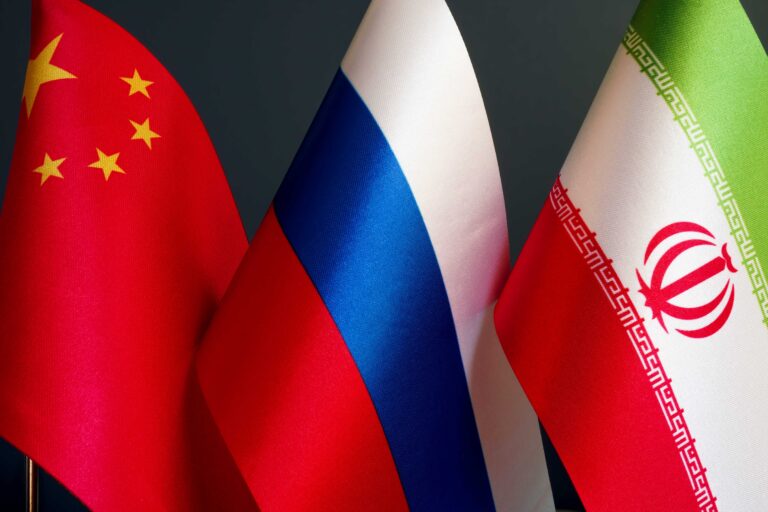
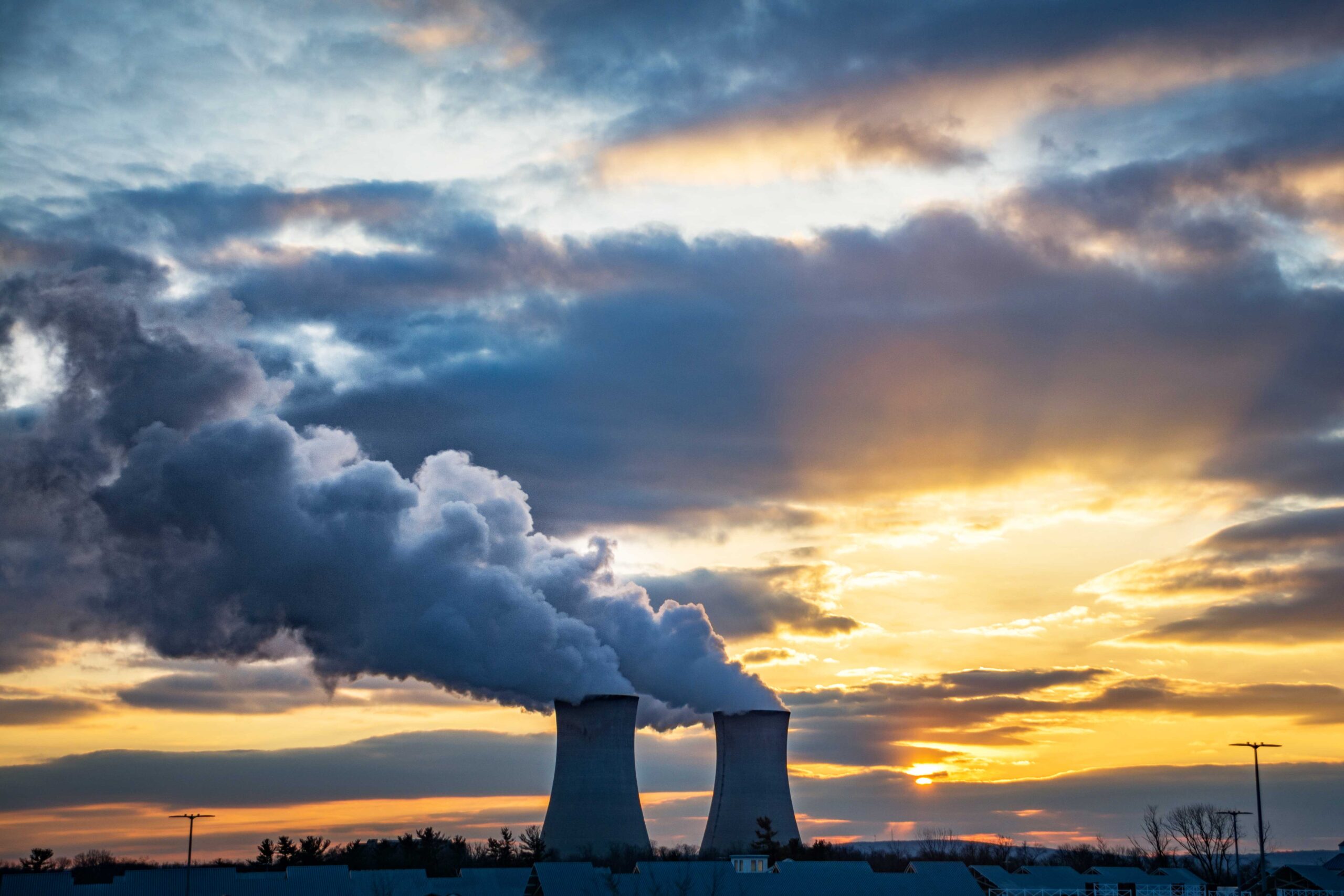
Today, nuclear energy is a highly politicised issue in the Middle East. All three great powers, the US, China and Russia, see the Middle East as a region with great economic potential and a growing need to diversify their energy portfolios. A recent large-scale overhaul of the American Nuclear Regulatory Commission (NRC)[i] demonstrates that the US is cognizant of this reality. It marks a significant development in American nuclear corporate diplomacy. The NRC’s changes are less focused on regulation and more on the development and promotion of nuclear energy. Where it promises American strategic export competitiveness, it also risks undermining the regulatory credibility that had made the US stand out among its partners and had assured its geopolitical influence.[ii]
Nuclear corporate diplomacy encompasses a strategic partnership. During the 60-80 years of a nuclear power plant’s operation,[iii] the recipient state relies on the host for technical knowledge, as well as components, including fuel supply and administrative experience. For instance, Article 123 of the American Atomic Energy Act (AAEA) applies non-proliferation norms to US nuclear energy partnerships, such as limiting uranium enrichment. Through this symbiotic relationship, the latter state becomes tied to the host for six to eight decades.[iv] Depending on the nature of the partnership, it also involves key macroeconomic decisions, such as the regulation of energy prices in the recipient state. A cursory look at the global nuclear energy landscape reveals that the US leads with 94 active nuclear power plants contributing 97 GW, followed by Russia with 36 and 27 GW, and China and France with 55 GW and 63 GW respectively, each with 57 power plants.[v]
The Middle East sees similar competition among great powers in nuclear energy, leading to three models of influence. First, the US’ nuclear partnerships[vi] feature private-sector vendors, all overseen by the NRC’s strict regulations. The US has partnered with the UAE at the Barakah Nuclear Energy Plant since 2009.[vii] In contrast, Russia’s state-owned agency, Rosatom, uses a ‘build-own-operate’ (BOO) model.[viii] Rosatom provides sovereign-backed loans that pay for over half the cost of nuclear power plants.[ix] Its flagship project is the El Dabaa Nuclear Power Plant in Egypt. China also forms strategic infrastructure partnerships. The China National Nuclear Corporation (CNNC) has several MoUs with Middle Eastern countries and hosts the China-GCC Forum on the peaceful use of nuclear technology.[x]
The Middle East attracts global nuclear energy players due to its growing energy demand, ample capital capacity, and geopolitical relevance. With energy demand increasing by about 1,000 terawatt-hours (TWh)[xi] over the last two decades, the region has become the third-largest contributor to electricity demand worldwide.[xii] Nuclear energy aligns with the long-term energy diversification strategies[xiii] of the broader economic transformation aimed at by Gulf countries. It not only provides sustainable energy essential to energy-intensive sectors but also supports global carbon-neutrality commitments.[xiv] The affluent sovereign funds of six GCC states, amounting to $4.9 trillion,[xv] also make them distinct in bearing the enormous cost of building a nuclear power plant. Similarly, the region’s crucial intersection of maritime security routes, abundant oil and gas reserves, and defence cooperation with the great powers make it more geopolitically relevant.
The recent NRC reform[xvi] in the US aims to alleviate nuclear energy export competitiveness due to long timelines and incompatibility with modern technologies. Through EO 14300, President Trump announced revisions to all the rules and set deadlines for their implementation. The ordinance aims to accommodate the regulation of modern nuclear technologies and next-generation reactor variants. The EO underscores the need to buttress the export competitiveness and re-establish the US as a global leader in nuclear energy, which was earlier hindered by regulatory bottlenecks.[xvii] The NRC was previously focused on the gigantic light-water reactors,[xviii] taking multiple years in their authorisation of licenses and entailing high upfront costs. In contrast, the Gulf states are considering next-generation reactor designs. The lag in US nuclear energy competitiveness has led to the ageing of its nuclear fleet, with no active nuclear power plant construction to date.[xix] Approximately 11.7 GW of its energy share will be reduced due to reactor closures.[xx] As a great power, the retirement of US reactors negatively impacts American strategic dominance as a whole. Shrinking nuclear capability at home will erode the technological momentum needed for sustained leadership in the global nuclear energy landscape. Studies report a nuclear energy shortfall of 110 GW[xxi], which is expected to grow to 256 GW[xxii] in the future due to the decommissioning of nuclear power plants worldwide.
Being a core component of its soft power, regulatory credibility also makes the US a distinctive player in the growing competition in the Middle Eastern nuclear energy market. Experts argue that the possible enhancement of the Department of Energy (DOE) and the political administration within the NRC might undermine the NRC’s independence.[xxiii] Novel complications in draft rulemaking can confuse the roles of promoter and regulator, which do not align with global nuclear best practices. The reported resignations of around 10 per cent of the NRC force since the Trump administration took charge[xxiv] are likely to challenge American technical capacity, which was already facing a shortfall.[xxv]
The rapidly changing nuclear energy landscape in the Middle East represents a unique intersection of technical capabilities and non-proliferation norms. Amidst them, the revision of the NRC aligns with the US’ nuclear energy vision, transcending its domestic sphere and becoming part of foreign policy. It remains to be seen whether the NRC reset helps the US reclaim dominance in the nuclear energy landscape, where strategic partnerships shape the course of geopolitical alignments. The undermining of nuclear regulatory triumphs, which risks weakening credibility, may be offset by the speed of reactor construction. To maintain its lasting influence in nuclear diplomacy, the US must uphold institutional integrity.
[i] The White House (2025). “Ordering the Reform of the Nuclear Regulatory Commission”, 23 May 2025, retrieved from: https://www.whitehouse.gov/presidential-actions/2025/05/ordering-the-reform-of-the-nuclear-regulatory-commission/.
[ii] Markey, E. (2025). “Senator Markey Blasts Trump Order Undermining Nuclear Safety, Mission of NRC”, 24 May 2025, retrieved from: https://www.markey.senate.gov/news/press-releases/senator-markey-blasts-trump-order-undermining-nuclear-safety-mission-of-nrc.
[iii] Crownhart, C. (2024). “Why the lifetime of nuclear plants is getting longer”, MIT Technology Review, 4 April 2024, retrieved from: https://www.technologyreview.com/2024/04/04/1090630/old-nuclear-plants/.
[iv] Ibid.
[v] Venditti, B. (2025). “Ranked: Nuclear Power Capacity by Country (2025)” 23 October 2025, retrieved from: https://www.visualcapitalist.com/ranked-nuclear-power-capacity-by-country-2025/.
[vi] U.S. Department of State (N.D.). “123 Agreements”, retrieved from: https://www.state.gov/bureau-of-international-security-and-nonproliferation/releases/2025/01/123-agreements.
[vii] UAE Embassy (2025). “The ‘Gold Standard’ UAE-US Partnership for Secure Nuclear Energy”, retrieved from: https://www.uae-embassy.org/sites/default/files/2025-05/Embassy_One-Pager_Nuclear Cooperation_05.12.2025_V3.pdf.
[viii] Ibid.
[ix] Ibid.
[x] GCC (2025). “The First GCC-China Forum on the Peaceful Uses of Nuclear Technology”, 21 April 2025, retrieved from: https://www.gcc-sg.org/en/MediaCenter/News/Pages/news2025-4-21-3.aspx.
[xi] https://www.iea.org/reports/the-future-of-electricity-in-the-middle-east-and-north-africa/executive-summary.
[xii] IEA (N.D.). “The Future of Electricity in the Middle East and North Africa”, retrieved from: https://www.iea.org/reports/the-future-of-electricity-in-the-middle-east-and-north-africa/executive-summary.
[xiii] UAE Embassy (N.D.). “UAE Energy Diversification”, retrieved from: https://www.uae-embassy.org/discover-uae/climate-and-energy/uae-energy-diversification.
[xiv] Emirates Nuclear Energy Company (2026). Retrieved from: https://www.enec.gov.ae/.
[xv] Alhajraf, S. (2025). “Strategic Role of Sovereign Wealth Funds in the Gulf’s Energy Transition and Economic Diversification”, Baker Institute, 15 July 2025, retrieved from: https://www.bakerinstitute.org/research/strategic-role-sovereign-wealth-funds-gulfs-energy-transition-and-economic-diversification.
[xvi] The White House (2025). “Fact Sheet: President Donald J. Trump Directs Reform of the Nuclear Regulatory Commission”, 23 May 2025, retrieved from: https://www.whitehouse.gov/fact-sheets/2025/05/fact-sheet-president-donald-j-trump-directs-reform-of-the-nuclear-regulatory-commission/.
[xvii] Authenticated U.S. Government Information (2025). “Executive Order 14300”, 23 May 2025, retrieved from: https://www.govinfo.gov/content/pkg/DCPD-202500633/pdf/DCPD-202500633.pdf.
[xviii] U.S. Government Accountability Office (2023). “NRC Needs to Take Additional Actions to Prepare to License Advanced Reactors”, July 2023, retrieved from: https://www.gao.gov/assets/gao-23-105997.pdf.
[xix] World Nuclear Industry Status Report (2025). Retrieved from: .https://www.worldnuclearreport.org/World-Nuclear-Industry-Status-Report-2025-HTML-version.
[xx] U.S. EIA (2017). “Key takeaways: AEO 2017 Electricity Sector Outlook”, retrieved from: https://www.eia.gov/outlooks/aeo/workinggroup/nuclear/pdf/electricitysector2017.pdf.
[xxi] Rinnovabili (2025). “World Nuclear Industry Status Report 2025, nuclear industry faces slowdown?”, 23 September 2025, retrieved from: https://www.rinnovabili.net/business/energy/world-nuclear-industry-status-report-2025/.
[xxii] Hunt, A. (2025). “IAEA increases nuclear growth projections”, World Nuclear News, 15 September 2025, retrieved from: .https://www.world-nuclear-news.org/articles/iaea-increases-nuclear-growth-projections.
[xxiii] Camacho, F. (2026). “How the NRC lost its independence”, 17 February 2026, retrieved from: https://www.eenews.net/articles/how-the-nrc-lost-its-independence/.
[xxiv] Ibid.
[xxv] Nuclear Energy Academic Roadmap (N.D.). “The Role of Universities”, retrieved from: https://orau.org/nuclear-energy-academic-roadmap/universities/index.html.