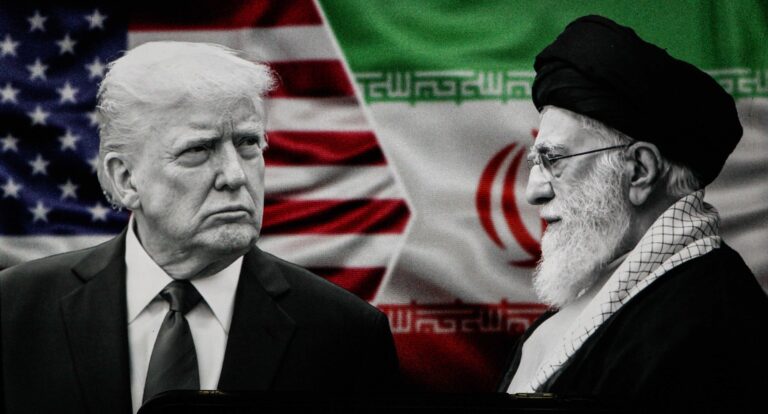
The Cold War is over, and Israel’s emerging deterrence relationship to a prospectively nuclear adversary in Tehran is not reasonably comparable to the traditional US-Soviet “Balance-of-Terror.” Still, there are crucial elements of now-prevailing superpower antagonisms that could substantially impact Israel’s nuclear choices. This means, among other things, that Israel ought never construct its own nuclear strategic doctrine and policy apart from close assessments of US-Russia-China relations.
In essence, there are several Cold War deterrence lessons that should be learned and adapted by Israel. Most urgently, continued full ambiguity regarding targeting doctrine, basing modes; and/or penetration capabilities could cause a newly-nuclear enemy state or still-nuclearizing enemy state (Iran) to underestimate Israel’s retaliatory capacity or decisional resolve.
As a subsidiary but still urgent nuclear concern, Israeli planners will need to continually assess the capability and intentions of Pakistan, an already-nuclear Islamic state that has openly declared a “nuclear war fighting” concept of national nuclear deterrence.
Going forward, assorted uncertainties surrounding presumed components of Israel’s nuclear arsenal could lead such enemy states as Iran to reach the “wrong” conclusion. Excessive uncertainty about Israel’s capabilities could lead adversaries to misjudge both its capacity and resolve. Ironically, if Israel’s nuclear weapons were sometime believed to be too destructive,[i] they might not deter. In these cases, more or less unwittingly, such beliefs would underscore various basic expectations of humanitarian international law. These expectations are known correctly as distinction, proportionality and military necessity.
Enemy miscalculations and authoritative international law
In the future, any continuing Israeli policy of complete ambiguity could cause an already-nuclear enemy state to overestimate the first-strike vulnerability of Israel’s nuclear forces. In part, at least, this overestimation would be the result of a too-complete silence concerning measures of protection that had been deployed to safeguard Israeli nuclear weapons and launch platforms. Such silence, in turn, could be the product of Israel’s perceived alignments with the United States.
To best understand the utility and legal content of Israeli strategic nuclear doctrine and posture, analysts must first clearly identify for themselves the variously core foundations of Israeli nuclear deterrence. These foundations concern prospective attackers’ perceptions of Israel’s nuclear capability and Israel’s willingness to use this capability. Any selective telegraphing of Israel’s strategic nuclear doctrine could potentially enhance Israel’s nuclear deterrence posture and thereby support both nuclear war avoidance and authoritative international law. This would be accomplished by heightening enemy state perceptions of Israel’s capable nuclear forces and its willingness to use these forces in reprisal for previously-designated first-strike or retaliatory attacks.
To deter an enemy attack, or a post-preemption retaliation against Israel,[ii] Jerusalem must always prevent a rational aggressor, by threat of an unacceptably damaging retaliation or counter-retaliation, from deciding to strike. Here, Israel’s national security would be sought by convincing the potential rational attacker (irrational state enemies could of course pose an altogether different and possibly insurmountable problem) that the costs of any considered attack will always exceed the expected benefits. Assuming that Israel’s state enemies: (1) value self-preservation most highly; and (2) choose rationally between all alternative options, they will necessarily refrain from an attack on Israel that is willing and able to deliver an unacceptably destructive response.
Iran and other enemy states might also be deterred by the plausible prospect of a more limited Israeli attack, one directed “only” at national leaders. In the usual parlance adopted by military and intelligence communities, this prospect refers to more-or-less credible threats of “regime targeting.” Whether credible or incredible, such threats could be severely problematic in legal terms. At the same time, the limited international response to controversial U.S. actions in Venezuela suggests that the aspiration for a justice-based system of international law may be increasingly difficult to sustain.
Two factors must combine to communicate believable deterrence. In terms of capability, the critical components are payload and delivery system. It must be successfully communicated to Iran or any other calculating adversary that Israel’s firepower and also its means of delivering that firepower are capable of inflicting unacceptable destruction. This means that Israel’s retaliatory or counter-retaliatory forces must always appear sufficiently invulnerable to enemy first-strikes and sufficiently elusive to penetrate an enemy’s active defenses. It need not need to be communicated to a potential attacker that Israel’s firepower and delivery vehicles are superior to those of Iran or another adversary. Deterrence, Israel’s planners must continuously bear in mind, is never about “victory.” The capacity to deter need not be as great as the capacity to “win.”
As a useful example, Israeli planners could think about North Korea and the United States. In this increasingly problematic dyad of international adversaries, the Americans are plainly superior in all usual expressions of hardware and battle-readiness, but the North Koreans could still bring significant harms to US armed forces and to certain portions of the American mainland. And this is to say nothing about parallel or corollary damages that could be visited on US allies in South Korea or Japan.
Increasingly complex calculations
If Israel maintains full ambiguity, enemy states like Iran could sometime conclude, rightly or wrongly, that a first-strike attack or post-preemption reprisal would be cost-effective. But if relevant Israeli doctrine were made more obvious to enemy states contemplating an attack – “obvious” in that Israel’s nuclear assets seemingly met both payload and delivery system objectives – Jerusalem’s nuclear forces could better serve their multiple security functions.
For Israel, the second requirement of credible nuclear deterrence concerns willingness. How could Israel convince Iran or other potential state attackers that it possessed the resolve to deliver an appropriately destructive retaliation and/or counter retaliation? The answer to this question lies largely in doctrine, that is, in Israel’s demonstrated strength of commitment to carry out such an attack and in the nuclear ordnance that would be made available.
Here, too, continued ambiguity over strategic nuclear doctrine could create the dangerous impression of an unwilling Israel. Conversely, any doctrinal movement toward some as-yet-undetermined level of disclosure could heighten the impression that Israel was in fact willing to follow-through on its nuclear threats.
There are variously persuasive connections between any incrementally more “open” or disclosed Israeli strategic nuclear doctrine and enemy state perceptions of Israeli nuclear deterrence. One such connection centers on the expected relationship between prospectively greater nuclear openness and the perceived vulnerability of Israel’s nuclear forces to preemptive destruction. Another such connection concerns the relation between greater doctrinal openness and the perceived capacity of Israel’s nuclear forces to penetrate an offending state’s active defenses.
To be deterred by Israel, a newly-nuclear Iran or other newly nuclear adversary (potentially, one of the major Sunni Arab states also worried about a resurgent Iran) would need to believe that at least a critical number of Israel’s retaliatory forces would successfully survive an enemy first-strike and that these forces would not subsequently be prevented from hitting pre-designated targets in Iran or elsewhere.
Calibrated disclosure could represent a rational option for Israel so long as the situationally-pertinent enemy state was made aware of Israel’s nuclear capabilities. The presumed operational benefits of any such expanding doctrinal openness would accrue from certain deliberate flows of information about dispersion, multiplication and hardening of Israel’s strategic nuclear weapon systems and from other technical features of these systems. Orderly and doctrinally-controlled flows of information could remove any lingering enemy state doubts about Israel’s nuclear force capabilities and its intentions. Left unchallenged, such doubts could undermine Israeli nuclear deterrence and correspondingly war-avoidance elements of international law.
Israel and “friction”: Inadvertent versus deliberate nuclear war
A key problem in purposefully refining Israeli strategic nuclear policy on issues of deliberate nuclear ambiguity has to do with what Prussian military thinker Carl von Clausewitz famously called “friction.”[iii] No military doctrine could ever fully anticipate the actual pace of combat activity or the precise reactions of individual human commanders under fire. It follows that Israel’s nuclear doctrine should be encouraged to combine adequate tactical flexibility with selective doctrinal openness. To understand exactly how such seemingly contradictory objectives could be reconciled in Jerusalem now presents a primary intellectual challenge to Israel’s national command authority.
In the end, Israeli planners should think about plausible paths to a nuclear war that include risks of an inadvertent or accidental nuclear war. It is possible (perhaps even plausible) that the risks of any deliberate nuclear war involving Israel would be small, but that the Jewish State could still be vulnerable to such a war occasioned by (1) mechanical/electrical/computer malfunction on one side or the other; and (2) assorted decisional errors in reasoning (i.e., human miscalculation).
To properly assess different but intersecting risks between deliberate nuclear war and inadvertent or accidental nuclear war should be regarded in Jerusalem as a core conceptual goal. These risks, including their corollary legal implications, could operate independently of one another and be impacted by Trump-era alignments. Also, Israel – like the much larger United States – should continuously prepare for issues of cyber-attack and cyber-war. Always, such challenging issues should be considered in tandem with the relentless proliferation of “digital mercenaries.”
One more analytic distinction warrants mention at this late-stage assessment. It references the difference between inadvertent nuclear war and accidental nuclear war. By definition, any accidental nuclear war would be inadvertent. An inadvertent nuclear war, however, need not be accidental. False warnings, which could be generated by technical malfunction or third-party hacking interference would not be included under causes of an unintentional or inadvertent nuclear war. Instead, they would represent cautionary narratives of accidental nuclear war.
Most critical among plausible causes of inadvertent nuclear war would be errors in calculation by one or both (or several) sides. The most conspicuous example would involve misjudgments of enemy intent or enemy capacity that could emerge and enlarge as a particular crisis continued to escalate. In part, such consequential misjudgments could stem from an amplified desire by one, both or several parties to achieve “escalation dominance.”
In any such projected crisis, all rational parties would likely strive for calculable advantage without risking total or near-total destruction. Where one or several adversaries would not be rational, however, all usual deterrence “bets” would be “off.” Where one or several sides would not be identified as rational, Jerusalem would need to input variously unorthodox sorts of security options.
Still other causes of inadvertent nuclear war involving Israel could include flawed interpretations of computer-generated nuclear attack warnings; an unequal willingness among adversaries to risk catastrophic war; overconfidence in deterrence and/or defense capabilities on one or several sides (including Israel); adversarial regime changes; outright revolution or coup d’état among adversaries and (among apparent foes) poorly-conceived pre-delegations of nuclear launch authority.
Markedly serious problems of overconfidence could be aggravated by successful tests of a nation’s missile defense operations, whether by Israel, by Iran or by any of its other adversaries. These problems could be further encouraged by too-optimistic assessments of Trump-era alliance guarantees. An example might be intra-crisis judgment in Jerusalem that Washington stands firmly behind its every move during ongoing escalations, up to and including certain forms of reprisal. Similarly, Iran or other enemy of Israel could mistake the seriousness and commitment of its own preferred guarantor, whether Russian, Chinese, North Korean or American.
Going forward, a potential source of inadvertent nuclear war could be the “backfire” effect from strategies of “pretended irrationality. A rational enemy of Israel that had managed to convince Jerusalem of its decisional irrationality could spark an otherwise avoidable Israeli military preemption. Conversely, an enemy leadership that had begun to take seriously any hint of decisional irrationality in Jerusalem could be frightened into striking first. Regarding this second scenario, it should be remembered that General Moshe Dayan, as Israel’s Minister of Defense, argued: “Israel must be seen as a mad dog, too dangerous to bother.”
Nightmare: New strategic meanings
While the “state of nations” has always been a “state of nature,” at least since the seventeenth century Peace of Westphalia (1648), current conditions of nuclear capacity and worldwide anarchy portend a uniquely dangerous amalgam of law-violating infringements. Among other things, the reasons for such dire portents lie in the indispensability of rational decision-making to viable nuclear deterrence and the subtly-interpenetrating fact that rational decision-making may become subject to corrosive modifications or complete disappearance.
In an increasingly unstable international system, Israeli decision-makers should prepare for increasingly incoherent rises. To avoid being caught unprepared, these leaders will have to prepare capably for unprecedented levels of world-system upheaval and once-unfathomable levels of decisional urgency. In some cases, strategic calculations will have to assume varying levels of enemy irrationality among state, sub-state or “hybridized” adversaries.
For Israel, the ultimate survival tasks will be intellectual ones, and will require sustained strategic foresight. In turn, these analytic victories will depend on prior capacities to fully understand the many-sided elements of Trump-era alliance reconfigurations. In principle, such capacities could lead Israel to consider preemption options.
Final decisions regarding such options would be based on (a) expectations of enemy rationality or irrationality; (b) expectations of enemy first-strikes; (c) presumed costs (cumulative “disutility”) of enemy first-strikes; (d) presumed schedule of enemy nuclear or biological weapons deployments; (e) expected efficiencies of enemy active defenses over time; (f) expected efficiencies of Israel’s active defenses over time; (g) expected efficiencies of Israeli hard-target counterforce operations over time; (h) expected reactions of unaffected regional enemies; and (i) expected US, Russian and world community reactions to the Israeli preemptions.[iv]
“The terrible `ifs’ accumulate.” What is most critically required of Israel is determined national willingness to face the complexities of world politics with more than just a perfunctory nod to deductive theory and international law. With specific regard to nuclear war with Iran (asymmetrical or symmetrical), Jerusalem will need to craft its policies as an intellectual rather than political task. Israel’s survival interests could never be served by an American president insufficiently attentive to the complexities of nuclear strategy,[v] even if that leader were genuinely willing to maintain Jerusalem’s “qualitative edge.”[vi]
Excessive strategic dependence on any single American administration could prove constraining for Jerusalem. With particular reference to Iran and other foreseeable nuclear states, Jerusalem should reassess comprehensive secrecy and consider calibrated disclosure. To best operationalize such a forward-directed policy, leaders of the Jewish state will also need to ensure that all pertinent strategies are based on rigorous analyses consistent with international law.
The logic resembles iterative strategic interaction, in which each move reshapes the options of the other side. Though nuclear strategy is inherently complex, its problems must still be worked out imaginatively, industriously, systematically and comprehensively. The fact that Israel is presently the only nuclear power in the Middle East and could remain in this advantageous position does not necessarily imply safety from an all-out conventional conflict or from a symmetrical nuclear war. In this connection, the prime minister and other leaders in Jerusalem should stay mindful that even an asymmetrical nuclear war in which Israel is the sole nuclear power could inflict intolerable harms on the Jewish state. Ultimately, much will depend on how Israel’s decision-makers choose to confront “the terrible `ifs.’”
Israel, Iran, and the Strategic Logic of Nuclear War – Part I
As designated instruments of a law-based system of deterrence, nuclear weapons can succeed only in their protracted non-use by Israel and Iran.
[i] The underlying idea here of some palpable apocalypse seems to have been born in ancient Iran (Persia), specifically, with the Manichaeism of the Zoroastrians. Interestingly, at least one of these documents, The War of the Sons of Light Against the Sons of Darkness, found in a Qumran cave, is a comprehensive description of Jewish military tactics and regulations at the end of the Second Commonwealth. In essence, the “Sons of Light” were expected to prevail in battle against the “Sons of Darkness” before the “end of days,” and the later fight at Masada was widely interpreted as an apocalyptic struggle between a saintly few and the wicked many.
[ii] Regarding preemption, Israeli precedents for any such defensive moves would be Operation Opera directed against the Osiraq (Iraqi) nuclear reactor on June 7, 1981, and, later (though lesser known) Operation Orchard against Syria on September 6, 2007. In April 2011, the U.N.’s International Atomic Energy Agency (IAEA) confirmed that the bombed Syrian site in the Deir ez-Zoe region of Syria had indeed been a developing nuclear reactor. In this writer’s judgment, both preemptions were lawful assertions of Israel’s “Begin Doctrine.”
[iii] See Beres, L.R. (2023). “Clausewitzian ‘Friction’ and Nuclear Strategy”, War Room, US Army War College, Pentagon, retrieved from: https://warroom.armywarcollege.edu/author/louis-rene-beres/.
[iv]For early commentary by this author on anticipatory self-defense under international law, with special reference to Israel, see: Beres, L.R. and (COL./IDF/Res.) Chatto, Y.T. (1995). “Reconsidering Israel’s Destruction of Iraq’s Osiraq Nuclear Reactor”, Temple International and Comparative Law Journal, 9(2), 437-449; Beres, L.R. (1993). “Preserving the Third Temple: Israel’s Right of Anticipatory Self-Defense Under International Law,” Vanderbilt Journal of Transitional Law, 26(1), 111- 148; Beres, L.R. (1991). “After the Gulf War: Israel, Preemption and Anticipatory Self-Defense,” Houston Journal of International Law, 13(2), 259-280; Beres, L.R. (1991). “Striking `First:’ Israel’s Post-Gulf War Options Under International Law,” Loyola of Lost Angeles International and Comparative Law Journal, 14(1), 1-24; Beres, L.R. (1991). “Israel and Anticipatory Self-Defense,” Arizona Journal of International and Comparative Law, 8, 89-99; and Beres, L.R. (1992). “After the SCUD Attacks: Israel, Palestine, and Anticipatory Self-Defense,” Emory International Law Review, 6(1), 71-104.
For an examination of assassination as a permissible form of anticipatory self-defense by Israel, see Beres, L.R. (1991). “On Assassination as Anticipatory Self-Defense: The Case of Israel,” Hofstra Law Review, 20(2), 321-340.
For more general assessments of assassination as anticipatory self-defense under international law by this author, see: Beres, L.R. (1991). “The Permissibility of State-Sponsored Assassination During Peace and War,” Temple International and Comparative Law Journal, 5(2), 231-249; and Beres, L.R. (1993). “Victims and Executioners: Atrocity, Assassination and International Law,” Cambridge Review of International Affairs.
[v] See Beres, L.R. (2026). “‘A House of Dynamite’: Donald Trump and Nuclear War”, Princeton Political Review, 8 February 2026, retrieved from: https://www.princetonpoliticalreview.org/opinion-1/a-house-of-dynamite-donald-trump-and-nuclear-war.
[vi] See Beres, L.R. (2016). “What if you don’t trust the judgment of the president whose finger is over the nuclear button”, The Bulletin of the Atomic Scientists, 23 August 2016, retrieved from: https://thebulletin.org/2016/08/what-if-you-dont-trust-the-judgment-of-the-president-whose-finger-is-over-the-nuclear-button/#post-heading.