“The terrible `ifs’ accumulate.”
Winston Churchill
During World War II, Winston Churchill had it right, and not just for the ongoing military conflict. In absolutely every case of conflict preparation and assessment, strategic explanation should be undertaken as a dialectical process. Always: (1) a continuous question-and-answer format should guide leadership decisions; and (2) policy-relevant conclusions should flow from sustained analysis of “the terrible `ifs.’”
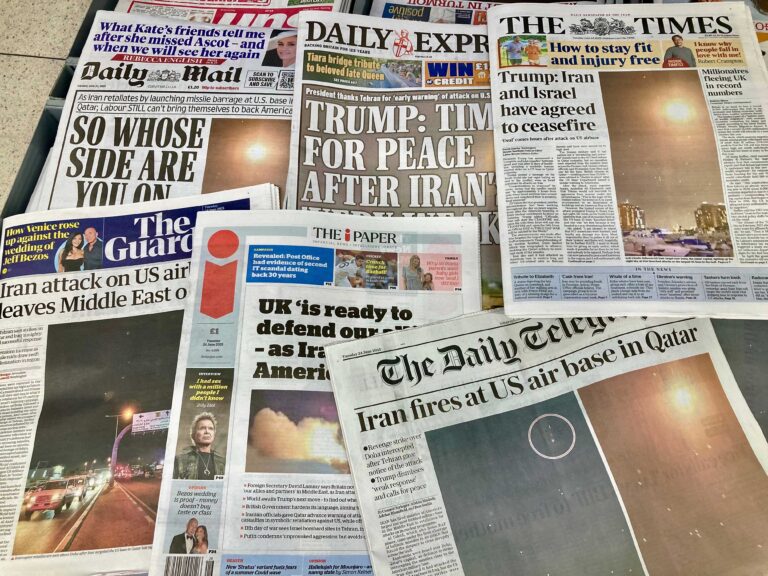
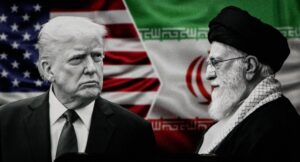
This brings us to the subject of Israel and nuclear war. At first glance, the June 2025 operation against Iran carried no risks of such an unprecedented conflict. In that operation, a cooperative military effort by Israel and the United States was launched to prevent Iranian nuclearization. Still, in the ongoing armed conflict between the US, Israel and the Islamic Republic, Jerusalem could issue deterrent threats of an “asymmetrical nuclear war” and/or Tehran could enlist state allies (e.g., North Korea or Pakistan) as Iranian nuclear surrogates.
These are basic scenarios. Accordingly, they now need augmentation with clarifying details and pertinent nuances. In both scenarios, Israel’s nuclear deterrent would benefit from a carefully-calibrated shift from “deliberate nuclear ambiguity” to “selective nuclear disclosure.” Israel’s long-standing policy of deliberate nuclear ambiguity refers to its practice of neither confirming nor denying possession of nuclear weapons, thereby seeking deterrence without formal acknowledgment. By contrast, selective nuclear disclosure would involve limited and calibrated acknowledgment of capabilities designed to strengthen deterrent credibility without abandoning strategic restraint.
At some not yet determinable point, Israel’s survival could become contingent on the harms of a “symmetrical nuclear war.” These unprecedented harms could be irremediable and obtain even if Israel were the recognizably “stronger” or “more powerful” nuclear adversary.
To meaningfully understand all this, diplomatic background will be important. For Israel, US-brokered pacts with the UAE and Bahrain transformed longstanding informal relationships into formal partnerships that intersect with broader Sunni-Shiite strategic dynamics in the region. Though some Israeli planners might still believe that Iran’s nuclear threat was tangibly diminished by the “Abraham Accords,” such thinking (Sigmund Freud would call it “wish fulfilment”) would be erroneous. Among other things, it would rest on a too-optimistic view of “countervailing” Sunni military power at conceptual and policy-making levels and of passive Iranian acceptance.
Looking ahead at the Israel-Iran axis of conflict, strategic questions will be many-sided and densely complicated. Iran need not always remain Israel’s greatest military concern, and an incremental or sudden growth of Sunni Arab power would not necessarily be in Israel’s security interests. In time, Saudi Arabia, Egypt or even non-Arab Turkey could decide to “go nuclear.” To argue that such a development would represent a net-positive for Israel would be to foolishly narrow Israel’s nuclear threat focus entirely to Iran. Such a reduction could make no strategic sense.
In addition, much will depend on the changing balance of Sunni-Shiite power, a theoretical equilibrium that is inherently subjective and potentially indecipherable. In a worst-case scenario, those enemy states presumably “neutralized” by the Abraham Accords would no longer offer Israel a purposeful anti-Shiite bloc. Instead, these Sunni Arab states would reconstitute themselves as an adversarial coalition, thereby replacing Shiite Iran as the Jewish State’s most formidable enemy.
Even if there were no Sunni Arab nuclear proliferation factor to consider, Israel’s nuclear forces and strategy would remain relevant to conventional war avoidance. While rarely discussed publicly, nuclear weapons could offer substantial security benefits to Israel in deterring non-nuclear foes. These foes could include various sub-state enemies and/or “hybridized” (state-sub-state) blocs.
Creating a credible nuclear deterrent
A summarizing question warrants immediate emphasis: After the 12-day missile war with Iran in June 2025, and the currently ongoing US-Israeli operations “Epic Fury” and “Roaring Lion”, how should Israel best ensure a viable and law-based nuclear deterrence posture? Generically, military assessments of any individual state’s nuclear deterrent should focus on a changing number of different and sometimes complementary elements. These elements would concern multiple weapon systems (offensive and defensive), weapon system infrastructures and enhancements of threat credibility. In the specific case at hand, analytic focus ought generally to highlight Israel’s missile and anti-missile capabilities and its expected willingness to launch under diverse enemy threats.
To suitably reinforce Israel’s nuclear deterrence posture, a continuously updated assessment will be in order. This dynamic focus should be directed at world system context, an obligation that calls forth both geo-strategic and jurisprudential objectives. At times, these objectives could be strongly interdependent or overlapping. At other times, they could be “force-multiplying” or synergistic. Presently, even Iran-centered military planners should think of parallel conflicts in Ukraine, North Korea, South Asia and the Taiwan Strait.
Returning to antecedent matters of methodology, deeply serious questions will need to be asked, answered and asked again, sequentially and dialectically. But how precisely should such analyses proceed? At some point, the original Cold War superpowers could find themselves on the same side. Under President Donald J. Trump, elements of U.S. foreign policy have been more accommodating towards Moscow than traditional NATO partners. In a once-unimaginable scenario of sustained American realignment, Israel could find its strategic calculations complicated.
Credo quia absurdum, cautioned Roman philosopher Tertullian: “I believe because it is absurd.”
Intersections and synergies
To assess the prospective impact of inter-state interactions on a nuclear war involving Israel, scholars and policy-makers will have to account for starkly bewildering relationships. On occasion, assorted interactions could be synergistic. This would express an always-daunting quality, one in which the “whole” of any single effect is greater than the calculable sum of its “parts.”[i]
Such hard-to-predict expectations will require capable evaluations. To a greater or lesser extent, hard-to-quantify effects could be filtered by variously appropriate and “peremptory” considerations of international law. In the final analysis, Israel’s strategic choices should always take jurisprudential factors into close account. In the end, neither Israel nor the United States could benefit from transient military victories[ii] in a continuously Hobbesian “state of nature.”[iii]
For Israeli military planners and others interested in Israel’s nuclear strategy, US-Russian antagonisms should be studied together with Israel’s relevant weapon systems and nuclear threat postures. For refined analysts, these system-defining antagonisms should be considered as core elements in constant flux. Complicating calculations, system changes would be both foreseeable and unforeseeable.
Superpower relations, whether or not tempered by authoritative international law, could quickly become vital or even determinative for Israeli nuclear deterrence. Ultimately, a great deal will depend on the precise manner in which Trump-era American realignments (pro-Putin, anti-NATO) impact this relationship and the variously underlying components of Israel’s strategic posture. To the extent discoverable, this impact would depend on Jerusalem’s multiple and overlapping nuclear power alignments with the United States. Moreover, in figuring Israel’s optimal strategic moves, China and North Korea could introduce additional strategic unpredictability.
Reason and anti-reason
Antecedent to any such complex considerations, much will depend on the expected rationality or non-rationality of each national nuclear power and the plausible interactions or synergies between these nuclear adversaries and their alliance partners/clients. Regarding the first concern, Israel’s strategic planners will need to bear in mind the subtle wisdom of German philosopher Karl Jaspers’ Reason and Existence (1935): “The rational is not thinkable without its other, the non-rational, and it never appears in reality without it.”[iv]
Never without it. This unambiguous assumption exhibits a rudimentary understanding for anyone engaged in strategic nuclear threat analyses. “Everything is very simple in war,” counsels Carl von Clausewitz in On War, “but even the simplest thing is difficult.” This generally useful insight remains persuasive not only during periods of active conflict, but also in those unsteady periods of latent hostility (what Thomas Hobbes meant as a “state of war” in Leviathan) that obtain between still-possible or still-impending wars of aggression.
Even during the expansive pre-nuclear era in world law[v] and world politics, a precarious logic of deterrence obtained within the global state of nature. Already, there had been operative a fearful condition of raw competition, corrosive violence and seemingly perpetual anarchy. Despite considerable nuance from century to century and year to year, this balance of power has existed since the 17th century Peace of Westphalia (1648.) In specifically legal terms, the “Westphalian” system is best described as a decentralized or “horizontal” system of international law.
Long before the advent of nuclear weapons, the worst “state of war” would have been characterized by “dreadful equality.” Here, world politics would have taken place within a vastly confusing context wherein “the weakest has strength enough to kill the strongest.” In such bitterly opaque circumstances, potential sources of decision-making bewilderment could quickly magnify and multiply.
In any such worst case configuration – most apparent today wherever nuclear proliferation would continue without any meaningfully correlative legal inhibitions – the life of individual human beings and entire states must be (per Thomas Hobbes) “solitary, poor, nasty, brutish and short.” For Israel, the shifting parameters of “Cold War II” and related issues of enemy rationality could soon produce indeterminable and foreseeable effects on its presumptive nuclear doctrine. Inter alia, these effects would include diverse issues surrounding upcoming policy choices between “deliberate nuclear ambiguity” and “selective nuclear disclosure.”
Nuclear ambiguity and Israeli nuclear deterrence
For Israel, a state sorely lacking in strategic depth,[vi] the former posture has been left unchallenged. This doctrinal stance is sometimes referred to as Israel’s “bomb in the basement.” Still, as a multipolar axis of conflict is now being shaped in world politics by the three principal superpowers (US, Russia and China) and as prospects for enemy irrationality are tangibly greater than ever before, Jerusalem will have to make appropriate and incremental modifications to its nuclear deterrence doctrine. Included here, among other things, would be assorted policy considerations of preemption or (as described under authoritative international law) “anticipatory self-defense.”
In principle at least, Israel’s strategic posture has long relied on ambiguity. At the same time, traditional ambiguity has been ostentatiously breached at the highest possible level by two of Israel’s prime ministers, first, by Shimon Peres, on December 22, 1995, and then by Ehud Olmert on December 11, 2006. Peres, speaking to a group of Israeli newspaper and magazine editors, had affirmed publicly: “…give me peace, and we’ll give up the atom. That’s the whole story.” Later, when Olmert offered similarly general but still-revelatory remarks, they were widely interpreted as “slips of the tongue.”
Today, a basic question should be resurrected in Jerusalem: Is comprehensive nuclear secrecy always in the best survival interests of the Jewish State?
Fashioning Israeli strategic doctrine should never consist of disjointed or ad hoc calculations. Any shift toward partial disclosure would need to be subtle, nuanced, more-or-less indirect and visibly incremental. Contrary to the often-parodied views of such prospective disclosure that may be found in popular news stories, such disclosure would not require overt policy declarations. Instead, it could be allowed to “leak out” or “spill out” on its own, thereby allowing a crucial point to be made without precipitating any immediate crisis or sense of impending misfortune.
From doctrine to strategy
Among other things, formal doctrine, consistent with world law, would represent the vital framework from which any gainfully pragmatic Israeli nuclear policy of selective disclosure could be extrapolated. In all military institutions and traditions, doctrine must describe the tactical or operational manner in which designated national forces ought to fight in variously plausible combat situations; the prescribed “order of battle;” and all manner of corollary operations. Appropriately, the literal definition of “doctrine” derives from Middle English, from the Latin doctrina, which means teaching, learning and instruction.
The central importance of codified Israeli military doctrine lies not only in the way it could animate, unify and optimize national military forces, but also in the manner it could transmit desired “messages” to an enemy state, enemy states, sub-state proxies or state-sub-state “hybrids. Understood in terms of Israel’s comprehensive strategic nuclear policy, complete ambiguity could weaken deterrence. Continued nuclear ambiguity would also jeopardize certain protective functions of international law.[vii] For Israel, this is the case because truly effective deterrence and defense should call for military doctrine that is at least partially recognizable by such adversary states as Iran and by certain sub-state terrorist foes.
In fashioning Israel’s strategic military plans, creating operational options for strategic surprise could prove necessary to subsequent combat operations. But successful deterrence is another matter entirely. In order to persuade would-be adversaries not to strike first – in current circumstances, a manifestly complex effort of dissuasion – projecting too much secrecy could (at least on occasion) prove counter-productive.
In matters of Israel and its enemies, especially Iran, optimal military success must lie in credible deterrence, not in any actual war-fighting.[viii] Examined in terms of ancient Chinese military thought offered by Sun-Tzu in The Art of War, “Supreme excellence consists of breaking the enemy’s resistance without fighting.” With this still-worthy dictum in mind, there are times for Israel when successful may require controlled disclosure of previously withheld information. Such information would concern Israel’s capabilities, its intentions or both qualities taken together.
In this connection, we may recall a popular Cold War I-era movie in which Dr. Strangelove, an “eccentric” strategic advisor to the American president discovers, to his horror, that the existence of America’s “doomsday machine” had not been made known in advance to the Soviets: “The whole point of the doomsday machine is lost,” shrieks Dr. Strangelove, “if you keep it a secret.” To have been suitably deterred, the film instructs, Soviet leaders ought to have been given prior warnings of the “doomsday machine.”
This device had been designed to ensure the perceived automaticity of America’s nuclear retaliatory response. Remembering the commonly-held strategic posture known as MAD, this response would have been made instantly recognizable to the Kremlin as “assuredly destructive.”
Deterrence ex ante, not revenge ex post
It follows from all this and also from general expectations of the laws of war (humanitarian international law) that Israel’s nuclear weapons should remain oriented to deterrence ex ante, not war fighting or revenge ex post. As designated instruments of a law-based system of deterrence, nuclear weapons can succeed only in their protracted non-use. Once they have been employed for any tangible “battlefield,” deterrence will have failed. Also worth noting, once nuclear weapons are actually used, all traditional meanings of “victory” instantly become moot.
Continue Reading:
Israel, Iran, and the Strategic Logic of Nuclear War – Part II
Even an asymmetrical nuclear war in which Israel is the sole nuclear power could inflict intolerable harms.
[i] See Beres, L.R. (2015). “Core Synergies in Israel’s Strategic Planning: When the Adversarial Whole Is Greater Than the Sum of Its Parts”, Harvard National Security Journal, Harvard Law School, retrieved from: https://journals.law.harvard.edu/nsj/2015/06/core-synergies-in-israels-strategic-planning-when-the-adversarial-whole-is-greater-than-the-sum-of-its-parts/.
[ii]See Beres, L.R. (2025). “Always Preparing for a ‘Next War’: The Infinite Lethality of World Politics”, Princeton Political Review, retrieved from: https://www.princetonpoliticalreview.org/opinion-1/always-preparing-for-a-next-war-the-infinite-lethality-of-world-politics.
[iii] See Beres, L.R. (2023). “Endgame: Obligations to Transform ‘Westphalian’ International Law”, Global Community Yearbook on International Law, Oxford University Press, retrieved from: https://academic.oup.com/book/55768/chapter-abstract/434255464?redirectedFrom=fulltext; Beres, L.R. (2025). “Preparing for the ‘Next War’: The Infinite Lethality of World Politics”, Modern Diplomacy, 19 July 2025, retrieved from: https://moderndiplomacy.eu/2025/07/19/preparing-for-the-next-war-the-infinite-lethality-of-world-politics/.
[iv] Interestingly, the critical importance of Reason to all legal judgment was prefigured in ancient Israel, which prominently accommodated the concept within its system of revealed law. Jewish theory of law, insofar as it displays the evident markings of a foundational Higher Law, offers a transcending order revealed by the divine word as interpreted by human reason. In the words of Ecclesiastes 32.23, 37.16, 13-14: “Let reason go before every enterprise and counsel before any action…And let the counsel of thine own heart stand…For a man’s mind is sometimes wont to tell him more than seven watchmen that sit above in a high tower….”
[v] In such jurisprudential matters, attention should be paid to long-standing ideas of a “higher law.” Under international law, these ideas, drawn originally from both the ancient Greeks and ancient Hebrews, are contained within the principle of jus cogens or peremptory norms. In the language of Article 53 of the Vienna Convention on the Law of Treaties (1969: “A peremptory norm of general international law….is a norm accepted and recognized by the international community of States as a whole, as a norm from which no derogation is permitted, and which can be modified only by a subsequent norm of general international law having the same character.”
[vi] The heart of this issue was addressed as early as June 29, 1967, when a U.S. Joint Chiefs of Staff memorandum specified that returning Israel to pre-1967 boundaries would drastically increase its vulnerability. The then Chairman of the JCS, General Earl Wheeler, concluded that for minimal deterrence and defense, Israel must retain Sharm el Sheikh and Wadi El Girali in the Sinai; the entire Gaza Strip; the high ground and plateaus of the mountains in Judea and Samaria; and the Golan Heights, east of Quneitra.
[vii] No state, including Israel, is under any per se legal obligation to renounce access to nuclear weapons; in certain residual circumstances, even actual resort to such weapons could be lawful. On July 8, 1996, the International Court of Justice at The Hague handed down its Advisory Opinion on “The Legality of the Threat or Use of Force of Nuclear Weapons.” The final paragraph of this Opinion, concludes, inter alia: “The threat or use of nuclear weapons would generally be contrary to the rules of international law applicable in armed conflict, and in particular the principles and rules of humanitarian law. However, in view of the current state of international law, and of the elements of fact at its disposal, the Court cannot conclude definitively whether the threat or use of nuclear weapons would be lawful or unlawful in an extreme circumstance of self-defense, in which the very survival of a State would be at stake.”
[viii] This conclusion was also reflected in the author’s Project Daniel Report (2003) to then Prime Minister Sharon. It was titled Israel’s Strategic Future. http://www.acpr.org.il/ENGLISH-NATIV/03-ISSUE/daniel-3.htm