During the Syrian civil war, U.S.-Turkish relations went through a rough patch over diverging policies.[i] Washington, lacking a clear policy on the Assad regime[ii], was preoccupied with combating ISIS, whereas Ankara feared spillover as Turkey took in the brunt of Syrian refugees fleeing the conflict.[iii]
Avoiding a full-scale invasion of Syria to defeat ISIS, both due to domestic pressure and potential fears of a wider confrontation with Russian and Iranian forces, the U.S. counted on Syrian-Kurdish militias. The U.S. selected Syrian Kurds to form the base[iv] of the Syrian Democratic Forces (SDF) around, relying on them as their militias consolidated territories in the northeast of Syria as the civil war expanded.
However, partnering with Syrian Kurdish militias came with a price as the forces’ YPG and YPJ were directly linked to the Kurdistan Workers Party (PKK)[v], which both Turkey and the United States designate as a terrorist organization. The partnership led to an immediate rift between Ankara and Washington, however, the Turkish government decided on a course of strategic patience to solve the SDF question.
Turkish-SDF conflict and split in Turkish-American relations
Having brought the YPG and YPJ under the umbrella of the SDF, the United States Central Command (CENTCOM) gradually recruited Arab tribal fighters[vi] west of the Euphrates river to join as well. Turkey saw no difference between the SDF and YPJ/YPG fighters, which had previously fought against Turkish forces[vii], and thus, Ankara gradually reduced cooperation[viii] with Washington over Syria.
The U.S. was restricted from using the Incirlik Airbase for anti-ISIS operations[ix], and in the same period, Washington halted[x] the sale of the patriot missile system sale to Ankara. Turkey would procure[xi] the Russian-made S400 system instead, leading to further political tension as operating Russian air defences is incompatible with NATO principles due to the spyware incorporated in its systems.
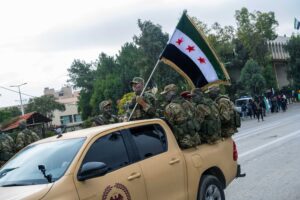
Relations deteriorated to the point where the U.S. would rescind Turkey’s role in the F-35 and F-16 Block-C programmes.[xii] The tensions did not significantly undermine Turkey’s military operations in Syria, which were increasingly aimed at weakening both the Assad regime and SDF by supporting their own de facto proxy militia, the Syrian National Army (SNA).[xiii] Turkey would conduct multiple offensives against the SDF[xiv], both in Afrin and northeast Syria. In addition to this, Turkey deployed its armed forces around the Idlib enclave[xv], which blocked the Ba’athist army and Russian forces from further offensives against the battered rebel opposition and Islamist fighters part of Hayat Tahrir al-Sham (HTS). That respite allowed Ankara to help the opposition build a base with Ahmed al-Sharaa, ultimately becoming the face of armed opposition against Assad in late 2024.
Patience in exerting influence over Syria
Ultimately, the SDF, with American air cover and support from special forces, dislodged ISIS[xvi] from its key strongholds in Raqqa and Deir ez-Zor. Even with American air power backing them, the SDF lost 11,000 fighters[xvii] with additional tens of thousands wounded during the counterterrorism operations.
In the meantime, Ahmed al-Sharaa, then operating under his nom de guerre, Abu Muhammad al-Jolani, distanced himself from al-Qaeda[xviii] and turned HTS into a purely Syrian liberation organization. Sharaa started to fight al-Qaeda’s remnants in Idlib as well as ISIS[xix], which the U.S. and Turkish governments quietly backed.
Russia’s invasion of Ukraine in 2022 fundamentally changed strategic calculations. As Turkey began to fight Russian-backed mercenaries in both Syria and Libya[xx], Ankara’s actions became a part of Washington’s considerations for a solution to end the war. The Biden Administration allowed Turkey back into the F-16 block-c program[xxi], and Trump’s second term as president led to the re-admission of Turkish President Recep Tayyip Erdogan into the fold on Syria.
As troops and air defence systems began to be relocated from Syria to Ukraine[xxii], Russian forces accumulated heavy losses and Moscow overextended itself.[xxiii] Meanwhile, Sharaa built numerous institutions in Idlib between 2019 and 2024, and consolidated control[xxiv] over several militias with Turkish support. These factions would strike the Assad regime in a lightning offensive in late November 2024.
The HTS-led Syrian rebel offensive successfully toppled Assad[xxv], and both the Turkish-backed SNA and the SDF moved to consolidate their positions in their respective areas of influence. Al-Sharaa became interim president and the Trump Administration made the stabilization of Syria a priority.
SDF miscalculations vs. Syrian government and Turkish gains
Against the backdrop of the collapse of the Assad regime, the new Syrian interim government under al-Sharaa faced numerous hurdles. Remnants of Assad loyalists[xxvi] in the Alawite strongholds of Latakia and Tartus, and brewing separatist sentiments[xxvii] among the Syrian Druze of Suwayda province continue to challenge the establishment of sovereignty over all of Syria. An important part of Syria’s fractures sovereignty has been the SDF stronghold in the northeast. The group, despite its recent ceasefire with the government, is not eager to integrate into the Syrian state.
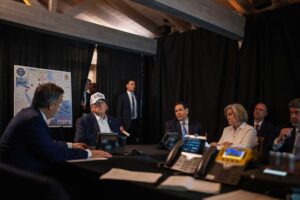
President Tayyip Erdogan saw a key opportunity to dislodge the U.S. from the norhteast, and together with Saudi Arabian Crown Prince Mohammed bin Salman, he vouched for al-Sharaa[xxviii] as a capable partner in conducting anti-ISIS operations. In May 2025, President Trump met al-Sharaa in Riyadh and invited him to the White House in November.[xxix]
Simultaneously, Trump would give credit to Erdogan for his support in Assad’s ousting[xxx] as Turkey’s role in patrolling frozen contact lines allowed rebel groups to recuperate after their losses. Under orders from the President, U.S. Ambassador to Turkey and Middle East envoy Tom Barrack would oversee negotiations[xxxi] on the full integration of the SDF into the new Syrian army.
The SDF has resisted this for several reasons beside the sacrifices they had made during years of fighting against ISIS. First, some of the Kurdish militias within the organization fought against al-Sharaa[xxxii] when he originally led the al-Qaeda-affiliated Syrian branch of al-Nusra, which later rebranded itself as HTS. Secondly, ethnic massacres in coastal and southern Syria against the Alawites[xxxiii] and Druze[xxxiv] respectively led to fears of the same retaliation against Kurds in the north. Lastly, being in control of Syria’s oil fields[xxxv], the SDF leadership under Mazloum Abdi hoped that oil could be used in negotiations for retaining some degree of autonomy in the northeast.
A turning point was the removal of Caesar Act sanctions[xxxvi], which devastated the Syrian economy during the Assad years. With the sanctions lifted, al-Sharaa’s government became open to international investments and stands on a stronger footing when it comes to reunification efforts. In a final blow, the Sunni Muslim base of the SDF[xxxvii], who had long been marginalized[xxxviii] in the Alawite-led years of the Assad regime, saw an opportunity to join forces with al-Sharaa, defecting the Kurdish-led grouping en masse.
U.S. strategic interests
During the post-Assad transition period, Turkey moved to align the U.S. with its own strategic interests in Syria. Erdogan and al-Sharaa capitalized on Trump’s planned withdrawal from Syria[xxxix] during his first term, and pushed to facilitate this outcome since the end of 2024. Syria’s interim government dramatically increased raids against ISIS cells[xl] in the country, impressing CENTCOM. Simultaneously, Turkey pushed for an integration agreement[xli] between the SDF and the Syrian interim government in which the Kurdish-led forces would come under pressure for ‘stalling.’
Mazloum Abdi’s red line is retaining full rights for Kurds, including the protection of their language, culture, and guaranteeing their right to serve in the new Syrian government. Al-Sharaa made a symbolic gesture[xlii] by designating Nowruz as a national holiday in Syria and establishing a curriculum for Kurdish education. Still, tensions around the integration of the Syrian army and the SDF and concerns about Kurdish autonomy remain strong.
Collapse of the SDF
Some of the first major combat operations against the SDF took place in the autumn of 2025 as the Syrian army moved to cordon off the Kurdish-held Sheikh Maqsood and Ashrafieh neighbourhoods in Aleppo. Sporadic clashes took place in October[xliii] and December 2025[xliv], which ended with U.S. mediation. Al-Sharaa and Turkey would truly test America’s Syria policy in early 2026.
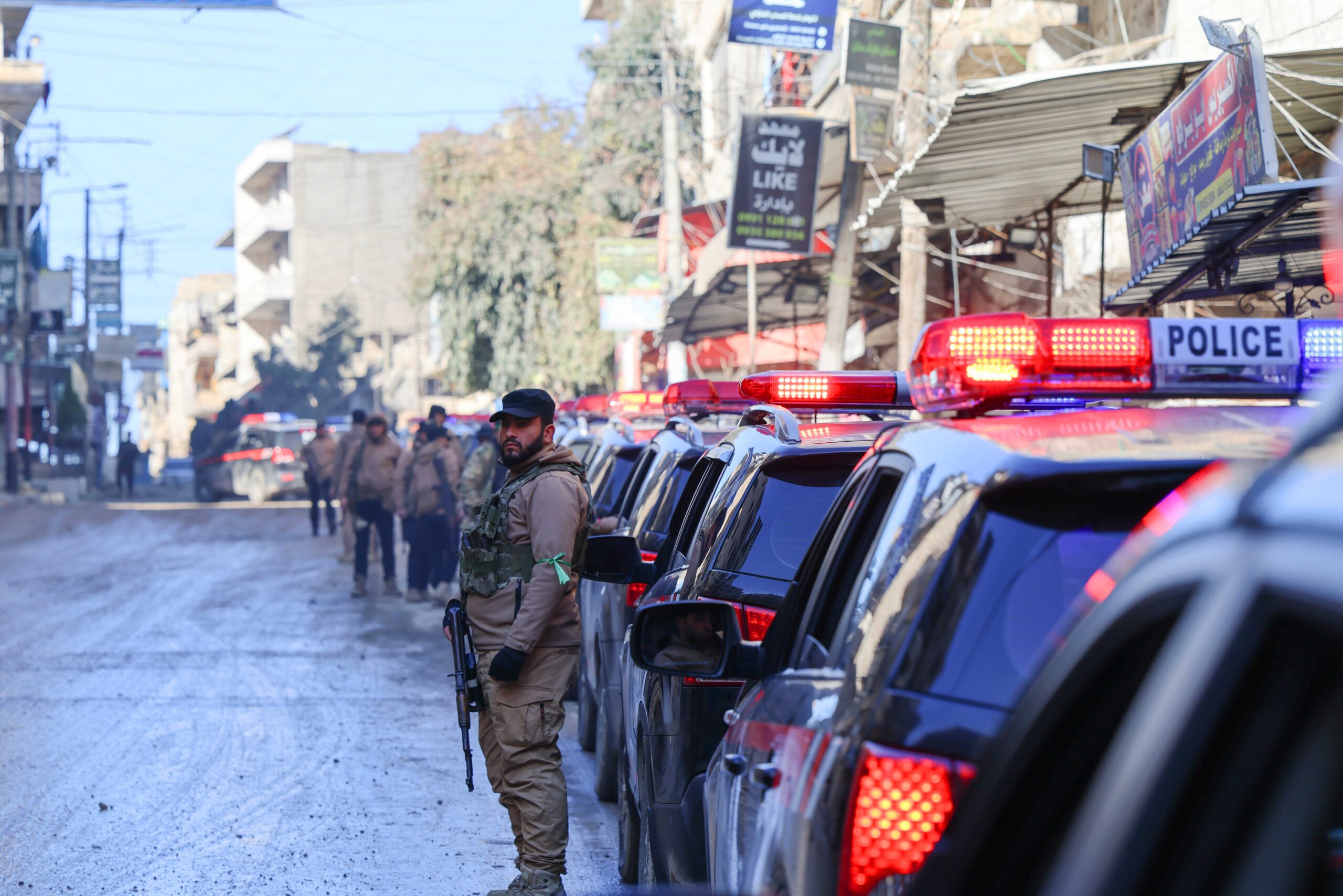
On 6th January 2026, Syrian forces conducted an offensive[xlv] to dislodge the SDF from the Sheikh Maqsood and Ashrafieh neighbourhoods, which Damascus achieved with relatively low casualties. This was followed by a deal to evacuate Kurdish fighters from Aleppo city towards the countryside. Several days later, the SDF was forced to withdraw[xlvi] west of the Euphrates as their positions became untenable. With little U.S. mediation, Damascus saw the inaction as a green light to force the SDF into a deal.
Only a week after the Aleppo clashes, al-Sharaa’s forces, backed by Turkey, launched a major offensive[xlvii] against the SDF west of the Euphrates. This was widely seen as successful as many of the Arab tribes within the SDF defected to the government’s side and helped dislodge remaining Kurdish fighters from Sunni-Arab majority areas such as Raqqa and Deir ez-Zor.
The Kurdish-led SDF overestimated the loyalty of Arab tribal fighters. This is surprising considering the heavy armed clashes[xlviii] between the Arab-led Deir ez-Zor military council and the SDF in late 2023, which saw dozens of deaths. Arabs and Kurds have indeed had historically turbulent relations, and the SDF was bound for combustion if a charismatic leader in Damascus could sway tribal fighters to defect.
The SDF also overestimated how long the U.S. government would be willing to sponsor them, especially under a president that had looked to scale down operations in Syria. The SDF was the bulwark for counterterrorism options against ISIS, but as the Islamist militant group weakened, so did the American-led mission and Washington’s loyalty to the Kurds in Syria.
The U.S. emphasized[xlix] the Syrian interim government’s cooperation to dismantle ISIS cells along with joint patrols with the STG. As al-Sharaa’s profile strengthened, Abdi’s hesitance to integrate became thorn in the side of unfolding joint American-Turkish interests.
In conclusion, with losing their core Arab tribal fighters, strategic terrain, and full backing by the U.S., the Kurdish-led Syrian Democratic Forces have few options but to accept an unfavourable American- and Turkish-backed deal proposed by Damascus. Despite ethnic tensions and a history of massacres, the U.S. has made its new Syria strategy clear – full centralization under Ahmed al-Sharaa, with growing defence partnerships with Turkey in the Levant.
[i] Dalay, G. (2018). “A difference of opinion? Fissures in US-Turkish relations after Syria”, Brookings, 26 January 2018, retrieved from: https://www.brookings.edu/articles/a-difference-of-opinion-fissures-in-u-s-turkish-relations-after-syria/#:~:text=During%20the%20course%20of%20the,became%20the%20main%20stumbling%20block.
[ii] Sahloul, A. (2021). “Ending America’s Diplomacy-Last Syria Policy”, War on the Rocks, 27 October 2021, retrieved from: https://warontherocks.com/2021/10/ending-americas-diplomacy-last-syria-policy/.
[iii] Cagaptay, S. et al. (2016). “The Impact of Syrian Refugees on Turkey”, WINEP, 26 August 2016, retrieved from: https://www.washingtoninstitute.org/policy-analysis/impact-syrian-refugees-turkey#:~:text=Now%20harboring%20at%20least%202.5,the%20southern%20provinces%20bordering%20Syria.
[iv] Mellen, R. (2019). “A brief history of the Syrian Democratic Forces, the Kurdish-led alliance that helped the U.S. defeat the Islamic State”, The Washington Post, 7 October 2019, retrieved from: https://www.washingtonpost.com/world/2019/10/07/brief-history-syrian-democratic-forces-kurdish-led-alliance-that-helped-us-defeat-islamic-state/.
[v] Stein, A. and Foley, M. (2016). “The YPG-PKK connection”, Atlantic Council, 26 January 2016, retrieved from: https://www.atlanticcouncil.org/blogs/menasource/the-ypg-pkk-connection/.
[vi] Holmes, A.A. (2020). “Arabs Across Syria Join the Kurdish-led Syrian Democratic Forces”, Middle East Research and Information Project, 19 August 2020, retrieved from: https://www.merip.org/2020/08/arabs-across-syria-join-the-kurdish-led-syrian-democratic-forces-295/#:~:text=Arab%20men%20and%20women%20have%20joined%20the,that%20the%20land%20be%20returned%20to%20Syria.
[vii] K24 (2017). “Kurdish YPG clash with Turkish army in northern Syria”, 13 December 2017, retrieved from: https://www.kurdistan24.net/en/story/373637/Kurdish-YPG-clash-with-Turkish-army-in-northern-Syria.
[viii] Sloat, A. (2018). “The United States and Turkey should fix their relationship – Before it’s too late”, Brookings, 16 February 2018, retrieved from: https://www.brookings.edu/articles/the-united-states-and-turkey-should-fix-their-relationship-before-its-too-late/#:~:text=The%20top%20agenda%20item%20remains,to%20stage%20attacks%20on%20Turkey.
[ix] Tisdall, S. (2015). “US deal with Turkey over ISIS may go beyond simple use of an airbase”, The Guardian, 24 July 2015, retrieved from: https://www.theguardian.com/world/2015/jul/24/us-deal-turkey-isis-incirlik-airbase-erdogan-obama#:~:text=Although%20Erdo%C4%9Fan%20is%20all%20but,Turkey%2C%20has%20also%20been%20accepted.
[x] Sanders, G. and Akca, A. (2020). “The Great Unwinding: The U.S.-Turkey Arms Sales Dispute”, CSIS, 18 March 2020, retrieved from: https://www.csis.org/analysis/great-unwinding-us-turkey-arms-sales-dispute#:~:text=Under%20Secretary%20of%20Defense%20for,program%20during%20this%20same%20timeframe.
[xi] Birol, C. (2019). “Turkey’s S-400 Missile Crisis: Four Possible Outcomes”, Baker Institute, 28 June 2019, retrieved from: https://www.bakerinstitute.org/research/turkey-us-missile-crisis-possible-outcomes#:~:text=In%202017%2C%20Turkey%E2%80%94a%20NATO,with%20Russia%20in%20recent%20years.
[xii] Mehta, A. (2019). “Turkey officially kicked out of F-35 program, costing US half a billion dollars”, Defense News, 17 July 2019, retrieved from: https://www.defensenews.com/air/2019/07/17/turkey-officially-kicked-out-of-f-35-program/#:~:text=The%20US%20has%20removed%20Turkey%20from%20the,work%20on%20the%20jet%20by%20March%202020.
[xiii] Kemal, L. (2024). “From rebel factions to an army: Efforts to tame the Syrian National Army”, Atlantic Council, 18 June 2024, retrieved from: https://www.atlanticcouncil.org/blogs/menasource/syrian-national-army-turkey-reform/.
[xiv] Global Conflict Tracker (2025). “Conflict Between Turkey and Armed Kurdish Groups”, 27 May 2025, retrieved from: https://www.cfr.org/global-conflict-tracker/conflict/conflict-between-turkey-and-armed-kurdish-groups.
[xv] Gurbuz, M. (2017). “The Challenges of Turkey’s Operation in Syria’s Idlib”, Arab Center Washington DC, 19 October 2017, retrieved from: https://arabcenterdc.org/resource/the-challenges-of-turkeys-operation-in-syrias-idlib/#:~:text=After%20arduous%20efforts%20to%20reach,key%20threat%20in%20western%20Syria.
[xvi] Wilson Center (2019). “Timeline: the Rise, Spread, and Fall of the Islamic State”, 28 October 2019, retrieved from: https://www.wilsoncenter.org/article/timeline-the-rise-spread-and-fall-the-islamic-state.
[xvii] Schogol, J. (2019). “US-backed group in Syria says it suffered more than 11,000 killed and 21,000 wounded fighting ISIS”, Rask & Purpose, 25 March 2019, retrieved from: https://taskandpurpose.com/news/sdf-casualties-isis-syria/.
[xviii] Zelin, A.Y. (2024). “What to Know About the Man Who Toppled Assad”, WINEP, 11 December 2024, retrieved from: https://www.washingtoninstitute.org/policy-analysis/what-know-about-man-who-toppled-assad.
[xix] Schenker, D. (2025). “Enough with the Hand-Wringing: Al-Sharaa Is Better than Assad”, WINEP, 11 March 2025, retrieved from: https://www.washingtoninstitute.org/policy-analysis/enough-hand-wringing-al-sharaa-better-assad.
[xx] Yildiz, G. (2021). “Turkish-Russian Adversarial Collaboration in Syria, Libya, and Nagorno-Karabakh”, SWP, 24 March 2021, retrieved from: https://www.swp-berlin.org/10.18449/2021C22/.
[xxi] TWZ (2024). “Turkish F-16 Dela Now Being Fast-Tracked By Biden Admin”, 25 January 2024, retrieved from: https://www.twz.com/turkish-f-16-deal-now-being-fast-tracked-by-biden-admin.
[xxii] McBride, J. (2024). “A Pyrrhic Victory: why Assad’s Position is More Precarious Than Ever”, Manara Magazine, 23 September 2024, retrieved from: https://manaramagazine.org/2024/09/a-pyrrhic-victory-why-assads-position-is-more-precarious-than-ever/.
[xxiii] Mappes, G. and Stepanenko, K. (2026). “New York Post: Nearly four years into war, Russia has gained little…”, ISW, 17 January 2026, retrieved from: https://understandingwar.org/newsroom/new-york-post-nearly-four-years-into-war-russia-has-gained-little-and-ukraine-keeps-bouncing-back-despite-some-2-million-draft-dodgers/#:~:text=At%20the%20maximum%20extent%20of,area%20to%20just%20over%2020%25.
[xxiv] Oreg, A. (2025). “Ahmed al-Sharaa, Syria’s New Leader: From Jihadist to Stateman?”, The Meir Amit Intelligence and Terrorism Information Center”, 3 January 2025, retrieved from: https://www.terrorism-info.org.il/en/ahmed-al-sharaa-syrias-new-leader-from-jihadist-to-stateman/.
[xxv] McBride, J. (2024). “Assad Falls: Why the Syrian Army Collapsed So Quickly”, 1945, 8 December 2024, retrieved from: https://www.19fortyfive.com/2024/12/assad-falls-why-the-syrian-army-collapsed-so-quickly/.
[xxvi] Albam, O. (2025). “Clashes in Syria’s coastal region between loyalists and government forces kill more than 70”, PBS News, 7 March 2025, retrieved from: https://www.pbs.org/newshour/world/clashes-in-syrias-coastal-region-between-assad-loyalists-and-government-forces-kill-more-than-70#:~:text=Overnight%2C%20Damascus%20sent%20reinforcements%20to,under%20control%2C%20state%20media%20reported.&text=It%20was%20the%20worst%20violence,calm%20and%20under%20government%20control.
[xxvii] Shadi, Dr M. (2025). “What Iif: As-Suwayda Sought Independence?”, Al Habtoor Research Centre, 17 July 2025, retrieved from: https://www.habtoorresearch.com/programmes/what-if-as-suwayda-sought-independence/.
[xxviii] Quilliam, Dr N. (2025). “The meeting of al-Sharaa and Trump has shifted the balance of power in the Middle East”, Chatham House, 5 June 2025, retrieved from: https://www.chathamhouse.org/2025/05/meeting-al-sharaa-and-trump-has-shifted-balance-power-middle-east.
[xxix] Al Jazeera (2025). “Trump hosts Syria’s al-Sharaa at White House as US extends sanctions relief”, 10 November 2025, retrieved from: https://www.aljazeera.com/news/2025/11/10/ahmed-al-sharaa-meets-trump-as-us-extends-syria-sanctions-relief.
[xxx] Madhani, A. (2025). “Trump meets with Turkey’s Erdogan as White House considers lifting ban on F-35 sales”, PBS News, 25 September 2025, retrieved from: https://www.pbs.org/newshour/politics/watch-live-trump-meets-with-turkeys-erdogan-as-white-house-considers-lifting-ban-on-f-35-sales#:~:text=Trump%20sees%20Erdogan%20as%20a,stability%20in%20a%20tumultuous%20moment.
[xxxi] The Wall Street Journal (2026). “Tom Barrack’s Not-So-Excellent Syrian Adventure”, 21 January 2026, retrieved from: https://www.wsj.com/opinion/syrian-democratic-forces-u-s-turkey-kurds-isis-ahmed-al-sharaa-tom-barrack-0aa83ed4.
[xxxii] Lu, D. and Thorp, G. (2016). “How the growing web of conflict in Syria became a global problem”, Washington Post, 14 March 2016, retrieved from: https://www.washingtonpost.com/graphics/world/explaining-the-syrian-conflict/#:~:text=A%20military%20fight%20starts%20between,Islamic%20extremists%20in%20their%20ranks.
[xxxiii] Anjarini, S. (2025). “Investigating the Alawite Massacres”, New Line Magazine, 12 May 2025, retrieved from: https://newlinesmag.com/reportage/investigating-the-alawite-massacres/.
[xxxiv] Amnesty International (2025). “Syria: New investigation reveals evidence government and affiliated forces extrajudicially executed dozens of Druze in Suwayda”, 2 September 2025, retrieved from: https://www.amnesty.org/en/latest/news/2025/09/syria-new-investigation-reveals-evidence-government-and-affiliated-forces-extrajudicially-executed-dozens-of-druze-people-in-suwayda/.
[xxxv] Reuters (2026). “Syrian forces seize major oil, gas fields in eastern Syria, security sources say”, 18 January 2026, retrieved from: https://www.reuters.com/world/middle-east/syrian-forces-seize-major-oil-gas-fields-eastern-syria-security-sources-say-2026-01-18/.
[xxxvi] Al-Assil, I. (2025). “What Lifting U.S. Sanctions Means for Syria’s Transition”, Belfer Center for Science and International Affairs, 23 December 2025, retrieved from: https://www.belfercenter.org/research-analysis/what-lifting-us-sanctions-means-syrias-transition#:~:text=The%20repeal%20of%20the%20Caesar%20Syria%20Civilian%20Protection%20Act%20removes,specifically%20to%20the%20Caesar%20Act.
[xxxvii] Holmes, A. (2019). “SDF’s Arab Majority Rank Turkey as the Biggest Threat to NE Syria”, Wilson Center, retrieved from: https://www.wilsoncenter.org/sites/default/files/media/documents/publication/sdf_arab_majority_rank_turkey_as_biggest_threat.pdf.
[xxxviii] Kunchihithlu, G. (2025). “Between History and Conflict: the Religious and Ethnic Groups of Syria”, The Next Century Foundation, 23 February 2025, retrieved from: https://www.nextcenturyfoundation.org/between-history-and-conflict-the-religious-and-ethnic-groups-of-syria/.
[xxxix] Borger, J. and Chulov, M. (2018). “Trump shocks allies and advisers with plan to pull US troops out of Syria”, The Guardian, 20 December 2018, retrieved from: https://www.theguardian.com/us-news/2018/dec/19/us-troops-syria-withdrawal-trump.
[xl] Zelin, A.Y. (2025). “The New Syrian Government’s Fight Against the Islamic State, Hezbollah, and Captagon”, Combating Terrorism Center, 18: 3, retrieved from: https://ctc.westpoint.edu/the-new-syrian-governments-fight-against-the-islamic-state-hezbollah-and-captagon/.
[xli] Ayoub, A. and Sheva, A. (2026). “The Syria-SDF Deal Hands Turkey a Strategic Victory”, Middle East Forum, 24 January 2026, retrieved from: https://www.meforum.org/mef-online/the-syria-sdf-deal-hands-turkey-a-strategic-victory.
[xlii] AlTaher, N. (2016). “Syria’s Al Shara recognizes Kurdish citizenship, language and Nowruz festival in presidential decree”, The National, 17 January 2026, retrieved from: https://www.thenationalnews.com/news/mena/2026/01/17/syrias-al-shara-recognises-kurdish-citizenship-language-and-nowruz-festival-in-presidential-decree/#:~:text=Syria’s%20President%20Ahmad%20Al%20Shara,state%20news%20agency%20Sana%20reported.
[xliii] The Syrian Observer (2025). “Aleppo Clashes Draw the Boundaries of Dialogue Between Damascus and the SDF”, The Syrian Observer, 9 October 2025, retrieved from: https://syrianobserver.com/syrian-actors/aleppo-clashes-draw-the-boundaries-of-dialogue-between-damascus-and-the-sdf.html#:~:text=Armed%20clashes%20broke%20out%20in,Syria’s%20sovereignty%20and%20territorial%20integrity.
[xliv] Al Jazeera (2025). “At least two killed in Aleppo clashes between Syrian army, Kurdish-led SDF”, 22 December 2025, retrieved from: https://www.aljazeera.com/news/2025/12/22/clashes-between-syrian-army-kurdish-led-sdf-break-out-in-aleppo.
[xlv] Atlantic Council (2026). “Eight questions (and expert answers) on the SDF’s withdrawal from Syria’s Aleppo”, 13 January 2026, retrieved from: https://www.atlanticcouncil.org/blogs/menasource/eight-questions-and-expert-answers-on-the-sdfs-withdrawal-from-syrias-aleppo/.
[xlvi] Nair, A.S. (2026). “’They left overnight’: Along the Euphrates, SDF withdrawal marks a turning point”, Syria Direct, 22 January 2026, retrieved from: https://syriadirect.org/along-the-euphrates-sdf-withdrawal-marks-a-turning-point/#:~:text=Days%20of%20fighting%20in%20Aleppo’s,of%20heavy%20gunfire%20and%20drones.
[xlvii] Tabler, A.J. (2026). “Kurdish Collapse in Northeast Syria? Key Things to Watch”, WINEP, 21 January 2026, retrieved from: https://www.washingtoninstitute.org/policy-analysis/kurdish-collapse-northeast-syria-key-things-watch.
[xlviii] Gritten, D. (2023). “Syria: Dozens killed in fighting between SDF and Arab tribesmen”, BBC News, 5 September 2023, retrieved from: https://www.bbc.co.uk/news/world-middle-east-66711352.
[xlix] Frantzman, S.J. (2025). “US deepens cooperation with Syria as CENTCOM expands anti-ISIS operations”, The Jerusalem Post, 11 December 2025, retrieved from: https://www.jpost.com/middle-east/article-880030.