The Trump administration has recently released the 2026 National Defense Strategy[i], outlining its policy for the Middle East. In the wake of the Gaza war and heightening tensions with Iran, the region holds paramount importance for President Donald Trump’s foreign policy. With an active reliance on military force, the establishment of new organizations like the Board of Peace[ii] and seeking favourable economic agreements, President Trump aspires to reimagine the Middle East as a more economically prosperous and peaceful region aligned with U.S. economic and strategic interests.
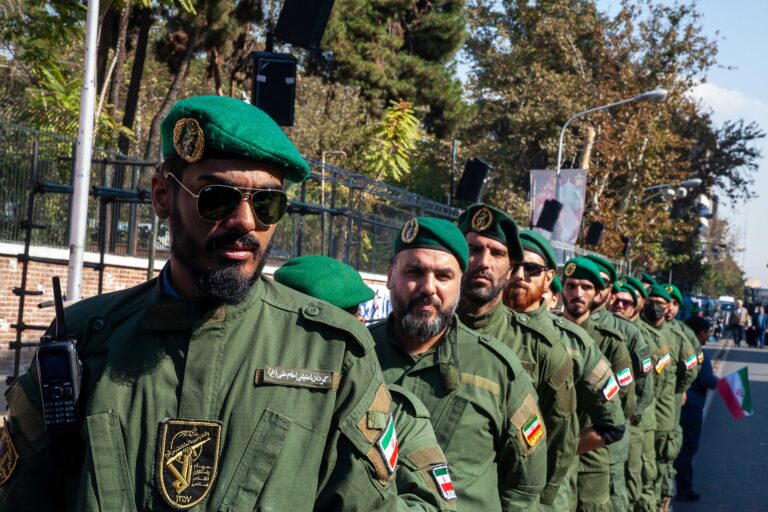
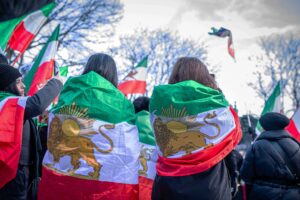
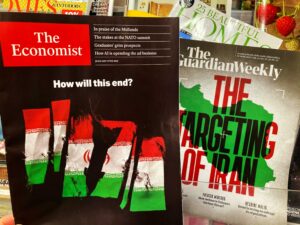
Under the Trump Administration, Iran has become the focal point of U.S. foreign policy in the Middle East. The changing dynamics of protests[iii] in Iran have earned a watchful eye from Washington and the rest of the world. President Trump has threatened[iv] to attack Iran, saying, “we are locked and loaded and ready to go,” if the protestors are harmed. Since then, the U.S.-based Human Rights Activists News Agency (HRANA) has reported the death of more than 6,000[v] individuals killed in the protests, with more investigations pending and numbers growing. Washington, closely monitoring the situation, has dispatched[vi] a naval armada to the region for multi-day aerial military drills, with the USS Abraham Lincoln at its head. The dispatch of the naval armada aims to compel Tehran to return to the negotiating table.
The use of military force[vii] is an important tenet of President Trump’s Middle East policy. This operationalization of force is not motivated by neo-conservative interventionism and aspirations of nation-building. It is categorically linked to the protection of American strategic and economic interests. As highlighted in the National Defense Strategy, Operation Midnight Hammer was carried out in retaliation for the loss of American lives, to secure the U.S.’ commercial interests and protect its allies, especially Israel. Similarly, Operation Rough Rider was launched to counter the Yemeni Houthis’ attacks on shipping lanes, thus safeguarding economic imperatives in the region. The National Defense Strategy emphasizes restoring peace from a position of strength, and Trump’s employment of the military option to counter the Iranian threat and restore regional peace, in line with U.S. interests, is synchronous with the principles of the document.
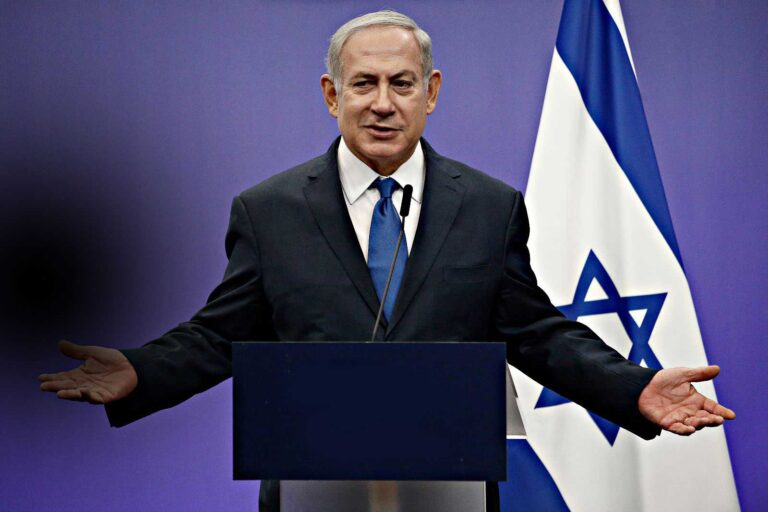
U.S. interests in the Middle East are rationalized for the protection of Washington’s model ally[viii], Israel. President Trump aims for the securitization of Israel and its right to defend itself against foreign threats. The U.S. is the primary benefactor of Israel’s defense endeavours and characterizes Israel as the future leader of the Middle East. Tel Aviv has created a nexus of security with the help of Jordan and Egypt, which act as interceptors for any attack in the region. The recent Operation Rising Lion[ix], carried out by Israel, wiped out the top military leadership of Iran, shifting the balance of power in its favour. With U.S. help, Israel holds the biggest stick in the Middle East and offers no carrots to any of its foes. Washington sees an opportunity to further empower Israel and bolster its regional security leadership. Israel itself plans to act as a ‘Super Sparta’[x] state that projects strength and provides a framework for the region’s future.
The U.S. acknowledges Israel’s leadership capabilities and endeavours to transplant this model to the entire Middle Eastern region.[xi] President Trump aims to continue the Middle Eastern normalization plan initiated in his first term. The Abraham Accords[xii] brokered peace between Israel and several Arab nations, fostering diplomatic, economic and security ties. The 2026 National Defence Strategy will carry forward the accords’ vision for a greater and expanded regional framework for peace.
President Trump’s role in the cessation of the Israel-Hamas War and the inception of the Board of Peace look to accentuate his persona as a peacemaker. He takes credit for bringing peace to eight different wars.[xiii] The Board of Peace is presented as an effort to create a more decisive and action-oriented mechanism for conflict resolution than the United Nations. Twenty-six countries[xiv] have become the founding members of the Board, comprising several regional powers from the Middle East, with President Trump expected to serve as Chairman. Members are expected to contribute US$1 billion in the first year to secure permanent membership, thus emphasizing shared financial responsibilities across participants. However, the initiative has also drawn international criticism, particularly from states and multilateral institutions that view the Board as an attempt to sidestep the United Nations and weaken established norms of collective security. Critics argue that bypassing the UN risks undermining international legitimacy, fragmenting global governance, and privileging power-based decision-making over inclusive multilateral consensus.
President Trump’s entire Middle Eastern policy emphasizes greater burden-sharing between allies.[xv] This is a point of concern that he has repeatedly raised in the context of the unequal contributions of allies with the framework of NATO. President Trump has long been a critic of the U.S.’ allies taking advantage of American resources. The National Defense Strategy explicitly outlines President Trump’s policy for the alleviation of American patronage, as urging partners to increase their military budgets. Middle Eastern allies will also be expected to increase their defence expenditure. The expectation is that this will ease the pressure on the U.S. for active strategic engagement in the Middle East. At the same time, increased military spending is expected to bolster the American defence industry,[xvi] which envisages a notable expansion under President Trump through increased arms sales to Gulf allies.
In a transactional exchange, as the U.S. invests in peace in the Middle East, President Trump expects (or rather demands) that Middle Eastern allies invest in the U.S. in return, employing a business-first approach in dealing with allies. Saudi Arabia will be investing US$600 billion[xvii] in the U.S. to further strengthen bilateral relations with Washington. The UAE, on the other hand, has committed to invest US$1.4 trillion[xviii] in the AI sector, focusing on data centres. Qatar and the U.S. have committed to economic exchanges potentially amounting to US$1.2 trillion.[xix] While these headline figures underscore strategic intent and political alignment, the majority of the announced investments remain aspirational in nature, structured as long-term pledges and framework agreements rather than fully executed or immediately disbursed capital flows.
Ultimately, President Trump’s approach to the Middle East reflects a distinct vision of order rooted in strength, transactional diplomacy, and regional burden-sharing. Supporters view this framework as a pragmatic departure from decades of costly interventionism, arguing that deterrence, economic leverage, and normalization among U.S. partners offer a more sustainable path to stability. Critics, however, caution that an overreliance on military pressure and deal-making risks sidelining unresolved political grievances, exacerbating regional polarization, and mistaking short-term alignment for durable peace. Whether this strategy can translate tactical advantage into lasting regional stability remains an open question – one that will depend not only on American resolve, but on the willingness of regional actors to move beyond security-first calculations toward inclusive and enduring political settlements.
[i] Department of War, 2026 National Defense Strategy (Washington, DC: 2026), retrieved from: https://media.defense.gov/2026/Jan/23/2003864773/-1/-1/0/2026-NATIONAL-DEFENSE-STRATEGY.PDF.
[ii] The White House (2026). “Statement on President Trump’s Comprehensive Plan to End the Gaza Conflict”, 16 January 2026, retrieved from: https://www.whitehouse.gov/briefings-statements/2026/01/statement-on-president-trumps-comprehensive-plan-to-end-the-gaza-conflict/.
[iii] Maloney, S. (2026). “The New Iranian Revolution Has Begun,” Brookings, 12 January 2026, retrieved from: https://www.brookings.edu/articles/the-new-iranian-revolution-has-begun/.
[iv] Dawn (2026). “Iran Indignant after Trump Says Military ‘Locked and Loaded,” 3 January 2026, retrieved from: https://www.dawn.com/news/1964789.
[v] Al Jazeera Centre for Public Liberties & Human Rights (2026). “Iran, Protest Death Toll, Communications Blackout and International Response,” 27 January 2026, retrieved from: https://liberties.aljazeera.com/en/iran-protest-death-toll-communications-blackout-and-international-response/.
[vi] Sanger, D.E., Pager, T. and Fassihi, F. (2026). “Trump Threatens Iran with ‘Massive Armada’ and Presses a Set of Demands,” The New York Times, 28 January 2026, retrieved from: https://www.nytimes.com/2026/01/28/us/politics/trump-iran-armada.html.
[vii] Thomas, R. (2026). “Top 5 highlights from the US National Defense Strategy,” Army-technology.com, 27 January 2026, retrieved from: https://www.army-technology.com/features/top-5-highlights-from-the-us-national-defense-strategy/.
[viii] Voice of America (2026). “The US National Defense Strategy for the Middle East,” 28 January 2026, retrieved from: https://editorials.voa.gov/amp/the-us-national-defense-strategy-for-the-middle-east/8107576.html.
[ix] Riboua, Z. (2026). “How Israel’s Operation Rising Lion Dismantled Iran from Within: A Case Study in the Art of Deception”, Hudson Institute, 8 January 2026, retrieved from: https://www.hudson.org/defense-strategy/how-israels-operation-rising-lion-dismantled-iran-within-case-study-art-deception.
[x] Borger, J. (2025). “Netanyahu’s ‘Super-Sparta’ Vision Braces Israel for Isolated Economic Future,” The Guardian, 16 September 2025, retrieved from: https://www.theguardian.com/world/2025/sep/16/netanyahu-super-sparta-vision-israel-economic-future-isolation.
[xi] Eichner, I. (2026). “Trump outlines global military strategy, hails Israel as ‘model ally’,” Ynet Global, 24 January 2026, retrieved from: https://www.ynetnews.com/article/h1tarkf8be.
[xii] Winkler, Z.J. (2025). “The Abraham Accords, A Stable Bridge in Unstable Times: An Assessment of the Accords and Their Role in Achieving Peace in the Middle East,” Intergovernmental Research and Policy Journal, 19 March 2025, retrieved from: https://irpj.euclid.int/articles/the-abraham-accords-a-stable-bridge-in-unstable-times-an-assessment-of-the-accords-and-their-role-in-achieving-peace-in-the-middle-east/.
[xiii] Tripathi, S. (2026). “‘Stopped 8 Wars, Including India-Pak’: Trump Reiterates In Davos,” NDTV, 21 January 2026, retrieved from: https://www.ndtv.com/world-news/stopped-8-wars-including-india-pak-trump-reiterates-in-davos-10800633.
[xiv] Dawn (2026). “26 Countries, Including Pakistan, Named Founding Members of Trump-Led ‘Board of Peace’”, Dawn, 28 January 2026, retrieved from: https://www.dawn.com/news/1969546.
[xv] Guldogan, D. and Gokce, S. (2026). “US rolls out 2026 defense strategy with sharper focus on homeland, deterring China, greater ally burden-sharing,” Anadolu Agency, 24 January 2026, retrieved from: https://www.aa.com.tr/en/americas/us-rolls-out-2026-defense-strategy-with-sharper-focus-on-homeland-deterring-china-greater-ally-burden-sharing/3809397.
[xvi] Alexander, K. (2026). “Trump’s National Security Strategy doesn’t downgrade the Middle East, it redefines it,” Atlantic Council, 28 January 2026, retrieved from: https://www.atlanticcouncil.org/blogs/menasource/trumps-national-security-strategy-doesnt-downgrade-the-middle-east-it-redefines-it/.
[xvii] Ivanova, I. (2025). “Saudi Arabia’s $600 Billion Investment Promise to the U.S. Needs Oil Prices to Stay High,” Fortune, 15 May 2025, retrieved from: https://fortune.com/2025/05/15/saudi-arabia-600-billion-oil-trump/.
[xviii] United States Department of State (2025).“2025 Investment Climate Statements: United Arab Emirates,” retrieved from: https://www.state.gov/reports/2025-investment-climate-statements/united-arab-emirates.
[xix] “US, Qatar Deals to Generate $1.2 Trillion in ‘Economic Exchange’, White House Says,” Reuters, May 14, 2025, retrieved from: https://www.reuters.com/world/us-qatar-deals-generate-12-trillion-economic-exchange-white-house-says-2025-05-14/.