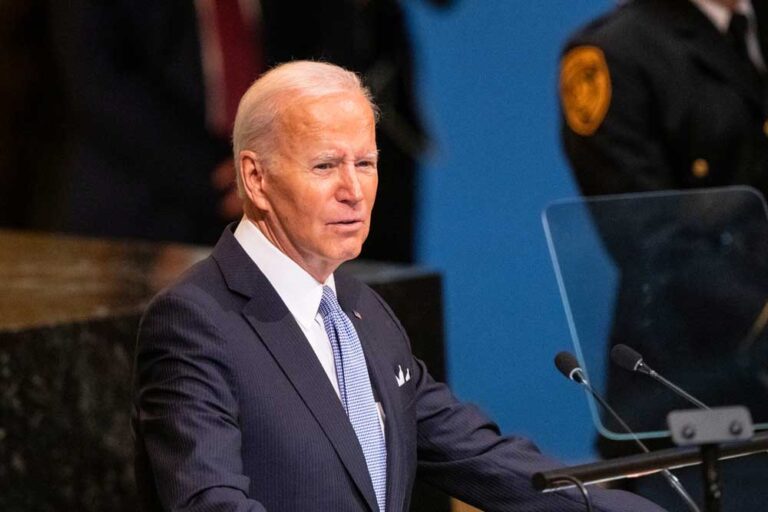
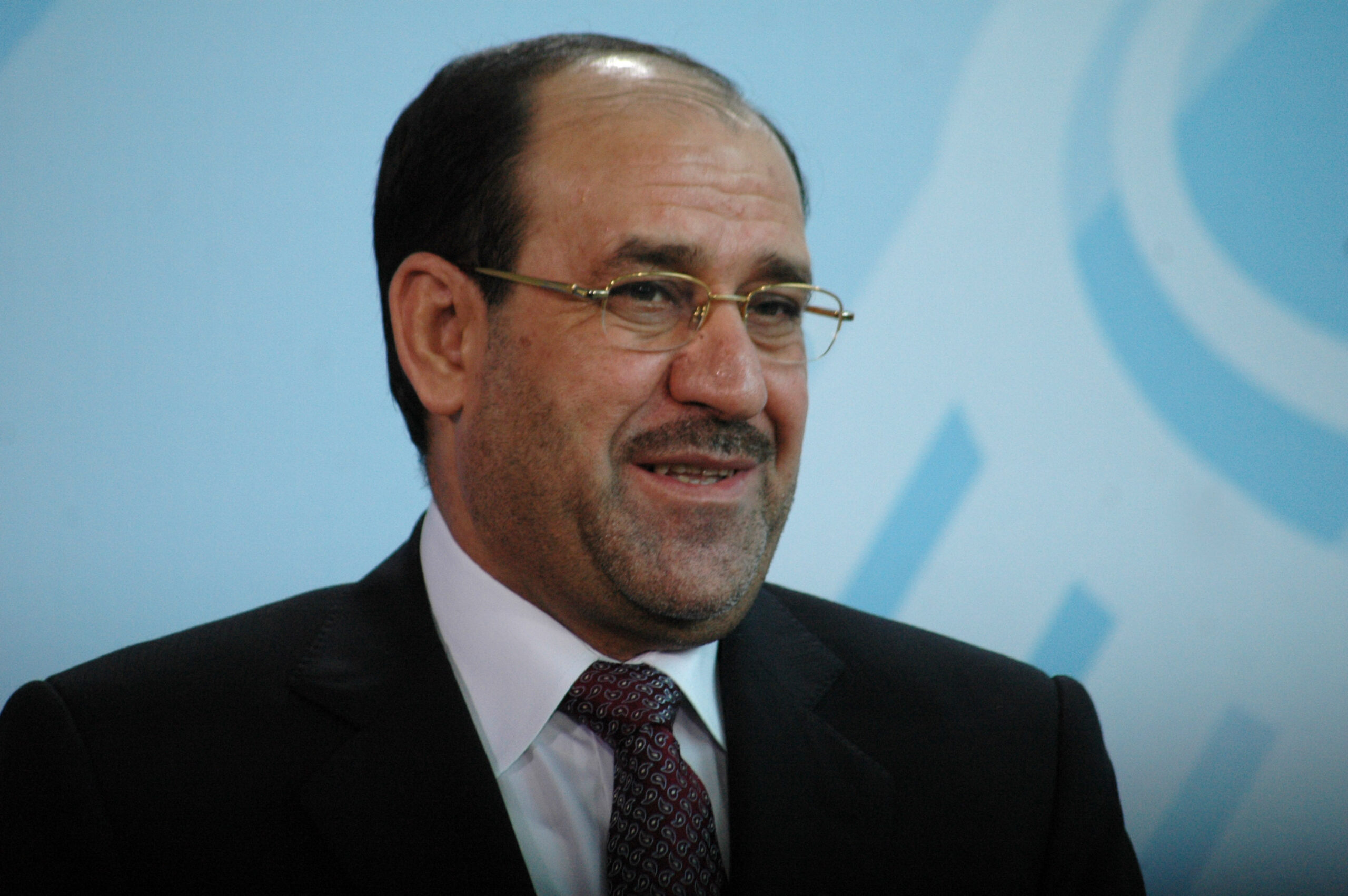
Three days after former Iraqi Prime Minister Nouri al-Maliki was nominated by the “coordination framework” as candidate for prime minister on 24th January 2026, pending formal designation by Iraq’s president. Following Maliki’s nomination, U.S. President Donald Trump posted[i] on TruthSocial, noting that “That should not be allowed to happen again.” Trump’s position created a new obstacle in Washington and Baghdad’s relationship, one that both countries need to adapt to in order to determine their future interactions. Iran has had to adapt to the new Iraqi reality as well.
Tensions between Iraq and the US Over Maliki's candidacy
Responding, Maliki said Trump’s regional and domestic opponents have “misled” him. In his statement[ii], amid rumours of mounting difficulties about his re-election, Maliki boldly claimed[iii] that Trump’s comments amounted to “blatant American interference in Iraq’s internal affairs.” He added that he would only resign if the majority of leaders in the Coordination Framework did not back him.
The future of the Iraqi presidency has been under considerable scrutiny due to this debate, as newly elected lawmakers are expected to select a president, a position that has historically been held by a Kurd in Iraq. The president will then have to appoint the prime minister, selecting them from the largest parliamentary bloc.
Maliki’s insistence on his selection was supported[iv] by public statements from Iranian Supreme Leader Ali Khamenei’s office and a statement from Grand Ayatollah Ali al-Sistani reiterating his long-standing policy of avoiding direct political intervention while urging stability and constitutional processes. Although the Coordination Framework has internal divisions, it nominated[v] Maliki by majority vote.
Trump’s post denouncing Maliki’s candidacy follows[vi] a string of statements made by U.S. Secretary of State Marco Rubio and by U.S. Chargé d’Affaires in Iraq Joshua Harris[vii] as well as current Iraqi Prime Minister Mohammed Shia al-Sudani. In contrast to its intended effect, the post hurt al-Sudani’s chances for re-election.[viii]
How Iranian strategies shape U.S. stance on Maliki’s candidacy
Tehran may have used Maliki’s candidacy as an instrument of leverage against Washington at this particular moment for a number of reasons:
- Iran’s concerns have centered on the possibility of conflict with the United States, proven right by joint US-Israeli attacks on 28th
- The intentional disclosure of the contents of a letter from Iranian Supreme Leader Ali Khamenei, which was taken to support Maliki’s candidacy, was a clear and direct provocation of the U.S. administration.
- American statements about their position on Maliki, which started through unofficial channels before moving to official ones, were disregarded by key Shia figures in Iraq. Trump’s post and its threats, which were discussed in meetings between the U.S. chargé d’affaires and Shia officials, did not deter Maliki and some of his allies. During these meetings, the United States threatened to impose severe sanctions that may cause the Iraqi economy to collapse.
- The Najaf religious authority has not publicly taken a direct position on Maliki’s nomination, and the leader of the Sadrist movement, Muqtada al-Sadr – who is well-known for his strained ties with Maliki – refrained from adopting a firm position on the question. Sadr is disruptive to the system. His religious heritage as the son of Grand Ayatollah Mohammed Sadiq al-Sadr, street pressure, and popular mobilisation are the sources of his strength. Instead of seeing institutions as the main source of power, he tactically uses them. This silence is in spite of the fact that Ali al-Sistani, the highest-ranking Shiite religious leader, had directly and publicly urged Shiite political forces[ix] to stop Maliki from taking office for a third term in 2014. He also intervened[x] in 2019 to force former Prime Minister Adel Abdul Mahdi to resign after the October protests broke out.
These changes now take place in a wider political context and go beyond the confines of internal Shiite political disputes. This implies that settling the conflict and installing a new government in Iraq will be contingent not only on the conclusion of US-Iranian talks that started[xi] in Muscat, Oman, on 6 February, but also on the stage of the conflict and its goals, particularly depending on broader U.S.–Iran tensions and regional strategic objectives.
Maliki’s candidacy and its consequences for Iraq-US-Iran dynamics
The US insists that if Baghdad ignores Trump’s threats, Washington will retaliate. Washington’s Middle East calculations do not now indicate that a total Iraqi exit from the US sphere of influence is one of the viable alternatives. But if Baghdad complied with Trump’s demands, the US would likely withdraw – at least partially – the economic and security pressures it has applied to change Iraq’s direction over the past few years. This could affect U.S.–Iraq security cooperation and military coordination. The next Iraqi government could align more closely with US Middle East policy if were formed in line with Washington’s recommendations. In this scenario, tensions between the Iraqi government, Shiite factions, and U.S. security partners could increase further.
Political groups in Iraq, especially Shia ones, face a challenging situation. The imposition of sanctions and the withdrawal of U.S. military support could, in the medium term, escalate to direct attacks targeting Iraqi military and political installations if strategic calculations about Iraq become entangled with the intensifying conflict with Iran. However, dropping Maliki as candidate in the face of U.S. pressure and Iran’s concurrent backing would signal that Iraq has completely shifted from the Iranian domain of influence to the Americans’ side. This would likely prompt Iran and its active militia proxies inside Iraq to use every tactic at their disposal, rekindling domestic turmoil and potentially fomenting a civil war.
The existing partnership, which offers a degree of agreement on the internal situation in Iraq and keeps the security situation from completely collapsing, is actually something that neither Washington nor Baghdad is ready or willing to end. But precisely because of this relationship, the U.S. administration holds leverage.
Although Tom Barrack serves as U.S. Ambassador to Turkey and Special Envoy to Syria, he has also been actively involved in diplomatic engagement related to Iraq’s government formation. The Trump administration’s regional strategy currently appears to be fully cohesive. If tensions are not mitigated, Iraq could become a battlefield in the escalating US-Iran conflict rather than improving its regional standing. If the conflict does not subside, Iraq could become a battlefield rather than improve its regional standing. This move may worsen Iraq’s already precarious status. Furthermore, Barrack’s adamant opposition to regional federalism would also make the situation more challenging for Iraq’s Kurds.
Six possibilities for Iraq’s government amid Iran-US tensions
Iraqi political forces currently have no choice but to attempt to contain Trump in a way that saves face and buys more time until the consequences of the current Iran-US conflict become evident. Only then can a suitable decision be made, depending on how the situation develops. There are six possibilities for the formation of the Iraqi government in the near future, taking shape at the moment:
- With Iranian approval, a compromise candidate could create an Iraqi government that is accepted both domestically and internationally. This would happen when the Iranian regime, either as a result of conflict or concessions made during negotiations with the US, survives;
- In the event that Iran’s current political system falls apart, another possibility is the establishment of an Iraqi government that is in line with Washington and compatible with the new regional status quo;
- Direct involvement by the Sadrist Movement could take place to pre-empt regional advances made by the Najaf regional authority, and to get Maliki to drop out of the race altogether;
- Under the direction of the current al-Sudani government or an interim government established for this specific purpose, early elections could be held in under a year. It is hoped that the Sadrist Movement would run in the upcoming elections. Prior to early elections, some experts have proposed giving interim Prime Minister Mohammed Shia al-Sudani the responsibility of overseeing a transitional government. However, this possibility is unlikely, given the existing disagreements among the Shiite blocs within the same coordinating framework;
- Maliki’s calibrated resignation may present an opportunity for the coordinating framework to shift direction in a way that maintains credibility and aligns with U.S. interests without compromising “Iraqi sovereignty”.
- Official readouts of the latest of Thomas Barrack’s high-profile meetings[xii] with top Iraqi officials on 22–23 February appeared to reiterate the alleged content of Washington’s 19th February letter to Baghdad.[xiii] Reports in Iraqi media suggested that Washington conveyed specific concerns and expectations regarding Iraq’s next government. During a television interview, former Iraqi Prime Minister Mustafa Al-Kadhimi reaffirmed[xiv] that “the message conveyed by the Iraqi ambassador in Washington, consisting of 7 points, is a genuine message.”
However, none of this appears to have shifted Maliki’s position. Speaking to AFP on 23rd February, he reaffirmed[xv] that he would “not withdraw until the end.” He further added that “no one has the right to say whom we can or cannot vote for.” And this might lead to the sixth possibility, which would involve Sudani making the final push to withdraw Maliki’s nomination. If Maliki doesn’t want to do it himself (possibility number 5), the simplest way to get rid of him is to convince[xvi] the Coordination Framework to withdraw its support. Sudani may be holding off on running for prime minister in order to see if he can win over the majority of the Coordination Framework, which must either retract Maliki’s support or double down and potentially risk US sanctions.
The Trump administration’s apparent departure[xvii] from Washington’s “strategic ambiguity” in favour of a more direct and public diplomatic approach suggests that the crisis surrounding Maliki’s nomination has exposed deep fault lines within Iraq’s Shiite leadership as well as Washington’s glaring influence in Iraqi affairs.
[i] Donald J. Trump (2026). “I’m hearing the Great Country of Iraq…”, Truth, 27 January 2026, retrieved from: https://truthsocial.com/@realDonaldTrump/posts/115968824541011312.
[ii] The Guardian (2026). “Iraq’s former prime minister denounces ‘blatant American interference’ in election”, 28 January 2026, retrieved from: https://www.theguardian.com/world/2026/jan/28/iraq-nouri-al-maliki-denounces-us-interference-trump-election.
[iii] The Defense Post (2026). “Iraq PM Candidate Maliki Denounces Trump’s ‘blatant’ Interference”, 29 January 2026, retrieved from: https://thedefensepost.com/2026/01/29/maliki-trump-iraq-us/.
[iv] Al-Estiklal (2026). “Iran Forces al-Maliki Back: Is Iraq on the Brink of New Conflict?”, retrieved from: https://www.alestiklal.net/en/article/iran-forces-maliki-back-is-iraq-on-the-brink-of-new-conflict.
[v] K24 (2026). “Iraq’s Shiite Coordination Framework Reaffirms Maliki Candidacy, Rejects Foreign Interference”, 31 January 2026, retrieved from: https://www.kurdistan24.net/en/story/891141/iraqs-shiite-coordination-framework-reaffirms-maliki-candidacy-rejects-foreign-interference%23:~:text=Iraq’s%2520Shiite%2520Coordination%2520Framework%2520Reaffirms,for%2520Maliki%2520as%2520its%2520candidate.
[vi] Dr Salih, M.A. (2026). “Containing Iran’s Influence in Iraq: Choices and Consequences for Washington”, Gulf International Forum, retrieved from: https://gulfif.org/containing-irans-influence-in-iraq-choices-and-consequences-for-washington/.
[vii] Kurdiu.org (2026). “Joshua Harris Delivered the Final Message to Maliki: The U.S. Disapproves”, 31 January 2026, retrieved from: https://www.kurdiu.org/en/b/589621.
[viii] Iraqi News (3036). “Al-Sudani gamble on Al-Maliki appears to be paying off”, 28 January 2026, retrieved from: https://www.iraqinews.com/iraq/al-sudanis-gamble-on-al-maliki-appears-to-be-paying-off/.
[ix] BBC News (2014). “Iraq crisis: Top Shia cleric urges quick PM appointment”, 27 June 2014, retrieved from: https://www.bbc.co.uk/news/world-middle-east-28055506.
[x] BBC News (2019). “Iraq unrest: PM Abdul Mahdi to resign after bloodies day in protests”, 29 November 2019, retrieved from: https://www.bbc.co.uk/news/world-middle-east-50600495.
[xi] Benmansour, M. et al. (2026). “Iran says talks with US in Oman were ‘good start’, will continue”, Reuters, 6 February 2026, retrieved from: https://www.reuters.com/world/middle-east/iran-us-negotiate-oman-amid-deep-rifts-mounting-war-fears-2026-02-06/.
[xii] +964 Media (2026). “Coordination Framework urges Kurdish parties to settle presidency”, 24 February 2026, retrieved from: https://en.964media.com/45438/.
[xiii] Al Monitor (2026). “In letter, US lays out 7 demands for next Iraqi PM, with emphasis on Iran”, retrieved from: https://www.al-monitor.com/originals/2026/02/letter-us-lays-out-7-demands-next-iraqi-pm-emphasis-iran.
[xiv] +964 Media (2026). “Kadhimi calls for Iraqi-led dialogue, says Trump tweet ‘interference’ but not the only kind”, 23 February 2026, retrieved from: https://en.964media.com/45414/.
[xv] Iraqi News (2026). “Al-Maliki defies Us threats, refuses to quit Prime Minister bid”, 23 February 2026, retrieved from: https://www.iraqinews.com/iraq/al-maliki-defies-us-threats-refuses-to-quit-prime-minister-bid/#google_vignette.
[xvi] The Arab Weekly (2026). “With US blessing, Sudani seems set for second term while Maliki clings to nomination”, 24 February 2024, retrieved from: https://thearabweekly.com/us-blessing-sudani-seems-set-second-term-while-maliki-clings-nomination.
[xvii] Mamouri, A. (2026). “Washington Has Lost Patience with Iraq’s Political Class”, MENA Nuances, 28 January 2026, retrieved from: https://www.menanuances.com/p/washington-has-lost-patience-with.