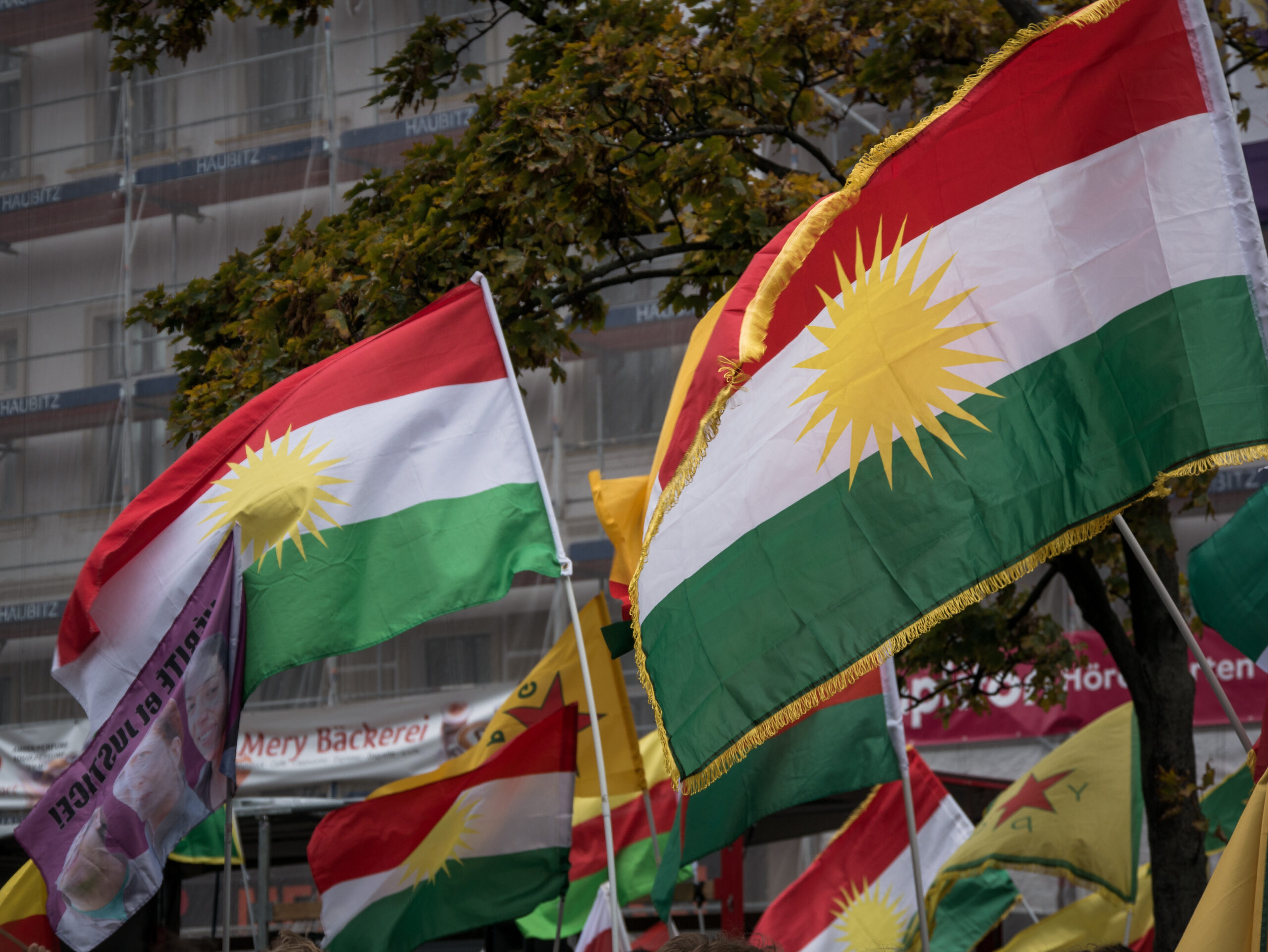
On 30th January, the Kurdish-led Syrian Democratic Forces (SDF) announced a ceasefire with the Syrian government and agreed to the integration of military and administrative units into the Syrian state.[i] For years, Syrian Kurds have been used as pawns, having played a vital role in the years-long battle against ISIS in Syria alongside the United States. Their military prowess was unsurpassed. Constituting a stable, orderly army in a volatile strategic landscape, the Kurds were Washington’s most reliable ally in Syria.[ii] However, the post-ISIS phase exposed a significant vulnerability in terms of their political and diplomatic strategies as they failed to establish regional alliances and put all of their stakes on the U.S.
Once the Assad regime fell on 8th December 2024, and Damascus reestablished its influence in the U.S. through mediators like Turkey and Gulf states, a new push began via Ankara and Damascus to establish an agreement with the White House that would put an end to the Kurds’ aspirations for an autonomous region in Syria. In the meantime, the Kurds continued to be strategically isolated and entirely reliant on the U.S.
Syrian Democratic Forces face new challenges after setbacks
Leading up to the current ceasefire, a number of setbacks occurred. Syrian Democratic Forces (SDF) commander Mazloum Abdi and Syrian Interim President Ahmed al-Sharaa attempted[iii] to negotiate the implementation of the 10th March agreement, which was unsuccessful. According to reputable sources in Damascus[iv], Syrian Foreign Minister Asaad al-Sheibani played an active role in sabotaging the talks. As a result, the negotiation phase came to an end, and a new phase of military confrontation started.
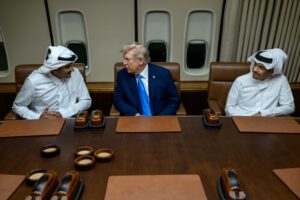
Great power politics was omnipresent behind the scenes. In September 2025, U.S. President Donald Trump met with Turkish President Recep Tayyip Erdoğan to strengthen their relationship[v] and look for ways to fill the void left by the retreat of Iranian influence in Syria. Then, on 10th November, Trump received al-Sharaa at the White House, where they agreed that Syria would join the international coalition against ISIS. Al-Sharaa promised “active assistance”[vi] to the US against the Iranian Revolutionary Guard Corps (IRGC), Hamas, and Hezbollah. In exchange, Trump expressed[vii] his support for Syrian unity and restoration under the interim government. Turkish Foreign Minister Hakan Fidan attended the meetings, which, according to a statement issued by U.S. Ambassador to Turkey Tom Barrack, established a U.S.-Turkish-Syrian framework[viii] for integrating the SDF into new Syrian structures in addition to redefining Turkish-Syrian-Israeli relations. On 18th November, Trump met with Saudi Crown Prince Mohammed bin Salman[ix] to build regional support for Syria’s new role in U.S. strategy.
Changing regional dynamics
In relation to Israeli security in particular, President Trump negotiated an agreement with Israeli Prime Minister Benjamin Netanyahu[x] regarding Syria in December 2025, claiming that Netanyahu would come to a separate agreement with the Syrian government. Trump also cautioned Netanyahu against taking “any steps that could destabilise Syria.”[xi] Shortly after the meeting, Netanyahu declared[xii] that he would seek a different relationship with Damascus, citing his wish to ensure the safety of his “Druze friends”[xiii] and other minorities, particularly Christians, without mentioning the Kurds.
A new round of Syrian-Israeli negotiations were held in Paris under U.S. patronage. Alongside Barrack, U.S. Special Envoy to the Middle East Steve Witkoff, Jared Kushner, and Turkish Foreign Minister Hakan Fidan also attended the meetings. The negotiations, held on 5-6 January, resulted in an agreement by the parties to “respect Syria’s sovereignty,” and a commitment by both Damascus and Tel Aviv to reach “security arrangements” through the establishment of a joint fusion mechanism (JFM)[xiv] tasked with “facilitating immediate and continuous coordination regarding the exchange of intelligence and de-escalating military tensions.” The Syrian-Israeli Coordination Mechanism was created to give Syrian authorities concrete assurances that, should the Syrian army choose to end military operations against the SDF, Israel would not conduct airstrikes to impede its movements – as it had done in July 2025 to thwart the Syrian army’s advances against the Druze in the Suwayda Governorate.[xv]
The Syrian army’s escalation of attacks against the SDF in Aleppo, particularly targeting positions in the Ashrafieh and Sheikh Maqsoud neighbourhoods, followed these negotiations almost immediately. Israel, on the other hand, swiftly removed itself from the situation. Israeli Foreign Minister Gideon Sa’ar denounced the attacks in Aleppo[xvi] and urged Western countries that care about the Kurdish people “not to remain silent”, without threatening Israeli action to intervene. Prime Minister Netanyahu and Israeli Defence Minister Israel Katz did not address the fighting in northeastern Syria.
Amid a tense four-day ceasefire between government forces and the SDF, Russian forces fortified their military presence at the airport of Qamishli.[xvii] Sources refuted claims made by the local media that Russian forces had started to evacuate Qamishli airport. They described the action as a “calculated redeployment rather than a withdrawal”[xviii] and said the troops were moved from Hmeimim airfield, Russia’s biggest military facility in Syria. The reinforcement coincided with mounting doubts about Russia’s continued involvement in Rojava.[xix]
The window of opportunity Iran’s internal turmoil has provided hastened al-Sharaa’s preparations to launch an offensive against Rojava since it removed the threat from Tehran potentially trying to prevent the unification of Syria. Al-Sharaa’s control of Rojava will give him direct access to Iraq and open connections with the Sunni tribes of Anbar and Diyala, changing the delicate balance of power in the region. Iran might have tried to thwart these plans through its ties with the Kurdistan Workers’ Party (PKK)[xx] if it were not for the domestic pressures it is currently experiencing.
The Syrian Democratic Forces and Rojava amidst shifting alliances
Syrian Kurds’ negotiating position was weakened by the miscalculations affecting the SDF in Raqqa and Deir ez-Zor.[xxi] This included the defection of some Arabs who had served in the SDF’s Sanadid Forces and Arab tribes that had previously been loyal to ISIS. Al-Sharaa and Abdi signed a new electronic agreement on 18th January that replaced the 10th March 2025 agreement.[xxii] In accordance with this arrangement, the SDF gave up authority over the governorates of Raqqa and Deir ez-Zor as well as the remaining territories it controlled west of the Euphrates River. The SDF gained control of Hasakah Governorate and the city of Kobani in Aleppo Governorate on 19th January, after withdrawing from their final holding, the Tishrin Dam, on the western bank of the Euphrates. After the failure to consolidate the accord and hold Syrian forces to its terms, in a final effort, the SDF declared “general mobilisation”[xxiii] across all Kurdish-populated territories in Syria, Iraq, Turkey, and Iran, urging people to join the resistance.
Negotiations between the Syrian government and the SDF began on 20th January under pressure from the Kurdistan Region of Iraq and the U.S. Following a mutual understanding between Damascus and the SDF over the future of Hasakah Governorate, a fresh four-day ceasefire was negotiated. This agreement stated that neither the Kurdish villages nor the city centres of Hasakah and Qamishli would be entered by government forces. At the same time, SDF commander Abdi reiterated that safeguarding places with a large Kurdish population was a “red line.”[xxiv] The ceasefire was extended by a further 15 days on 24th January.[xxv]
The U.S. abandoned its Kurdish ally, declaring the end of the SDF’s campaign against ISIS and claiming that the relationship was no longer justified[xxvi] to continue. The Pentagon’s new National Defense Strategy emphasizes[xxvii] the defense of the American homeland and advocates for a return to the “peace through strength” doctrine, placing an unprecedented burden on allies. According to the key clause in this document, Washington would provide “more limited” assistance to allies.
The road ahead
Military forces unrelated to the SDF crossed the Euphrates from west to east without being stopped by U.S. forces for the first time since the deconfliction agreement between Russia and the U.S. (Memorandum on Air Safety in Syria) was agreed in October 2015. The Autonomous Administration of North and East Syria (also referred to as Rojava), a semi-autonomous entity is altogether threatened to disappear under these circumstances. Rojava is home to an ethnically diverse population that includes sizable communities of Arabs, Kurds, Syriacs, and Assyrians, as well as smaller populations of Turkmen, Armenians, Chechens, and Yazidis.
The conflict has changed from a confrontation between the Syrian government and the SDF to a potential nationalist movement led by the Kurdish People’s Protection Units (YPG), which have steadfast support[xxviii] from the Kurdistan Workers’ Party (PKK). The Syrian government, which enjoys the local support of some Arab tribes in Raqqa and Deir ez-Zor in addition to the backing of Turkey, Qatar, and Saudi Arabia, will likely find itself in continued friction against the Kurds against this unstable political backdrop. This is further exacerbated by the new U.S. security doctrine of limited support and lingering threats posed by ISIS militants, putting the entire region in a precarious situation.
[i] Hubenko, D. (2026). “Syria: Kurdish-led SDF and government agree integration deal”, DW, 30 January 2026, retrieved from: https://www.dw.com/en/kurdish-led-sdf-forces-announce-comprehensive-deal-with-syrian-government/a-75724282.
[ii] Sewell, A. (2026). “A US shift marked Kurdish-led forces’ fall from power in Syria”, The Washington Post, 21 January 2026, retrieved from: https://www.washingtonpost.com/world/2026/01/21/syria-sdf-kurdish-washington-military-islamic-state/747dc7a4-f6e5-11f0-9ceb-4c268b6e1369_story.html.
[iii] The Syrian Observer (2026). “Meeting Between SDF Leaders and Syrian Officials in Damascus Ends Without Breakthrough on 10 March Agreement”, 4 January 2026, retrieved from: https://syrianobserver.com/syrian-actors/meeting-between-sdf-leaders-and-syrian-officials-in-damascus-ends-without-breakthrough-on-10-march-agreement.html.
[iv] Al Monitor (2026). “Closed-door breakdown in Syria-Kurdish talks foreshadowed Aleppo clashes”, 11 January 2026, retrieved from: https://www.al-monitor.com/originals/2026/01/closed-door-breakdown-syria-kurdish-talks-foreshadowed-aleppo-clashes.
[v] Rogers, A. (2025). “Four takeaways from Trump’s Washington meeting with Turkiye’s Erdogan”, Al Jazeera, 25 September 2025, retrieved from: https://www.aljazeera.com/news/2025/9/25/four-takeaways-from-donald-trumps-meeting-with-turkiyes-president-erdogan.
[vi] Homsi, N. (2025). “US envoy Barrack says Syria will help fight Hezbollah, Hamas and IRGC”, The National, 13 November 2025, retrieved from: https://www.thenationalnews.com/news/mena/2025/11/13/us-envoy-barrack-says-syria-will-help-fight-hezbollah-hamas-and-irgc/.
[vii] Hawar News (2025). “Barrack: transitional govt. pledges to fight Hamas, Hezbollah, Iran”, 13 November 2025, retrieved from: https://hawarnews.com/en/barrack-transitional-govt-pledges-to-fight-hamas-hezbollah-iran.
[viii] The New Region (2025). “US, Syria, Turkey top diplomats discussed SDF integration: Envoy”, 13 November 2025, retrieved from: https://thenewregion.com/posts/3641.
[ix] Radzius, D. (2025). “Saudi Crown Prince’s $1 Trillion Pledge: What Does US Receive”, Military.com, 19 November 2025, retrieved from: https://www.military.com/daily-news/headlines/2025/11/19/saudi-crown-prince-drops-1-trillion-bombshell-oval-office.html.
[x] Berman, L. et al. (2025). “Mwwting PM, Trump warns of ‘hell to pay’ if Hamas doesn’t disarm in ‘very short’ time”, The Times of Israel, 30 December 2025, retrieved from: https://www.timesofisrael.com/meeting-pm-trump-warns-of-hell-to-pay-if-hamas-doesnt-disarm-in-very-short-time/.
[xi] France24 (2026). “Israel, Syria agree to share intelligence, seek military de-escalation after Paris talks”, 6 January 2026, retrieved from: https://www.france24.com/en/middle-east/20260106-israel-syria-intelligence-military-de-escalation-paris.
[xii] North Press Agency (2025). “Netanyahu, Trump signal interest in new Israel-Syria relations”, 31 December 2025, retrieved from: https://npasyria.com/en/133990/.
[xiii] Guldogan, D. (2025). “Israel’s interest is to have ‘a peaceful border’ with Syria: Netanyahu”, AA, 30 December 2025, retrieved from: https://www.aa.com.tr/en/middle-east/israels-interest-is-to-have-a-peaceful-border-with-syria-netanyahu/3784358.
[xiv] U.S. Department of State (2026). “Joint Statement on the Trilateral Meeting Between the Governments of the United States of America, the State of Israel, and the Syrian Arab Republic”, 6 January 2026, retrieved from: https://www.state.gov/releases/office-of-the-spokesperson/2026/01/joint-statement-on-the-trilateral-meeting-between-the-governments-of-the-united-states-of-america-the-state-of-israel-and-the-syrian-arab-republic.
[xv] Al Jazeera (2025). “Israel hits Syrian army HQ, near Damascus palace as Suwayda fighting rages”, 16 July 2025, retrieved from: https://www.aljazeera.com/news/2025/7/16/ceasefire-collapses-in-syrias-suwayda-as-israel-threatens-escalation.
[xvi] Genn, J. (2026). “Israel: Syrian attacks on Kurdish minority in Aleppo ‘serious and dangerous’”, The Jerusalem Post, 8 January 2026, retrieved from: https://www.jpost.com/middle-east/article-882779.
[xvii] Karkas, M. (2026). “Exclusive: Russia reinforces Qamishli airport base amid Syrian govt advances against SDF”, The NewArab, 23 January 2026, retrieved from: https://www.newarab.com/news/exclusive-russia-reinforces-qamishli-airport-base-syria?amp.
[xviii] Rudaw (2026). “Footage shows a Russian aircraft landing at Qamishli airport…”, X/Twitter, 22 January 2026, retrieved from: https://x.com/RudawEnglish/status/2014354210196685082?s=20.
[xix] Kuridstan24 (2025). “Russia Expands Military Presence at Qamishli Airport: Report”, 11 August 2025, retrieved from: https://www.kurdistan24.net/en/story/857179/russia-expands-military-presence-at-qamishli-airport-report.
[xx] Toga, O. (2025). “What is Iran seeking in its cooperation with PKK?”, Daily Sabah, 31 January 2025, retrieved from: https://www.dailysabah.com/opinion/op-ed/what-is-iran-seeking-in-its-cooperation-with-pkk.
[xxi] France24 (2026). “Syrian government forces advance in previously Kurd-held territory”, YouTube, retrieved from: https://www.youtube.com/watch?v=97N95ZChSME&t=52s.
[xxii] Syrian Arab News Agency (2026). “Terms of the Ceasefire and Integration Agreement between Syria and SDF”, 18 January 2026, retrieved from: https://sana.sy/en/syria/2291194/?fbclid=IwY2xjawPiGzRleHRuA2FlbQIxMABicmlkETExUWdrQU5TWTJlc3JFYWd3c3J0YwZhcHBfaWQQMjIyMDM5MTc4ODIwMDg5MgABHnTVBZCb1B0DNOZdB2ux8cE31tfly-lY5hdv7eI90RCUIbS_DLoh2pcFia83_aem_Iefu32RiVBlGgxgRBRuCig.
[xxiii] Karam, H. (2026). “SDF calls on Kurds across Kurdistan to heed Rojava’s ‘resistance’ call”, 20 January 2026, retrieved from: https://thenewregion.com/posts/4333#:~:text=Follow%20us%20on-,SDF%20calls%20on%20Kurds%20across%20Kurdistan%20to%20heed%20Rojava’s%20’resistance,SDF%20said%20in%20a%20statement.
[xxiv] Hawar News Agency (2026). “Mazloum Abdi: Our forces withdraw to predominantly Kurdish areas, protecting them is our red line”, 20 January 2026, retrieved from: https://hawarnews.com/en/mazloum-abdi-our-forces-withdraw-to-predominantly-kurdish-areas-protecting-them-is-our-red-line.
[xxv] Qereman, O. and Ashawi, K. (2026). “Syria extends ceasefire with Kurdish forces by 15 days”, Reuters, 24 January 2026, retrieved from: https://www.reuters.com/world/middle-east/syrian-troops-kurdish-forces-poised-front-lines-truce-deadline-looms-2026-01-24/.
[xxvi] Ambassador Tom Barrack (2026). “The greatest opportunity for Kurds in Syria right now…”, X/Twitter, 20 January 2026, retrieved from: https://x.com/USAMBTurkiye/status/2013635851570336016?s=20.
[xxvii] U.S. Department of Defense (2026). “2026 National Defense Strategy”, retrieved from: https://media.defense.gov/2026/Jan/23/2003864773/-1/-1/0/2026-NATIONAL-DEFENSE-STRATEGY.PDF.
[xxviii] ANF News (2026). “Murat Kerayilan: No matter the cost, we will never abandon our people in Rojava”, 20 January 2026, retrieved fromhttps://english.anf-news.com/kurdistan/murat-karayilan-no-matter-the-cost-we-will-never-abandon-our-people-in-rojava-83336.